
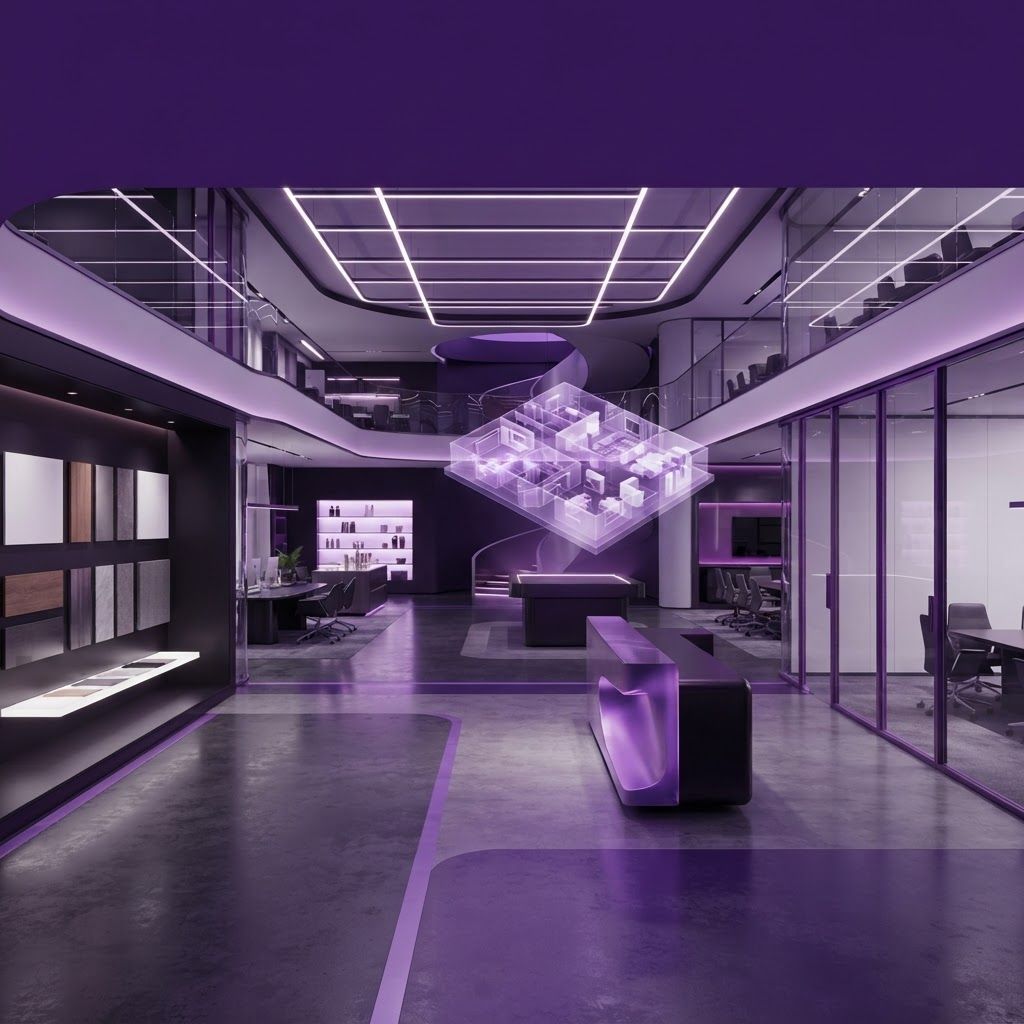
What Interior Fitout Really Involves
An interior fitout is the process of converting bare or outdated commercial space into a finished, operational environment. It sits between construction and design, requiring both trades coordination and aesthetic judgment. A typical scope includes demolition of existing partitions, framing and drywall, ceiling systems, mechanical and electrical distribution, plumbing for restrooms and break areas, data and low-voltage cabling, flooring, millwork, glazing, painting, lighting, signage substrates and final furnishing coordination. Because so many trades work in a compressed footprint over a short schedule, sequencing errors are immediately visible in the completion date.
In Laredo, the fitout market reflects the local economy. Customs brokers, freight forwarders and logistics operators need functional offices near the bridges with strong data infrastructure and secure document handling. Medical practices continue expanding to serve a growing population, requiring exam rooms, sterile areas, specialized plumbing and mechanical systems that meet health regulations. Retail centers along the major commercial corridors generate a steady stream of tenant improvements. Restaurants require hood systems, grease interceptors, make-up air and health department coordination, making them among the most technically demanding fitouts of all.
The Economics of a Fitout
Most commercial fitouts are funded partly through a landlord tenant improvement allowance and partly by the tenant. That structure creates a tight relationship between scope, schedule and rent commencement. If the fitout runs late, the tenant pays rent on space it cannot use, or delays opening and loses revenue. A capable fitout contractor understands this pressure and manages the two items that most often cause delay: permitting and long-lead equipment. Rooftop mechanical units, electrical switchgear, custom millwork and specialty glazing can carry lead times far longer than the field construction itself, and they must be ordered before drawings feel finished.
1. Frontera Interiors
Frontera Interiors is one of the most established fitout specialists in Laredo, with a portfolio spanning offices, professional suites and retail spaces. The firm's strength is above-ceiling coordination, resolving conflicts among ductwork, sprinklers, lighting, structure and cabling before installation rather than during it. Clients report predictable schedules and short punch lists, and the company is known for accurate early budgets that survive into contract.
2. Border Office Solutions
Border Office Solutions focuses on offices for logistics, customs brokerage and freight forwarding companies, a specialized niche given Laredo's trade economy. These clients need robust data infrastructure, secure file and document areas, multiple workstations in efficient layouts and reliable cooling for equipment rooms. The firm understands these operational requirements and designs layouts around actual workflow rather than generic open-plan templates.
3. Meridian Medical Fitouts
Meridian Medical Fitouts specializes in healthcare interiors, including physician offices, dental practices, imaging suites and outpatient clinics. Medical work carries requirements that ordinary commercial fitout does not: specific finish materials for infection control, medical gas where applicable, dedicated electrical circuits, lead shielding for imaging and detailed inspection processes. The firm's familiarity with these standards keeps approvals on track and prevents costly late corrections.
4. Vista Commercial Interiors
Vista Commercial Interiors combines interior design with construction delivery, producing space plans, finish palettes, furniture selections and lighting design and then executing them. For tenants without an architect on retainer, this integrated approach reduces coordination burden and eliminates the gap between design intent and constructed reality. The firm is particularly strong on professional service offices where client-facing impression matters.
5. Gateway Retail Fitout
Gateway Retail Fitout concentrates on stores, showrooms and shopping center tenant improvements. Retail fitouts are schedule-driven because opening dates are tied to leases and merchandising calendars, and the firm has developed efficient processes for fast turnarounds. It is also experienced with national tenant brand standards, which specify fixtures, finishes and lighting in exacting detail.
6. Cornerstone Hospitality Interiors
Cornerstone Hospitality Interiors handles restaurants, cafes and bars, arguably the most complex fitout category. Kitchen exhaust hoods, make-up air, grease interceptors, floor drains, walk-in coolers, health department requirements and heavy electrical loads all converge in a small space. The firm coordinates equipment suppliers early and understands the inspection sequence, which prevents the last-minute failures that delay restaurant openings.
7. Summit Workplace Construction
Summit Workplace Construction serves larger corporate and institutional tenants, delivering multi-floor offices, training centers and administrative facilities. The firm brings formal project controls, including detailed schedules, cost reporting and change management, and it is experienced with phased work in occupied buildings where existing staff must continue working. Its site protocols for noise, dust and access are well developed.
8. Del Norte Interior Contractors
Del Norte Interior Contractors provides general interior fitout services across office, retail and light industrial administrative space. The firm is valued for practicality and responsiveness on small to mid-sized projects that larger contractors may deprioritize. Owners of single-tenant buildings and small business operators frequently choose the firm for straightforward pricing and hands-on ownership involvement.
9. Lomas Millwork and Fitout
Lomas Millwork and Fitout differentiates itself through in-house custom millwork capability, producing reception desks, casework, display fixtures, wall paneling and specialty cabinetry. Controlling millwork internally removes one of the most common sources of fitout delay and allows tighter integration with field dimensions. The firm is a strong choice for projects where built-in furniture is central to the design.
10. Anchor Interior Group
Anchor Interior Group rounds out the list with broad fitout capability and a reputation for rescuing troubled projects. The firm is frequently brought in to complete work abandoned by another contractor or to correct installations that failed inspection. Its assessments are direct, and clients value that it identifies problems rather than concealing them until closeout.
Trends in Commercial Interiors
Flexibility has become a primary design requirement. Tenants increasingly want demountable partitions, modular power and data distribution, and layouts that can be reconfigured without full reconstruction. Indoor environmental quality has also risen in importance, with greater attention to ventilation rates, filtration and low-emitting materials. Lighting quality, particularly tunable and well-controlled LED systems, is now treated as a productivity and comfort investment rather than a commodity. In Laredo specifically, cooling performance and envelope tightness within tenant spaces receive close attention because comfort complaints are common in older buildings during summer.
How to Run a Fitout Well
Begin with a realistic understanding of the space. A measured survey of existing conditions, including verification of ceiling heights, structural constraints, existing mechanical capacity and electrical service, prevents designs that cannot be built. Lock in long-lead procurement early, and treat permitting as a schedule activity with a defined duration rather than an administrative afterthought. Negotiate the tenant improvement allowance with clarity about what it covers, since disputes over whether an item is landlord or tenant scope are common.
Finally, choose a contractor whose experience matches the specific building type. A firm that has completed twenty medical suites will anticipate issues a generalist discovers during inspection. Ask who the on-site superintendent will be, how many concurrent projects they manage and how change orders are documented. In interior fitout, where schedules are short and every trade depends on the one before it, that operational discipline is the difference between opening on time and explaining a delay to your customers.