
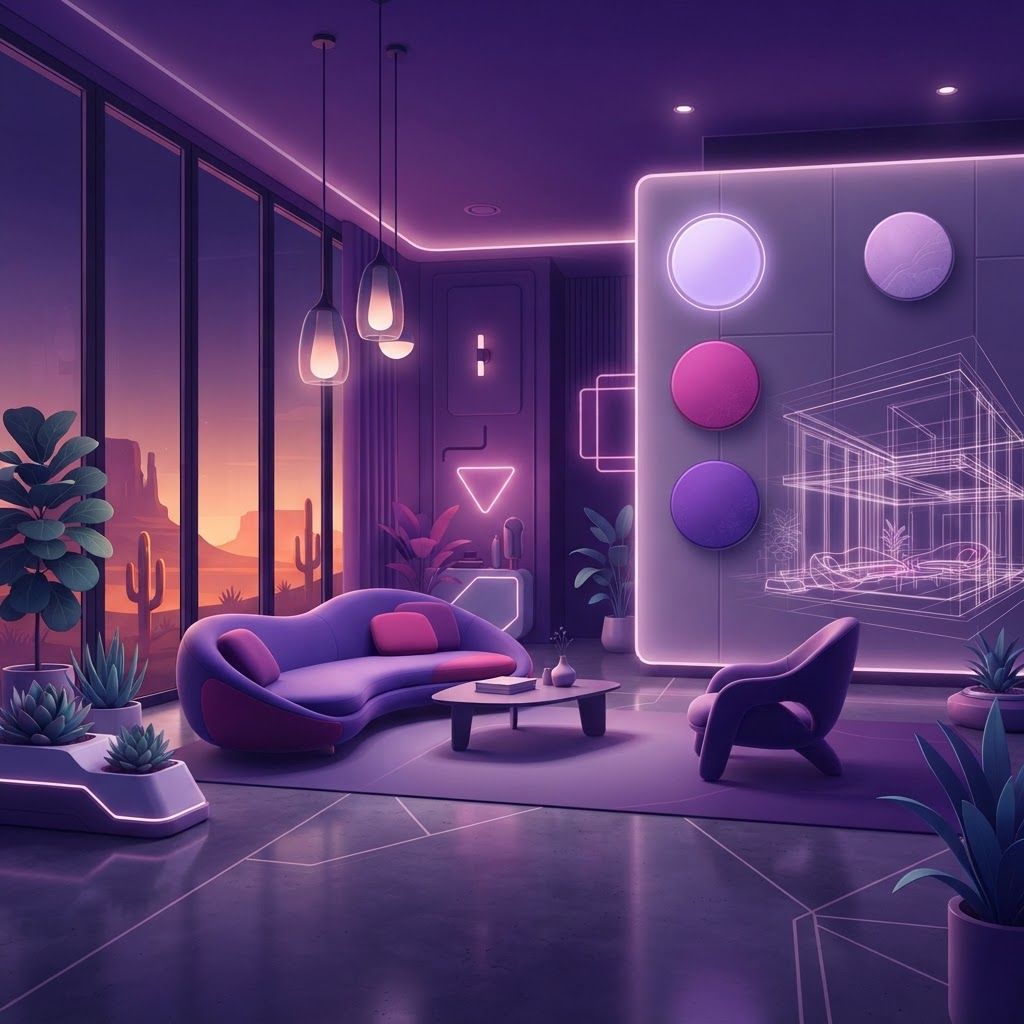
Designing for the Desert
Interior design in Tempe is shaped by conditions that do not apply in most of the country. Sunlight is abundant and intense for most of the year, which affects color perception, fabric durability, and the placement of artwork and furniture. Temperatures swing from mild winters that make patios the best room in the house to summers where interiors must feel genuinely cool and sheltered.
Good regional design responds to this rather than ignoring it. Deep window reveals, layered window treatments, light reflective surfaces used carefully to avoid glare, and materials that resist fading are practical considerations. So is the treatment of outdoor rooms, which in Arizona are extensions of the living space and deserve the same design attention as interiors.
The Evolving Regional Aesthetic
Southwest design has matured substantially. The heavy terracotta and literal desert motifs of earlier decades have given way to a more restrained vocabulary: warm neutrals, plaster and lime wash finishes, natural woods, woven textures, ceramics, and sculptural forms. Desert modernism, which emphasizes clean lines, generous glazing, and strong indoor outdoor connection, has strong currency in Tempe given the city's stock of mid century and contemporary infill homes.
At the same time, the area's diverse population supports a wide range of styles, from transitional family interiors to genuinely minimalist urban condominiums near Tempe Town Lake.
Est Est Inc
A long established Arizona design firm, Est Est is known for sophisticated residential interiors with a strong command of scale and material quality. Its work frequently involves full architectural collaboration rather than surface decoration, which suits significant renovations and custom construction.
David Michael Miller Associates
Widely respected for refined, restrained interiors, this firm produces work characterized by careful proportion, natural materials, and quiet luxury. Clients seeking timeless design rather than trend driven statements frequently gravitate toward this approach.
Ownby Design
Ownby Design has built a reputation for warm contemporary interiors that feel comfortable rather than austere. The firm handles both new construction and remodels, with particular strength in kitchens and primary suites where function and aesthetics must be resolved simultaneously.
Interior Trends
Serving the East Valley, Interior Trends offers full service design including space planning, finish selection, custom furnishings, and project coordination. The firm is often recommended for clients who want a single point of accountability across contractors, cabinetmakers, and suppliers.
La Casa Interior Design
La Casa focuses on residential interiors with an emphasis on livability for families. Durable materials, practical storage solutions, and layouts that accommodate real household routines feature prominently, without sacrificing visual coherence.
Studio Dwell Design
Studio Dwell specializes in contemporary and minimalist interiors, a good match for Tempe's growing inventory of urban condominiums and modern infill homes. The firm is skilled at making compact footprints feel generous through built in storage and disciplined editing.
Chris Ellis Design
Known for a design build oriented approach, Chris Ellis Design integrates construction knowledge into the design process. That combination reduces the gap between concept and executed result, particularly on structural remodels where wall removal and mechanical rerouting are involved.
Wiseman and Gale Interiors
With deep roots in Arizona, Wiseman and Gale brings a layered, collected sensibility that blends antique and contemporary pieces. For clients who want interiors that feel personal and accumulated rather than purchased as a single package, this approach is distinctive.
Desert Modern Interiors
As the name suggests, this firm concentrates on desert modernism, working extensively with mid century properties and contemporary architecture. Period appropriate restoration combined with modern function is a demanding specialty and one that meaningfully affects resale value for architecturally significant homes.
Vallone Design
Vallone Design produces elegant, detail intensive interiors with strong attention to lighting, custom millwork, and material transitions. The firm is frequently engaged for high end residences where bespoke elements and coordinated art placement are central to the outcome.
How Designers Charge
Engagement models vary. Hourly billing suits smaller scopes and consultation work. Flat fees provide budget certainty for defined projects. Cost plus arrangements apply a markup to furnishings and materials procured by the designer. Percentage of project cost is common on larger renovations. Some firms combine models, charging a design fee plus procurement markup.
Clarify early what is included: concept development, drawings, finish schedules, procurement, delivery coordination, installation, and site visits during construction. Ambiguity in scope is the most frequent source of friction on design projects.
Running a Successful Project
Begin with a realistic budget and share it openly. Designers cannot specify appropriately without knowing the constraint, and withholding it typically wastes time on unaffordable concepts. Assemble reference images before the first meeting, including examples you dislike, since negative preferences communicate as much as positive ones.
Expect lead times on custom furniture, stone, and specialty fixtures to stretch across months. Order long lead items early. For renovations, coordinate design decisions with contractor scheduling, since finish selections often need to be locked well before they are installed.
Finally, insist on documentation. Floor plans, elevations, finish schedules, and furniture specifications prevent the misunderstandings that turn into expensive corrections. Projects that begin with clear documentation almost always finish closer to budget and closer to the original vision.