
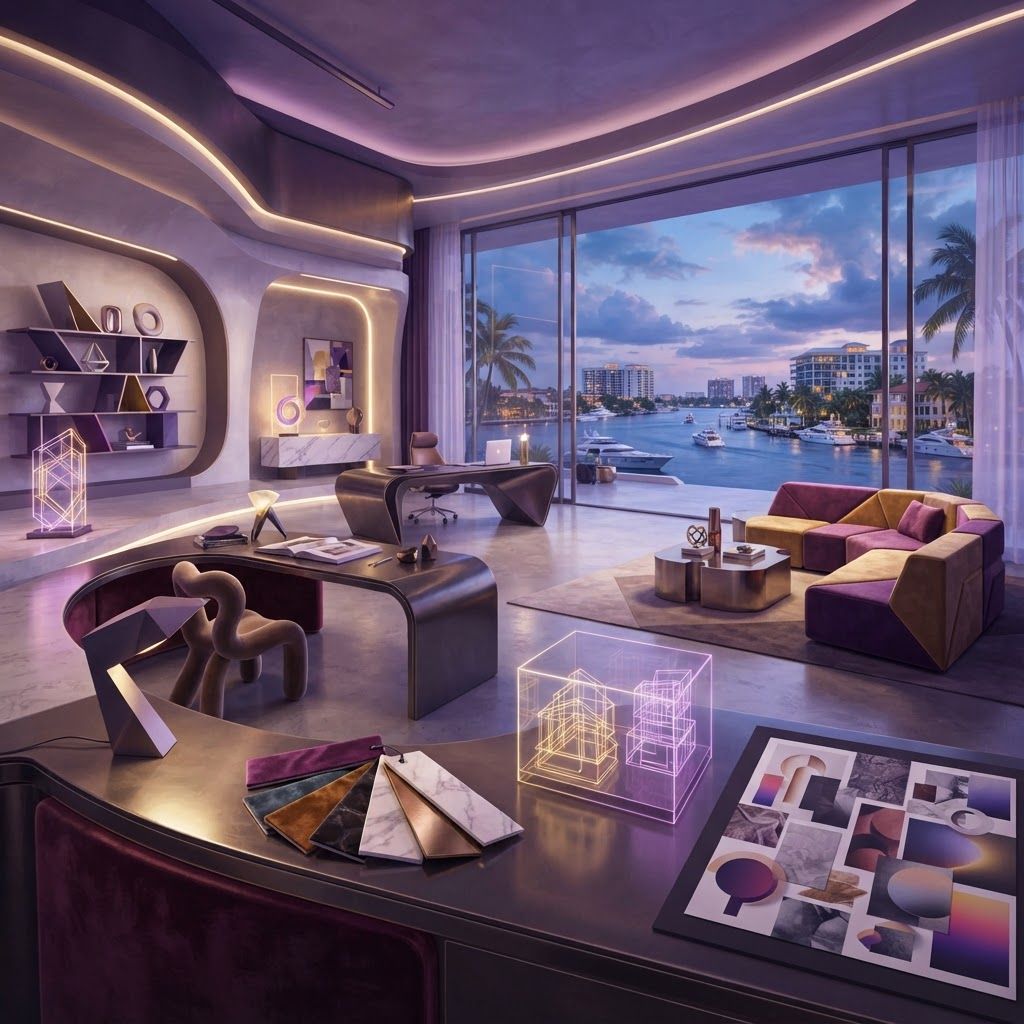
A Distinct Regional Design Culture
Fort Lauderdale has developed a recognizable design language shaped by its geography and its residents. The city's waterfront orientation, intense natural light, marine industry heritage, and mix of mid-century architecture and contemporary towers have produced work that differs meaningfully from design in other American markets.
The dominant aesthetic blends coastal contemporary restraint with yacht-influenced detailing: clean lines, integrated storage, high-performance materials, and palettes drawn from sand, water, and sky. Tropical modern work incorporates indoor-outdoor transitions, natural woods, and lush planting. There is also strong demand for mid-century modern restoration, given the city's substantial stock of well-designed post-war homes.
Types of Design Firms
Full-service residential design firms handle projects from concept through installation, managing space planning, finish selection, custom furniture, art and accessory procurement, and coordination with architects and contractors. These firms suit clients undertaking substantial renovations or furnishing large homes.
Architecture and interiors studios integrate both disciplines, which produces particularly coherent results on projects involving structural change, additions, or ground-up construction. For Fort Lauderdale waterfront properties where window placement and outdoor connection are central to the design, this integration matters.
Decoration-focused studios concentrate on furnishings, textiles, art, and styling without structural involvement. They are the right choice for clients who like their layout and want a refined, cohesive result.
Yacht and marine interior specialists represent a genuine Fort Lauderdale niche. The city's position as a global yachting center has created a body of designers who work on vessel interiors, and that expertise, which demands extreme space efficiency, custom millwork, and materials that survive marine conditions, frequently informs their residential work.
Commercial and hospitality designers serve restaurants, hotels, medical offices, and retail, working with different regulatory requirements including accessibility compliance and commercial code.
Understanding the Design Process
Most projects follow a recognizable sequence. The initial consultation establishes scope, budget parameters, timeline, and aesthetic direction. Programming and space planning define how each area will function and how circulation works.
Concept development produces mood boards, material palettes, and preliminary layouts. Design development refines these into detailed drawings, elevations, millwork details, lighting plans, and specified selections. For renovation work, this phase includes coordination with structural engineers, mechanical contractors, and permitting.
Procurement covers ordering furniture, fixtures, fabrics, and custom pieces, then tracking long lead times that frequently extend several months for custom upholstery and imported goods. Project management runs through construction, coordinating trades and resolving field conditions.
Installation is the final phase, where furniture is delivered, art is hung, and the space is styled. Experienced firms handle this in a coordinated single event rather than piecemeal delivery.
Fee Structures Explained
Interior design fees are structured in several common ways, and understanding them prevents misaligned expectations. Flat fee arrangements quote a fixed amount for a defined scope, providing budget certainty but requiring precise scope definition upfront.
Hourly billing charges for actual time at stated rates, sometimes with different rates for principal designers versus junior staff. It suits smaller or open-ended projects.
Cost-plus arrangements bill furnishings at the designer's trade cost plus a stated markup, typically alongside a design fee. Clients gain access to trade-only resources unavailable at retail.
Percentage-of-project fees calculate the designer's compensation as a share of total project cost, common on larger renovations.
Many firms combine methods, charging a flat design fee plus markup on procurement. Clients should request written clarity on which model applies, whether travel and site visits are billable, how change orders are handled, and what the payment schedule looks like.
Considerations Specific to Fort Lauderdale
Light management is a central design problem. The intensity of South Florida sun causes fading in textiles, wood, and art, and creates glare and heat gain. Experienced local designers specify solar-resistant fabrics, UV-filtering window film or glazing, and layered shading solutions as standard practice rather than afterthoughts.
Humidity and salt air affect material longevity significantly. Designers working near the water select corrosion-resistant hardware, marine-grade finishes for outdoor applications, and materials that tolerate moisture without warping or mildewing.
Indoor-outdoor continuity is expected rather than optional. Sliding glass systems, consistent flooring across thresholds, covered outdoor rooms with proper lighting and fans, and furniture suited to both environments define successful South Florida interiors.
Condominium projects carry their own constraints. Building rules govern work hours, elevator use, contractor insurance requirements, permitted flooring assemblies for sound transmission, and often prohibit any change to exterior-visible elements. Designers who regularly work in Fort Lauderdale towers know these processes and build them into schedules.
Permitting through Broward County and municipal building departments requires time, and designers experienced locally build realistic allowances into project timelines rather than promising schedules that permitting will not support.
How to Choose a Designer
Review portfolios for range and for projects resembling yours in scale, budget, and property type. Look for evidence of the designer's own point of view rather than generic reproduction of current trends.
Verify credentials where relevant. Florida licenses interior designers for certain commercial work, and membership in professional organizations indicates ongoing education and adherence to practice standards.
Ask for references from clients whose projects completed within the past two years, and ask those clients specifically about budget accuracy, schedule performance, and how problems were resolved.
Discuss budget honestly at the first meeting. Designers cannot deliver appropriate solutions without a realistic number, and a firm that dodges budget conversations early tends to produce unwelcome surprises later.
Finally, assess working chemistry. Design projects run for months and involve many decisions. A designer whose communication style suits yours will produce a better experience and, ultimately, a better result.
Final Thoughts
Fort Lauderdale's interior design market offers exceptional talent working in a distinctive coastal idiom. Choose a firm whose portfolio genuinely matches your project type, understand the fee structure in writing before starting, and prioritize designers who take light, humidity, salt exposure, and condominium logistics seriously. Those practical competencies, paired with real design vision, are what produce interiors that still look and function beautifully a decade later.