
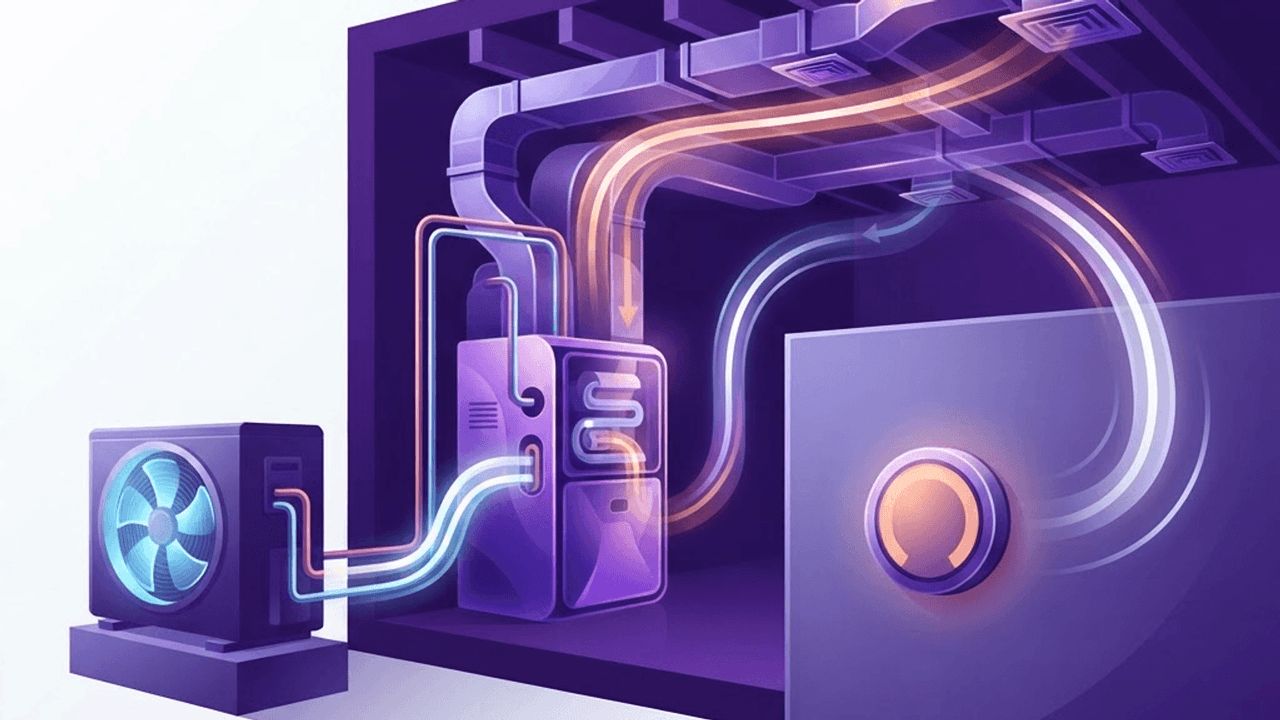
Climate Demands on Peoria HVAC Systems
Few regions test heating and cooling equipment as thoroughly as central Illinois. Winter design temperatures drop well below zero, requiring heating capacity that must operate reliably for months. Summer combines high temperatures with substantial humidity, meaning air conditioning must remove moisture effectively rather than simply lowering temperature. Shoulder seasons swing between both extremes within a single week.
That range means an HVAC system in Peoria operates through an unusually wide envelope of conditions. Equipment selection, sizing, ductwork design and installation quality all influence comfort and operating cost significantly. Industry studies consistently find that installation quality affects real world efficiency more than the nominal efficiency rating of the equipment, which is why contractor selection deserves more attention than brand comparison.
What Separates a Strong HVAC Contractor
The clearest indicator of quality is whether a contractor performs a load calculation before recommending equipment. A proper calculation accounts for square footage, insulation levels, window area and orientation, air infiltration and occupancy. Contractors who size equipment by replacing whatever was there previously, or by applying a rough rule of thumb, routinely install oversized systems.
Oversizing causes genuine problems. An oversized furnace short cycles, producing temperature swings and reducing component life. An oversized air conditioner cools quickly but runs too briefly to dehumidify, leaving a home cold and clammy. Right sized equipment runs longer at lower capacity, which improves comfort, humidity control and efficiency simultaneously.
Duct evaluation is the second marker. Even excellent equipment underperforms through undersized, leaky or poorly balanced ductwork. Strong contractors measure static pressure, assess duct sizing and address returns rather than ignoring distribution. Licensing, insurance, technician certification and clear maintenance offerings complete the picture.
The Ten Best HVAC Companies in Peoria
1. River City Heating and Cooling is a long established full service company recognized for performing load calculations, static pressure testing and detailed commissioning on every installation.
2. Heartland Climate Systems handles residential replacement and service work, valued for clear equipment options at different price points and honest guidance on repair versus replacement.
3. Prairie State Mechanical serves commercial and light industrial clients with rooftop units, chillers, boilers, building automation and preventive maintenance contracts.
4. Summit Comfort Solutions specializes in high efficiency systems and heat pump installations, including cold climate heat pumps suited to central Illinois winter conditions.
5. Cornerstone Heating and Air is known for strong emergency service response during extreme weather, with stocked trucks and after hours availability.
6. Bluff City HVAC focuses on older homes where ductwork is limited or absent, using ductless mini split systems and high velocity solutions that avoid major renovation.
7. Illinois Valley Air Systems combines HVAC service with indoor air quality work, including ventilation, filtration, humidification and duct sealing.
8. Northgate Geothermal and HVAC specializes in geothermal heat pump systems, an efficient option for properties with suitable land for ground loop installation.
9. Grand View Heating Services serves the mid market with reliable furnace and air conditioner replacement, straightforward pricing and dependable seasonal maintenance.
10. Legacy Boiler and Radiant handles hydronic systems, including boilers, radiators and radiant floor heating found in many older Peoria properties and specified in some new construction.
Furnaces, Heat Pumps and Hybrid Systems
High efficiency gas furnaces remain the most common heating choice in the region, offering strong performance in extreme cold at reasonable operating cost. Modulating furnaces with variable speed blowers deliver noticeably better comfort than single stage units by running longer at lower output and maintaining more even temperatures.
Air source heat pumps have improved dramatically. Modern cold climate models maintain useful capacity at low outdoor temperatures, making them viable in central Illinois where they once were not. Because a heat pump provides both heating and cooling from one system, it can simplify equipment and reduce operating cost, particularly during shoulder seasons.
Hybrid or dual fuel systems pair a heat pump with a gas furnace. The heat pump handles mild and moderate conditions efficiently, and the furnace takes over during severe cold. For many Peoria homes this combination offers the best balance of comfort, efficiency and reliability. Geothermal systems provide the highest efficiency available but require significant installation investment and suitable site conditions.
Indoor Air Quality and Humidity Control
Comfort depends on more than temperature. Winter heating dries indoor air substantially, causing discomfort, static and damage to wood flooring and furniture. Whole home humidification addresses this more effectively than portable units. Summer requires the opposite, and properly sized cooling equipment with adequate runtime handles most dehumidification, though whole home dehumidifiers help in tight, well insulated houses.
Filtration deserves attention as well. Higher efficiency media filters capture more particulate than basic filters, but they must be matched to blower capability to avoid excessive static pressure. Mechanical ventilation has become important in newer, tighter homes, where energy recovery ventilators introduce fresh air without discarding conditioned energy.
Maintenance and Cost Considerations
Semiannual maintenance genuinely extends equipment life. A proper visit includes cleaning coils, checking refrigerant charge, inspecting the heat exchanger, verifying combustion and venting, testing safety controls, examining electrical connections and confirming airflow. Filter changes between visits are the homeowner responsibility and the most common cause of avoidable service calls.
When deciding between repair and replacement, weigh equipment age, repair cost relative to replacement, refrigerant type, efficiency improvement and remaining expected life. Systems approaching fifteen to twenty years with a significant failure are usually better replaced, especially if efficiency gains and improved comfort are factored in. Request multiple written proposals that specify model numbers, capacities, efficiency ratings, ductwork modifications, warranty coverage and permit responsibility.
Final Thoughts
Peoria HVAC market includes specialists in high efficiency systems, geothermal, hydronic heating, ductless retrofits and commercial mechanical work. Prioritize contractors who calculate loads, evaluate ductwork and commission their installations, because those practices determine whether the system you purchase actually delivers the comfort and efficiency it promises across every season central Illinois produces.