
Why HVAC Design Matters More Than Equipment Brand
Chula Vista contains meaningfully different climates within a single city. Neighborhoods near San Diego Bay experience moderate temperatures, frequent marine layer and relatively low cooling demand. Eastern communities toward Eastlake, Rolling Hills Ranch and the Otay Ranch area sit further inland and higher, and regularly run ten to fifteen degrees warmer on summer afternoons. A system correctly designed for a western bungalow would be undersized for an eastern two-story home, and a system sized for the eastern hills would short-cycle and dehumidify poorly if installed near the coast.
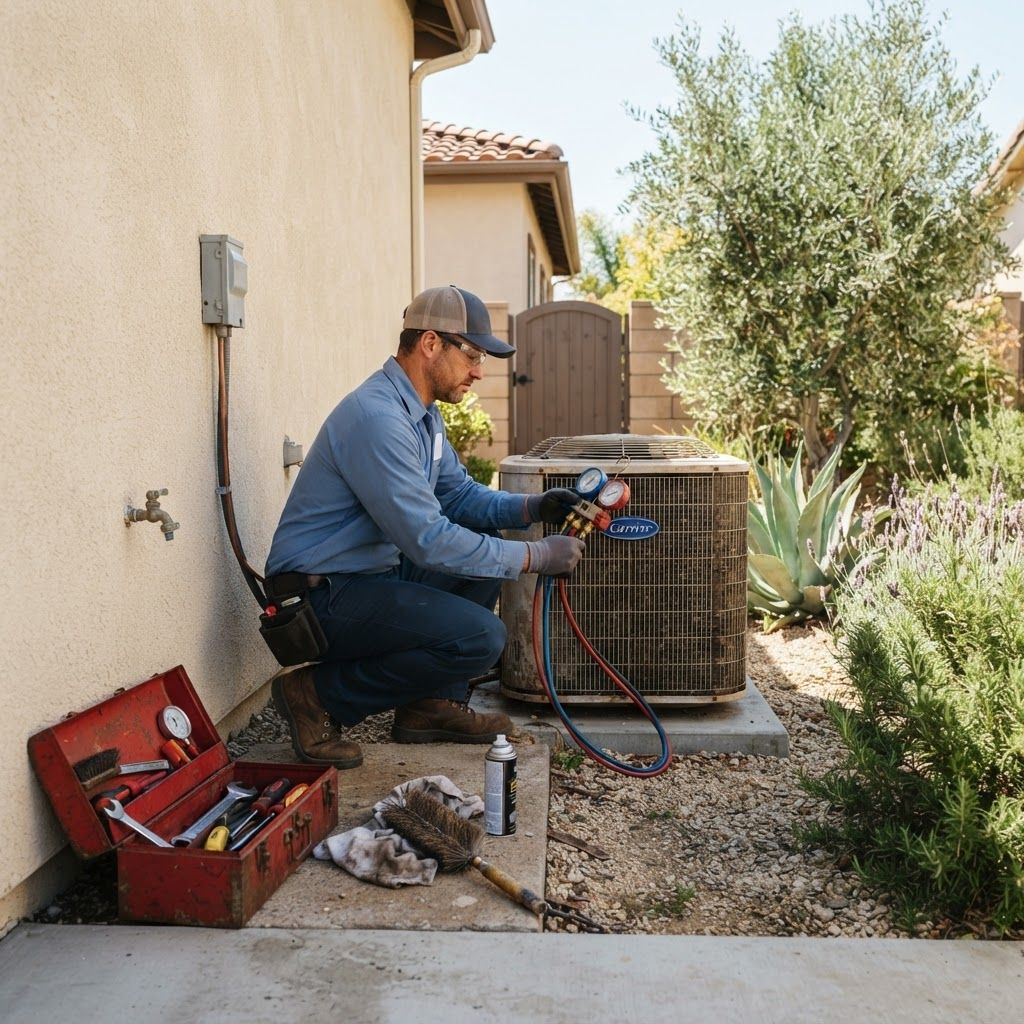
This is why installation quality dominates equipment brand in determining comfort and operating cost. Industry experience consistently shows that most performance complaints trace to duct design, duct leakage, refrigerant charge accuracy and airflow setup rather than to the equipment itself. A mid-tier system installed with a proper load calculation, correctly sized ducts, sealed connections, verified charge and measured airflow will outperform a premium system installed carelessly, both in comfort and in energy consumption.
How to Evaluate an HVAC Company
Require a written load calculation, not a rule of thumb
Ask for a room-by-room load calculation reflecting your home's orientation, insulation, window area and infiltration. Contractors who size equipment by square footage or by matching the old unit are guessing, and oversized equipment causes short cycling, poor humidity control, uneven temperatures and shortened compressor life.
Insist on duct evaluation as part of any replacement
Replacing equipment while retaining undersized, leaky or poorly routed ducts wastes much of the investment. A serious proposal includes duct inspection, static pressure measurement, sealing and any necessary resizing. Contractors who never mention ducts are selling boxes rather than systems.
Verify licensing, insurance and refrigerant certification
Confirm an active California contractors license in the appropriate classification, obtain insurance certificates, and confirm technicians hold federal refrigerant handling certification. Ask whether permits will be pulled, since equipment changeouts generally require them.
Demand commissioning documentation
After installation, request written measurements of refrigerant charge, airflow, temperature split and static pressure. This is the objective evidence that the system was set up correctly rather than merely turned on. Companies that commission systems properly will provide this readily.
Compare maintenance agreements and response commitments
Ask what a maintenance agreement actually includes, how many visits, what is measured and what discount applies to repairs. Also ask about response time during peak summer demand, since that is precisely when a failure matters most.
The Ten Types of HVAC Company Serving Chula Vista
1. Full-service residential HVAC contractors
These companies handle repair, maintenance, replacement and duct work across common residential systems. They suit most homeowners because they can diagnose honestly rather than defaulting to replacement, and they maintain relationships that support long-term service.
2. Heat pump and electrification specialists
Heat pumps have become the default efficient choice in this climate, and specialists understand cold-climate capacity curves, correct sizing for both heating and cooling, electrical capacity implications and available incentives. This is the fastest evolving segment of the trade.
3. Ductless mini-split installers
Mini-splits suit older homes without ducts, additions, converted garages and accessory dwelling units. Quality installation depends on correct line set routing, careful condensate management and thoughtful head placement, which specialists handle far better than generalists.
4. Duct design, sealing and replacement specialists
Because duct performance dominates comfort, companies focused on duct testing, sealing and redesign often deliver the greatest improvement per dollar. They use blower door and duct leakage testing to quantify results rather than asserting them.
5. Indoor air quality specialists
Filtration, ventilation, humidity control and source removal address air quality concerns that a temperature-focused contractor overlooks. Specialists design mechanical ventilation for tight homes and select filtration that the air handler can actually support without excessive static pressure.
6. Commercial HVAC contractors
Rooftop packaged units, variable refrigerant flow systems, building automation, economizers and zoning for offices and retail require different expertise and equipment. Commercial firms also provide the scheduled maintenance programs that keep businesses operating.
7. Industrial and process cooling firms
Warehouses, manufacturing and cold storage in the Otay Mesa corridor need process cooling, large air handling, evaporative systems and ventilation engineered for equipment loads rather than human comfort.
8. Emergency repair and diagnostic specialists
During a summer heat event, availability is everything. Companies with genuine after-hours dispatch, stocked trucks and strong diagnostic discipline restore cooling quickly and avoid replacing parts speculatively.
9. New construction and remodel HVAC contractors
Rough-in work for additions, accessory dwelling units and new homes requires coordination with framing, insulation, energy compliance documentation and inspection schedules. Experience with California energy code documentation is essential here.
10. Energy audit and whole-home performance companies
These firms evaluate the building envelope, insulation, air sealing and ducts before recommending equipment. Their value is identifying cases where insulation and air sealing reduce required equipment capacity, lowering both installation and operating cost.
Practical Advice for Owners
Schedule maintenance in spring before cooling season rather than during it, when availability is scarce and rates are higher. Change filters on the interval the equipment requires rather than annually, because restricted airflow damages equipment and raises consumption. Address uneven temperatures between floors as a duct and airflow problem before considering equipment replacement. When replacing a system, get three proposals that each include a load calculation and duct evaluation so you are comparing designs rather than only prices.
Conclusion
HVAC performance in Chula Vista depends on correct sizing for your specific microclimate, sound duct design and verified commissioning, far more than on which brand is installed. Require load calculations, insist on duct evaluation, confirm licensing and certification, and ask for measured commissioning data. Choose the specialist type your building calls for, and the system will deliver comfort and low operating cost for its full service life.