
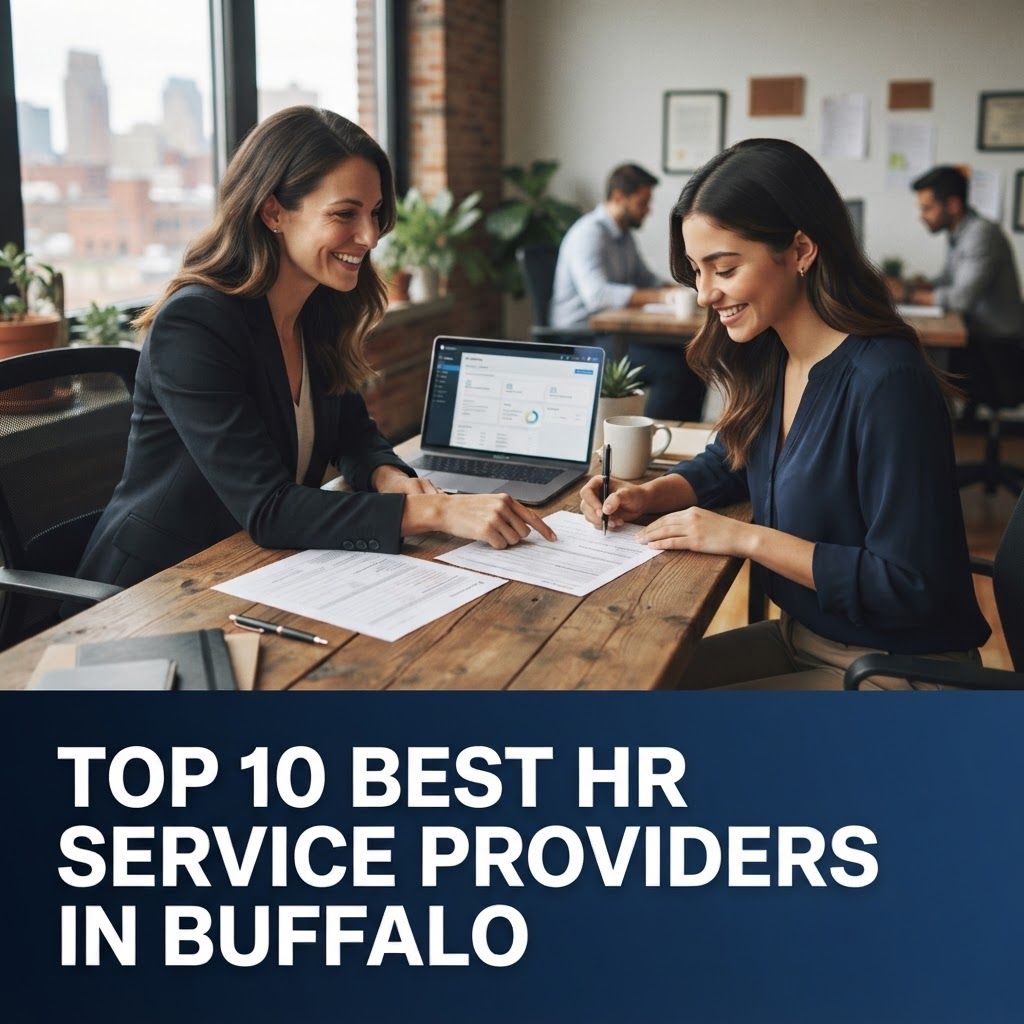
Outsourced HR Has Become Mainstream
The idea that human resources must be handled internally has largely dissolved among small and mid-sized Buffalo employers. The reasons are practical: compliance complexity in New York State requires specialized knowledge, HR technology has become too expensive and intricate for part-time administration, benefits markets demand professional navigation, and hiring a full-time HR generalist is difficult to justify below a certain headcount. Service providers have filled the gap with models ranging from narrow administrative support to complete functional replacement.
Buffalo's employer mix makes this market particularly active. Manufacturers, healthcare practices, professional service firms, hospitality operators, nonprofits, and technology companies all need HR infrastructure, and few of them want to build it from scratch.
The Four Main Service Models
Professional employer organizations become the co-employer of record. The PEO handles payroll, employment tax filing, workers compensation coverage, benefits sponsorship, and HR compliance, while the client retains day-to-day direction of employees. The primary advantages are access to large-group benefit plans, potentially favorable workers compensation pricing, and comprehensive compliance support. The considerations include cost structure — typically a percentage of payroll or per-employee fee — and reduced direct control over some employment mechanics.
Administrative services organizations provide similar bundled services without co-employment. The client remains the sole employer of record and sponsors its own benefit plans, while the ASO administers them. This suits employers who want operational support but need to control their own benefit offerings or cannot use co-employment for contractual reasons.
HR outsourcing and fractional HR arrangements place an experienced HR professional in your organization part-time, either onsite or remotely. This model works well when the need is judgment and leadership rather than transaction processing — handling employee relations, building policy, coaching managers, and overseeing recruiting.
Point-solution providers handle single functions: benefits brokerage, recruiting, background screening, HRIS implementation, or leave administration. Employers with internal HR staff typically use several of these rather than a bundled provider.
What Employers Should Expect Providers to Handle
Benefits administration is usually the entry point. This covers plan selection and renewal negotiation, open enrollment execution, employee education, carrier feeds and eligibility management, COBRA administration, and ACA compliance reporting. Strong providers deliver decision support tools that help employees choose appropriate plans rather than defaulting to the same election annually.
Compliance support covers policy development, handbook maintenance against current New York and federal law, mandated training delivery including annual sexual harassment prevention training, wage and hour classification review, I-9 verification processes, and recordkeeping systems that would survive an audit.
Leave administration has grown notably complex. New York paid family leave, state disability, paid sick leave, FMLA, ADA accommodation interactive processes, and workers compensation absences frequently overlap on a single employee, and getting the coordination wrong creates both legal exposure and employee frustration. Specialized providers handle this well; generalists often struggle.
Talent acquisition services span job description development, sourcing, applicant tracking system administration, screening, interview coordination, offer management, and onboarding. Recruiting outsourcing is frequently purchased separately from other HR services because it demands different skills.
Organizations Serving Western New York Employers
Buffalo employers have access to both national and local providers. National PEOs including TriNet, Insperity, and ADP TotalSource serve the region, alongside payroll-anchored providers such as Paychex, Paylocity, and Paycom that layer HR services onto their platforms.
Locally, Lawley stands out as a Buffalo-headquartered insurance brokerage with substantial employee benefits and HR advisory capability, combining benefits strategy, compliance guidance, and HR technology support. Superior Group of Companies and Insero Talent Solutions maintain significant regional workforce and staffing operations. Continuum Global Solutions and various regional PEOs and ASOs serve small and mid-sized employers throughout Erie and Niagara counties.
The Buffalo Niagara Partnership serves as a valuable resource for member employers, providing HR guidance, compliance updates, and connections to service providers. Accounting and advisory firms including The Bonadio Group and Freed Maxick offer human capital consulting alongside financial services. Numerous independent HR consultants — many of them former corporate HR directors — provide fractional support to companies too small for full-time staff.
Choosing the Right Model
Headcount is the most useful starting filter. Under roughly twenty-five employees, a PEO or fractional HR arrangement usually provides the best economics and compliance coverage. Between twenty-five and one hundred, employers often benefit from an ASO or a strong benefits brokerage combined with fractional HR leadership. Above one hundred, most organizations build internal HR capacity and use specialized providers for benefits, leave administration, recruiting, and project work.
Benefits strategy can override headcount logic. An employer with a young, healthy workforce may get better pricing on its own plans than through a PEO's pooled arrangement, while an employer with older employees or adverse claims experience may benefit substantially from pooling. Run the actual numbers rather than assuming.
Contract Terms Worth Scrutinizing
Read the exit provisions before anything else. PEO agreements can be difficult to leave mid-plan-year because benefits, workers compensation, and payroll all move simultaneously. Understand notice requirements, whether you can obtain claims and loss data on exit, and how employee benefit continuity will be handled.
Clarify liability allocation. Who is responsible if an employment tax filing is late, a benefit eligibility error occurs, or a compliance obligation is missed? Written indemnification language matters more than verbal assurances.
Confirm data portability. Your employee records, compensation history, performance documentation, and applicant data should be exportable in usable formats at any time.
Emerging Considerations
Artificial intelligence in HR — resume screening, interview analysis, performance prediction — is drawing regulatory attention, and employers remain liable for discriminatory outcomes regardless of whether a vendor built the tool. Mental health and family-building benefits have become competitive necessities in the Buffalo labor market. Pay transparency requirements demand structured compensation data. And hybrid work policies continue to require thoughtful design as employers compete with fully remote employers for local talent.
Getting Value From the Relationship
The employers who benefit most treat HR providers as strategic partners with visibility into business plans rather than administrative vendors. Share growth projections, upcoming organizational changes, and known employee relations concerns early. HR problems handled proactively cost a fraction of what they cost after escalation, and that is ultimately where outsourced HR earns its fee.