
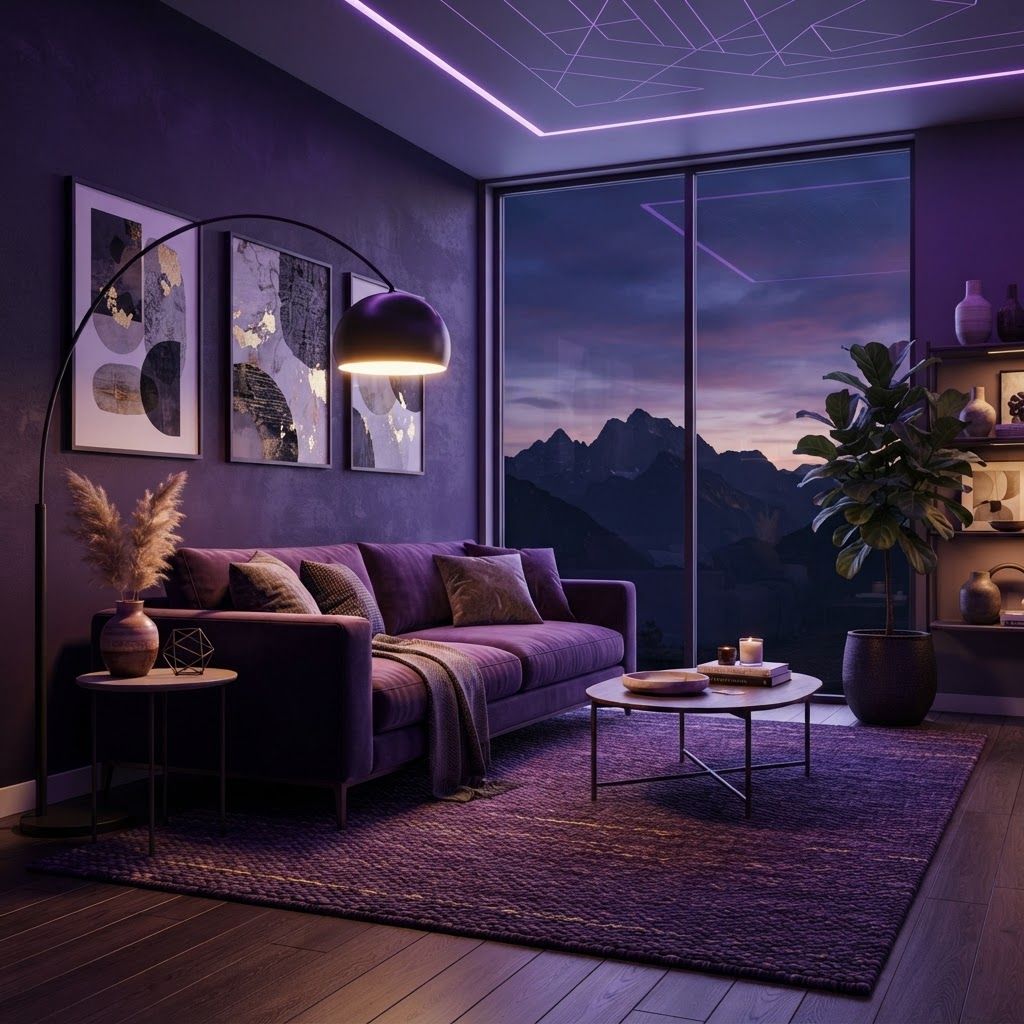
How Salt Lake City Developed Its Own Design Language
For a long time the interior design conversation in Utah revolved around traditional and transitional styling. That has shifted substantially. The valley's population growth, an influx of design conscious residents drawn by outdoor access and a strengthening tech economy, and a robust local maker community have combined to produce a home decor market with real character.
The prevailing aesthetic pulls from several directions at once. Mountain modern takes the warmth of natural wood, stone, and wool and pairs it with clean lines and large glazing rather than heavy rustic detailing. Scandinavian influence shows up in light woods, restrained palettes, and functional furniture. Meanwhile a strong handcraft tradition keeps ceramics, textiles, and custom woodwork prominent in a way that mass market retail alone would not support.
Practical climate factors influence choices as well. Intense high altitude sunlight fades textiles and finishes quickly, which pushes demand for quality window treatments and UV resistant fabrics. Extremely dry air affects solid wood furniture, making construction quality and proper acclimation genuinely important rather than a marketing point.
Ten Home Decor Brands and Retailers Worth Knowing
1. Alice Lane Home Collection. A Utah based interior design firm and showroom known for layered, sophisticated interiors and a curated furniture and accessory collection. Their strength is complete room composition rather than individual statement pieces, and their showroom functions as a design education resource.
2. Cottonwood Furniture Company. A local maker focused on solid wood furniture built for the region's dry climate. Custom dining tables, credenzas, and bed frames in oak, walnut, and ash appeal to buyers who want longevity over trend cycles.
3. Now and Again. A downtown home goods and gift retailer offering a mix of modern accessories, textiles, ceramics, and stationery. Popular for finishing touches and gifting, with an inventory that turns over frequently.
4. Salt Lake Furniture Design. A design forward furniture retailer carrying contemporary upholstery, modular seating, and modern case goods. A good fit for homeowners moving away from traditional silhouettes.
5. Hip and Humble. A long standing local favorite with a warm, eclectic assortment of decor, candles, linens, and small furniture. Its appeal lies in accessible price points and a consistently inviting merchandising style.
6. Emmi Home. A boutique focused on modern minimalist decor with an emphasis on ceramics, vases, textiles, and sculptural objects. Frequently sourced by designers looking for restrained accent pieces.
7. Wasatch Woodcraft. Specializes in custom cabinetry, built ins, and architectural millwork. While not a traditional decor retailer, built in shelving and paneling increasingly define how valley homes are finished.
8. Blackbird Home. Offers a curated blend of vintage and contemporary furnishings, appealing to buyers who want interiors with visible history rather than an entirely new build look.
9. Mountain Land Design. A showroom oriented toward plumbing fixtures, hardware, tile, and surfaces. These fixed finishes set the tone for kitchens and bathrooms long before furniture arrives.
10. Fieldwork Textiles. A local textile maker producing woven throws, pillows, and rugs in natural fibers. Their work reflects the regional palette of wool, linen, and undyed cotton that pairs naturally with mountain modern interiors.
Design Trends Defining Valley Interiors
Warm minimalism has become the dominant direction. It keeps the uncluttered geometry of minimalism but replaces cold whites and grays with plaster textures, oatmeal linens, tan leather, and honeyed wood tones. The result photographs well but, more importantly, feels comfortable in a climate with long bright days and cold nights.
Natural material honesty is another throughline. Unlacquered brass that patinas, quartzite and soapstone rather than uniform engineered surfaces, and visible wood grain all signal a preference for materials that age rather than degrade. Related to this is a shift toward fewer, better pieces. Buyers increasingly invest in a single well built sofa or dining table instead of furnishing an entire room at a low price point.
Functional zoning has grown with remote work. Dedicated home offices, reading nooks, mudrooms sized for ski and hiking gear, and flexible guest spaces reflect how valley households actually use their homes. Window treatment sophistication has risen alongside it, with layered drapery and solar shades addressing both the glare and the heat gain that come with intense mountain sun.
How to Build a Cohesive Interior
Start with the fixed elements. Flooring, wall color, cabinetry, tile, and hardware are expensive and disruptive to change, so they should establish the palette. Once those are set, choose a limited color story, generally one dominant neutral, one supporting tone, and one accent, and repeat it deliberately across rooms so the home reads as a single composition.
Invest asymmetrically. Sofas, mattresses, dining tables, and lighting deserve the largest share of budget because they are used daily and their quality is felt physically. Accessories, art, and seasonal textiles can rotate at lower cost and are the right place to experiment.
Pay attention to scale, which is the most common mistake in larger valley homes. Rooms with high ceilings and expansive glazing overwhelm standard sized furniture and art. Larger rugs, taller lamps, and oversized artwork solve the problem far more effectively than adding more pieces.
Layer lighting in three levels. Ambient light from ceiling fixtures, task light at reading and work surfaces, and accent light on art or architecture. Interiors that rely on a single overhead source almost always feel flat regardless of furniture quality.
Shopping Locally Versus Nationally
National retailers offer speed, price, and predictable stock, which matters when furnishing quickly. Local makers and boutiques deliver something different: construction quality suited to the dry climate, custom dimensions for older homes with irregular rooms, and pieces that do not appear in every neighbor's living room.
A practical hybrid works well for most households. Source foundational upholstery and casegoods where quality and warranty are strongest, then use local ceramics, textiles, art, and custom millwork to give the interior specificity. That combination produces a home that feels considered rather than catalog assembled.
Final Thoughts
Salt Lake City's home decor market has matured into something genuinely worth exploring, spanning full service design houses, custom woodworkers, textile makers, and well curated boutiques. The strongest interiors in the valley tend to share a few traits: a restrained palette, natural materials chosen for how they age, appropriate scale for mountain architecture, and a mix of national practicality with local craftsmanship. Building that kind of space is less about following a trend than about choosing pieces that will still make sense a decade from now.