
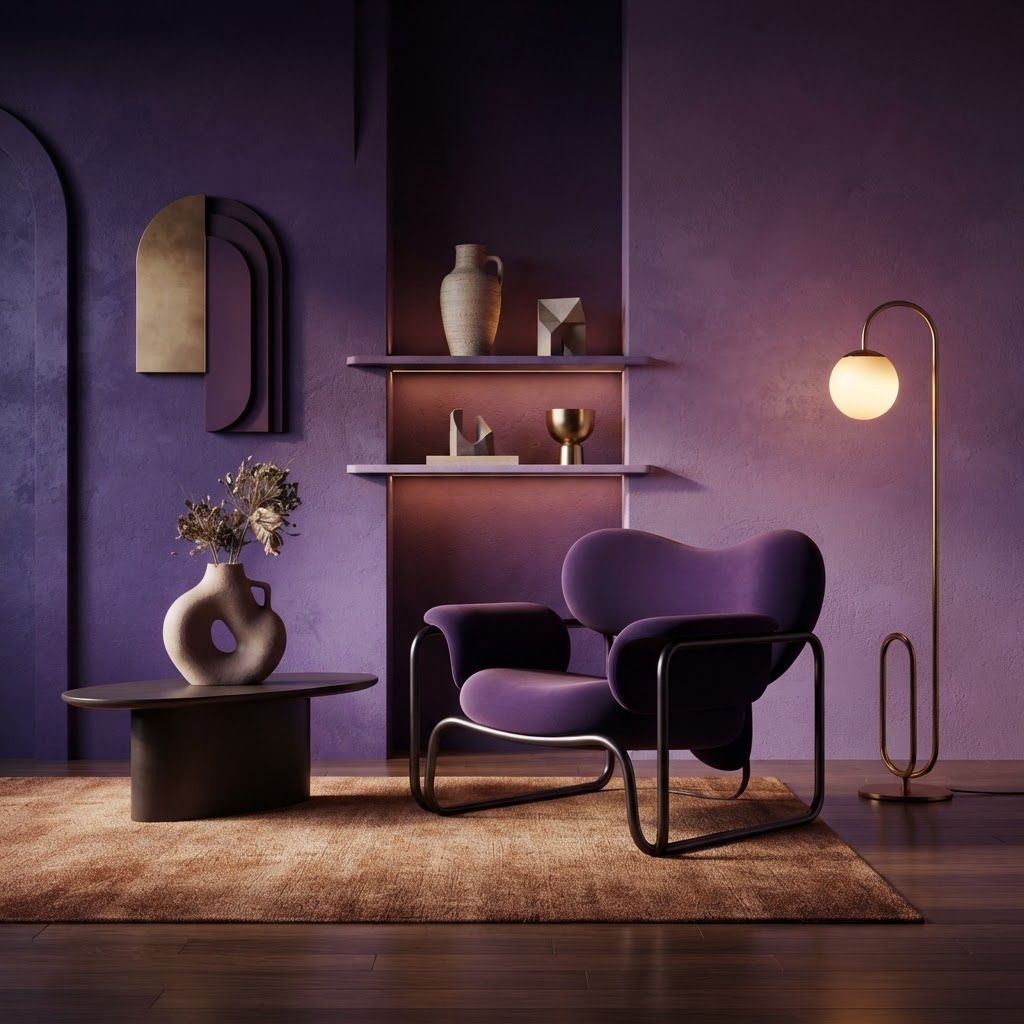
A City Built on Furniture
Grand Rapids earned the nickname Furniture City for good reason. For much of the late nineteenth and twentieth centuries the city was a national center of furniture manufacturing, and that legacy still shapes the local design economy. Global office furniture companies remain headquartered in the region, design education has a strong local presence, and there is an unusually deep bench of makers, upholsterers, and independent retailers for a metro of this size.
For homeowners, this means access to a decor market with real depth, spanning high-craft custom work, mid-century and antique sourcing, and contemporary retail.
Ten Home Decor Brands and Retailers to Know
1. Herman Miller
A globally recognized design company with deep West Michigan roots, known for iconic modern furniture and a design philosophy centered on research, ergonomics, and longevity.
2. Steelcase
Headquartered in Grand Rapids, Steelcase is a global leader in workplace furniture whose residential-adjacent and home office collections have become increasingly relevant as remote work reshaped how people furnish their homes.
3. Haworth
Another major West Michigan furniture company, respected for contemporary design, sustainable materials, and collaborations with international design brands.
4. Klingman's Furniture
A historic Grand Rapids furniture retailer offering curated collections and in-house design consultation, a long-standing destination for quality upholstery and case goods.
5. Van Hoecks Furniture
A locally owned retailer known for solid wood furniture and Amish-crafted pieces, appealing to buyers prioritizing durability and traditional construction.
6. Woodward Furniture
Focused on customizable upholstery and made-to-order seating, allowing customers to specify frame, fill, and fabric rather than accepting stock configurations.
7. Fitzgeralds Furniture & Decor
A design-forward home store carrying accessories, lighting, textiles, and accent furniture, popular for finishing touches that pull a room together.
8. Modern Mix Home
Specializes in mid-century modern and contemporary pieces, blending new production with vintage sourcing for layered interiors.
9. Grand Rapids Antique Market Vendors
A collective of dealers offering restored antiques, vintage lighting, architectural salvage, and one-of-a-kind pieces that give newer homes character.
10. Heartwood Home Studio
A local maker-driven brand producing handcrafted wood furniture, shelving, and decor with an emphasis on regional hardwoods and small-batch production.
Design Trends Shaping Grand Rapids Interiors
Several directions are visible across local homes right now. Warm minimalism has largely replaced stark all-white interiors, bringing in oak and walnut tones, textured plaster finishes, and layered neutrals. Natural materials are ascendant, with wool, linen, rattan, stone, and unlacquered brass appearing consistently. Color is returning cautiously through deep greens, terracotta, and muted blues used on cabinetry and accent walls rather than whole rooms.
There is also a strong regional preference for durability over trend-chasing. West Michigan buyers historically favor furniture that lasts, and that value shows up in the popularity of solid wood construction, performance fabrics, and repairable upholstery.
Furnishing for a Four-Season Climate
Local homes need to work in both January darkness and July brightness. Layered lighting is essential: ambient ceiling light alone makes interiors feel flat during long winters, while a combination of table lamps, wall sconces, and dimmable fixtures creates warmth. Textiles do similar work, with heavier throws, wool rugs, and lined drapery adding comfort in cold months and lighter cotton and linen swapped in for summer.
Entryway design deserves specific attention. A mudroom or entry zone with durable flooring, a bench, hooks, and a boot tray is not decorative in this climate, it is functional infrastructure.
Investing Where It Matters
Interior designers generally advise spending on the pieces used most and saving on the pieces changed most. A sofa, dining table, and bed frame justify investment because they carry daily use and define a room's structure. Accent pillows, seasonal accessories, and small decor can rotate inexpensively as tastes evolve.
Custom upholstery is worth considering for awkward spaces. Many older Grand Rapids homes have room proportions that standard retail furniture fits poorly, and a made-to-measure sofa often solves a layout problem that no off-the-shelf piece can.
Shopping Local Versus National
National retailers offer price and speed. Local retailers and makers offer fit, quality control, and the ability to see and touch materials before committing. The strongest approach for most households is a blend: source foundational pieces locally where craftsmanship pays off, and fill in with national or online purchases for items where longevity is less critical.
Grand Rapids also benefits from a genuine secondhand market. Estate sales, antique dealers, and consignment shops regularly surface well-built vintage furniture at a fraction of new prices, and a reupholstered vintage frame frequently outperforms a new import in both durability and character.
How to Judge Furniture Quality
Because so much of the decor market competes on appearance, knowing what to inspect is valuable. On upholstery, look for a kiln-dried hardwood frame rather than particleboard, joinery that uses corner blocks and dowels rather than staples alone, eight-way hand-tied or sinuous spring suspension, and high-resiliency foam wrapped in down or fiber. On case goods, check for dovetail drawer joinery, solid wood or high-quality veneer over stable substrate, and drawers that glide smoothly when fully extended. Ask whether replacement parts and reupholstery are practical, since a piece that can be refreshed in fifteen years is fundamentally a different purchase than one destined for disposal.
Working With a Designer
Many Grand Rapids retailers include design consultation with purchase, and independent interior designers work on hourly or project fees. Even a few consultation hours can prevent expensive errors in scale, traffic flow, and color coordination, particularly in older homes where room proportions and window placement constrain layout in ways that are not obvious until furniture arrives.