
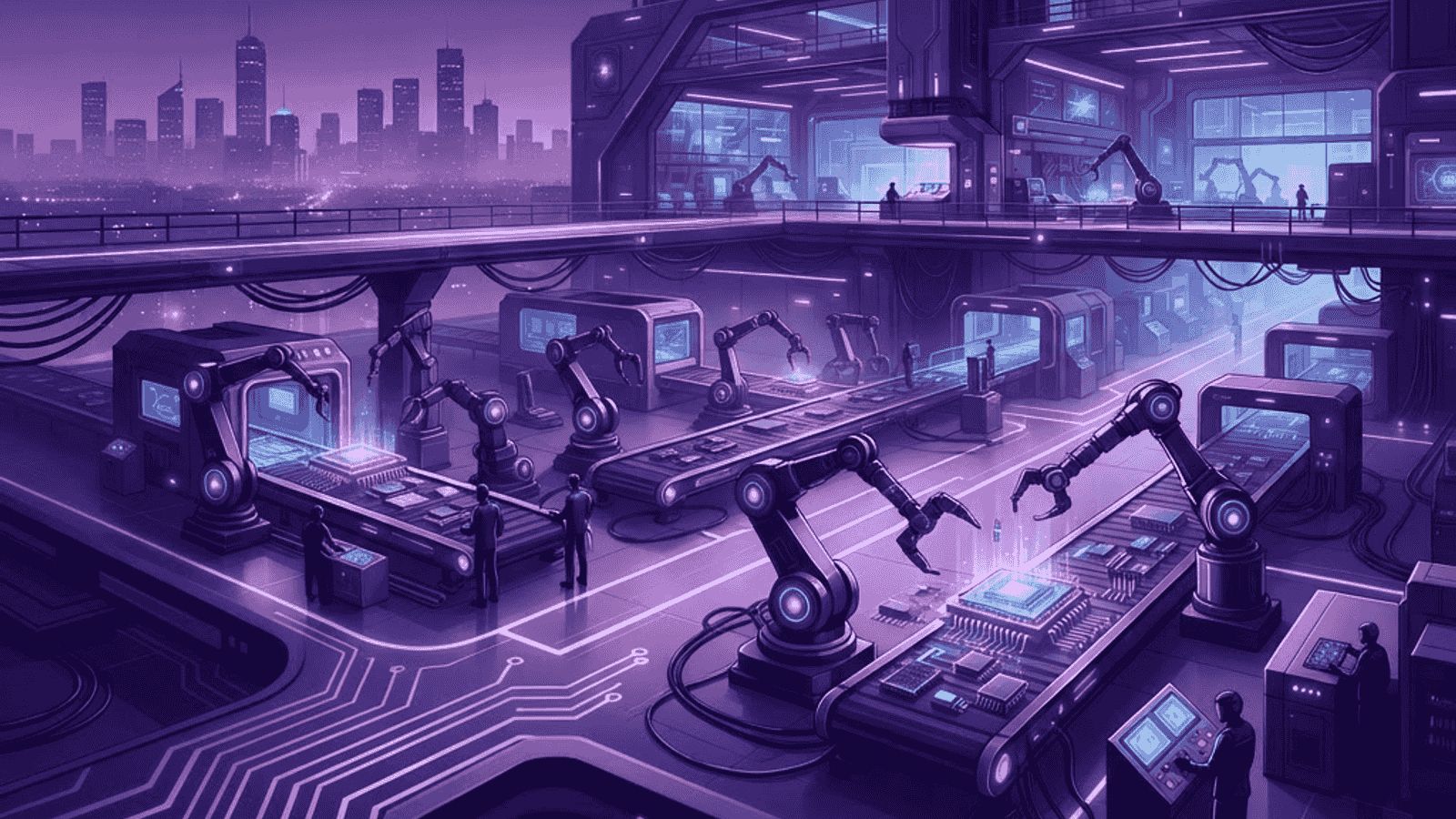
Manufacturing Is Still Central to Tulsa
Discussions of Tulsa technology often focus on software, but the region's hardware manufacturing base remains substantial and technically sophisticated. Aerospace maintenance and component production, oilfield and midstream equipment, industrial controls, electrical products, precision machining, and metal fabrication all operate at meaningful scale here. Decades of energy industry demand produced deep expertise in pressure vessels, pumps, valves, and heavy fabrication, while aerospace work built precision machining and quality system capability.
Several structural advantages sustain this base. Central location and rail, highway, and inland port access via the Tulsa Port of Catoosa support heavy freight economics. Workforce training through Tulsa Technology Center and regional colleges keeps skilled trades replenished. Utility costs remain competitive. And the presence of both large anchor operations and hundreds of specialized job shops creates a supply chain where complex assemblies can be sourced locally.
Ten Hardware Manufacturers in the Tulsa Region
1. Cimarron Precision Manufacturing
Cimarron Precision Manufacturing operates multi-axis machining centers serving aerospace and defense customers. Tight tolerance work, documented process control, and rigorous quality management systems define its operation, along with the material traceability those industries demand.
2. Osage Industrial Fabrication
Osage Industrial Fabrication specializes in heavy steel fabrication, pressure vessels, skid packages, and structural assemblies for energy and process industries. Certified welding programs and in-house testing capability allow the company to handle code-stamped work that many shops cannot.
3. Arrowhead Electronics Works
Arrowhead Electronics Works provides electronics manufacturing services including circuit board assembly, cable harnesses, enclosure integration, and functional testing. Prototype-to-production support makes it a practical partner for hardware startups and industrial equipment builders alike.
4. Green Country Controls
Green Country Controls builds industrial control panels, motor control centers, and automation cabinets. Its work sits at the intersection of hardware assembly and systems integration, requiring both fabrication capability and controls engineering knowledge.
5. Route 66 Pump and Valve
Route 66 Pump and Valve manufactures and remanufactures fluid handling equipment for energy, water, and process applications. Rebuild and refurbishment services extend asset life considerably, which appeals to operators managing capital constraints.
6. Blue Dome Sheet Metal
Blue Dome Sheet Metal handles laser cutting, forming, punching, and finishing for enclosures, brackets, panels, and custom assemblies. Fast turnaround on low and medium volume runs makes it a common choice for product developers iterating on physical designs.
7. Meridian Sensor Systems
Meridian Sensor Systems designs and manufactures industrial sensors and monitoring hardware for harsh environments. Ruggedized packaging, calibration discipline, and integration with data acquisition platforms connect its products directly to the region's industrial analytics work.
8. Sooner Composite Structures
Sooner Composite Structures produces composite components and tooling for aerospace and specialty transportation applications. Layup expertise, cure process control, and non-destructive inspection capability are central to its value, along with weight reduction engineering support.
9. Bison Machine and Tool
Bison Machine and Tool provides tooling, fixtures, dies, and specialized machine components for other manufacturers. As a supplier to manufacturers rather than end users, the company plays a quiet but essential role in keeping regional production lines running.
10. Tulsa Power Components
Tulsa Power Components manufactures electrical distribution and power conditioning hardware, including transformers, switchgear components, and custom assemblies. Growing electrification demand and data center construction across the region have expanded its market considerably.
Technology Trends on the Factory Floor
Hardware manufacturing in Tulsa is being reshaped by several forces. Automation and robotics are addressing persistent labor availability constraints, particularly in welding, material handling, and machine tending. Additive manufacturing has moved beyond prototyping into tooling, fixtures, and some end-use parts. Digital thread initiatives connect design models directly to machine programs and inspection routines, reducing translation errors. Sensor instrumentation and machine monitoring provide utilization visibility that was previously estimated rather than measured.
Quality systems are also evolving. Statistical process control, automated inspection with vision systems, and electronic traceability records are increasingly expected by aerospace and energy customers. Manufacturers investing in these capabilities win work that competitors cannot bid on credibly.
Choosing a Manufacturing Partner
Selecting a hardware supplier requires more diligence than selecting a software vendor because switching costs are higher. Verify relevant certifications and quality system registrations for your industry. Tour the facility and observe housekeeping, work-in-progress organization, and equipment condition, all of which reveal operational discipline. Discuss capacity honestly, including current backlog and how your volume fits. Clarify material sourcing and traceability practices. Understand engineering support availability, since a supplier who can improve manufacturability often saves more than a lower unit price.
Ask about communication cadence as well. Manufacturing programs encounter surprises, and the difference between a supplier who flags a problem early and one who reveals it at the delivery date is enormous.
Workforce and Supply Chain Realities
The most cited constraint among Tulsa manufacturers is skilled labor availability, particularly for welders, machinists, and controls technicians. Companies responding effectively invest in apprenticeships, partner with technical education programs, and automate the least skill-differentiated tasks. On the supply side, recent years have taught local manufacturers to hold deeper inventory of critical components, qualify secondary sources, and design with material substitution flexibility where specifications allow.
Final Thoughts
Tulsa's hardware manufacturing sector combines generational craft knowledge with increasingly modern process technology. From precision aerospace machining to heavy fabrication, electronics assembly, sensors, composites, and power equipment, the regional supply base can support complex product programs. Buyers should evaluate certifications, capacity, engineering support, and communication practices as seriously as pricing, because in hardware the relationship is a long one.