
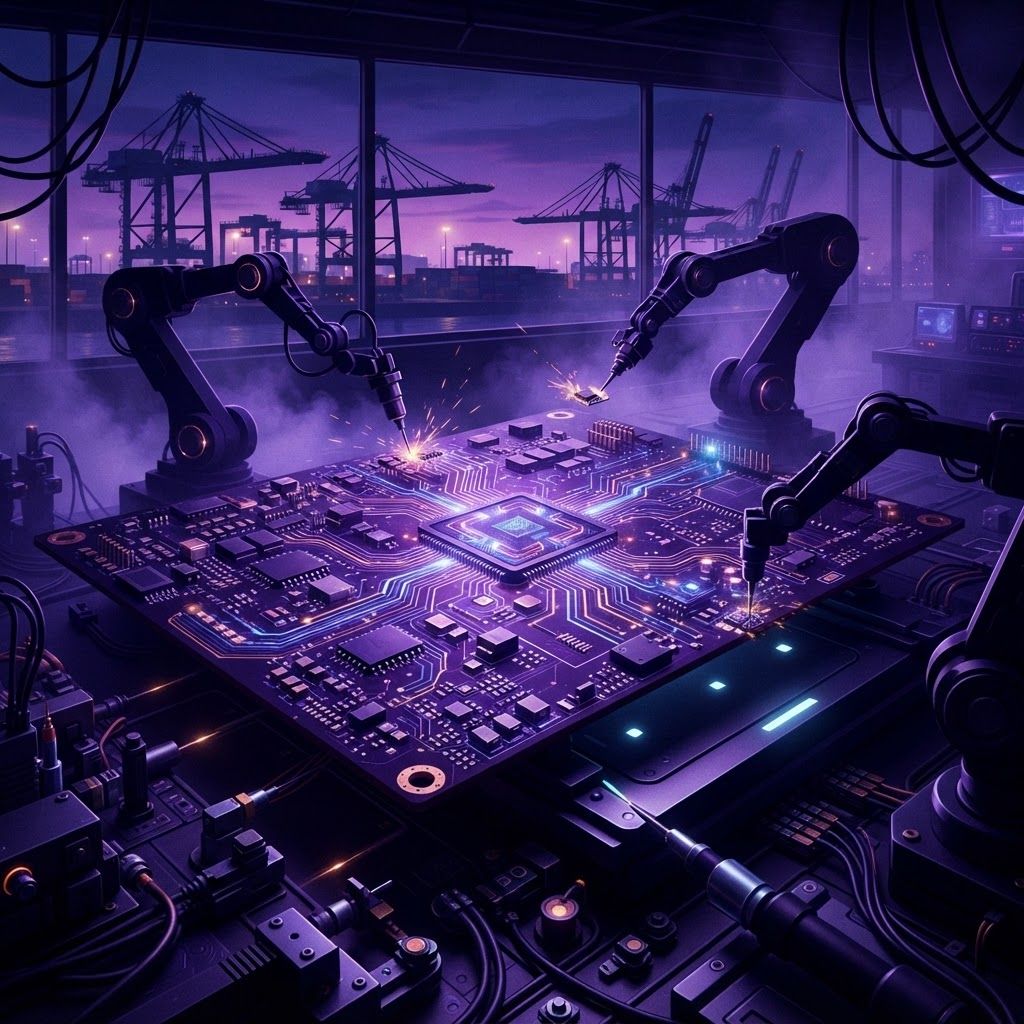
A Manufacturing Heritage With Modern Capability
Norfolk's manufacturing story begins with ships. Generations of shipbuilding and repair work created a regional workforce skilled in welding, machining, electrical systems, and precision fabrication, along with a supplier network capable of producing components to demanding specifications. That foundation never disappeared, and it has since diversified into defense electronics, industrial equipment, marine systems, and specialized instrumentation.
What makes the region distinctive today is the combination of heavy industrial capability and electronics sophistication in the same geography. A company needing a ruggedized enclosure, a custom circuit assembly, and integration into a marine-qualified system can often source all three within a short drive, which shortens development cycles considerably compared with distributed supply chains.
Capabilities Available in the Region
Precision machining and fabrication form the backbone, covering computer-controlled milling and turning, sheet metal work, welding to marine and structural standards, and surface treatment. Tolerances achievable locally satisfy aerospace and naval requirements, which is a meaningful capability threshold.
Electronics manufacturing services include circuit board assembly, cable and harness production, testing, and box build integration. Firms serving defense customers maintain traceability documentation and process controls that commercial-only shops typically lack.
Marine and industrial systems integration ties the pieces together, producing complete assemblies that must withstand salt exposure, vibration, temperature extremes, and continuous operation. Environmental qualification testing is a genuine differentiator here.
The Ten Leading Hardware Manufacturers in Norfolk
1. Global Technical Systems designs and manufactures advanced engineered systems including energy storage, control equipment, and ruggedized electronics for naval and industrial applications. Its engineering-to-production capability is among the deepest in the region.
2. Colonna's Shipyard combines ship repair heritage with extensive machining, fabrication, and industrial services, serving marine, industrial, and government customers with heavy capability that few facilities can match.
3. Norfolk Precision Machine specializes in close-tolerance machined components for defense and industrial customers, with quality systems built around documented inspection and traceability.
4. Tidewater Fabrication Works handles structural steel and aluminum fabrication, weldments, and custom enclosures, frequently supporting marine and infrastructure projects with short-notice requirements.
5. Harbor Electronics Assembly provides circuit board assembly, cable harness manufacturing, and functional testing, serving clients who need low to medium volume production with high documentation standards.
6. Elizabeth River Instruments produces sensors and measurement equipment for marine and environmental monitoring applications, an area where local domain knowledge is a competitive asset.
7. Coastal Industrial Products manufactures pumps, valves, and fluid handling components engineered for corrosive and high-cycle service conditions common in port and processing environments.
8. Blueline Ruggedized Systems focuses on hardened computing and display equipment built to survive shock, vibration, and moisture exposure in field and shipboard use.
9. Hampton Roads Composites works in advanced composite fabrication, producing lightweight structural components for marine and transportation customers seeking corrosion resistance and weight reduction.
10. Anchor Metal Finishing rounds out the list with plating, coating, and surface treatment services that protect components in aggressive coastal environments, an essential link in the regional supply chain.
Quality Systems and Certification
Manufacturer selection should begin with quality management credentials. General quality management certification indicates documented processes and continuous improvement discipline. Aerospace and defense standards add configuration control and traceability requirements. Welding and pressure equipment work carries its own code compliance obligations.
Beyond certificates, examine actual practice. Ask how nonconforming material is handled, how first article inspection is documented, and how calibration records are maintained. A facility tour reveals more than a document review: organization, tooling condition, and how operators discuss quality tell you what the culture is really like.
Trends in Regional Manufacturing
Reshoring has strengthened order books across the region as customers reassess the fragility of distant supply chains. Lead time reliability now competes with unit cost in sourcing decisions, and local suppliers benefit from that recalibration.
Automation adoption continues steadily rather than dramatically. Collaborative robots handle repetitive loading and inspection tasks, while machine monitoring gives managers real-time visibility into utilization. The constraint is workforce rather than capital, and the manufacturers investing in training programs are the ones expanding.
Additive manufacturing has found its role in tooling, fixtures, prototypes, and low-volume replacement parts rather than replacing conventional production. For a port economy where a missing legacy component can idle expensive equipment, on-demand part production has clear value.
How to Select a Manufacturing Partner
Match volume expectations honestly. A shop optimized for low-volume, high-mix precision work will struggle with high-volume production, and the reverse is equally true. Misalignment here produces quality problems and strained relationships regardless of goodwill.
Discuss design for manufacturability early. Experienced suppliers can suggest changes that reduce cost substantially without affecting function, but only if they see drawings before designs are frozen. Involving a manufacturer during development is consistently cheaper than optimizing afterward.
Clarify capacity commitments, material sourcing responsibilities, and tooling ownership in writing. These terms determine your flexibility if volumes change or the relationship ends.
Final Thoughts
Norfolk's hardware manufacturers offer a rare combination of heavy fabrication, precision machining, electronics assembly, and marine qualification experience concentrated in one region. Whether the requirement is a ruggedized electronic assembly, a corrosion-resistant fluid component, or a large structural weldment, the local supply base can generally support it. Selecting well means matching volume, tolerance, and certification requirements to a shop's genuine core competency rather than its broadest capability claim.