
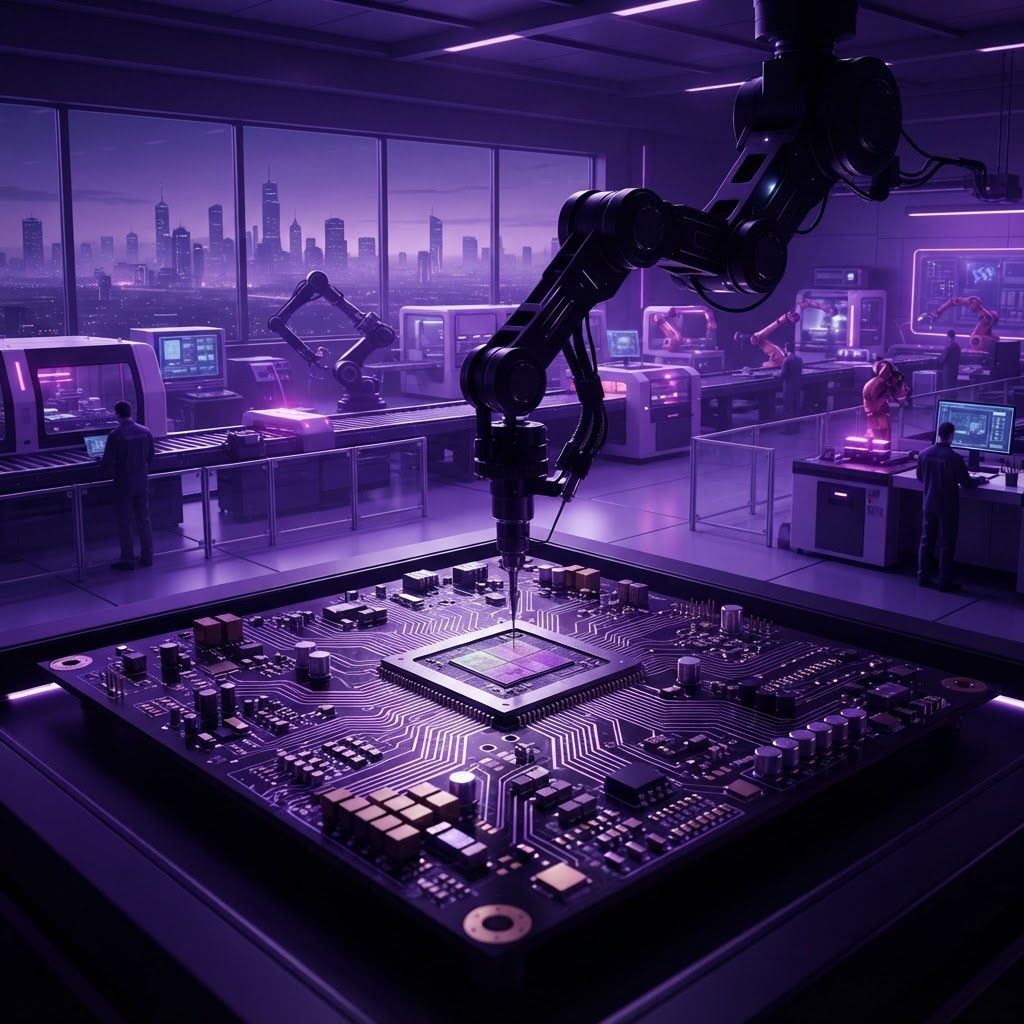
Manufacturing as a Regional Strength
Clarksville sits within a manufacturing corridor shaped by highway access, rail connectivity, reasonable land costs and proximity to major distribution routes. That combination has attracted sustained industrial investment, and the surrounding workforce includes machinists, technicians and engineers with practical production experience, many of whom developed technical skills during military service.
The resulting manufacturing base covers a broad range. Some operations produce finished products; others supply components to assemblers elsewhere. Some run high-volume automated lines; others do low-volume precision work where each piece is inspected individually. The ten manufacturers below represent that diversity and serve customers across automotive, industrial, electronics and specialty markets.
The Top 10 Hardware Manufacturers in Clarksville
1. Cumberland Precision Manufacturing
Cumberland Precision Manufacturing operates CNC machining capability for tight-tolerance metal components, serving industrial equipment and automotive customers with both prototype and production runs.
2. Two Rivers Electronics Assembly
Two Rivers Electronics Assembly provides printed circuit board assembly including surface mount and through-hole processes, with automated optical inspection and functional testing.
3. Red River Industrial Components
Red River Industrial Components manufactures fittings, brackets, housings and fabricated assemblies, combining stamping, welding and finishing operations under one roof.
4. Queen City Tool and Die
Queen City Tool and Die designs and builds tooling for stamping and molding operations, supporting manufacturers who need custom dies engineered for their specific production requirements.
5. Northfield Contract Manufacturing
Northfield Contract Manufacturing offers turnkey production services including sourcing, assembly, testing and packaging for companies bringing physical products to market without their own facilities.
6. Heritage Metal Works
Heritage Metal Works specializes in sheet metal fabrication including laser cutting, forming and powder coating, serving equipment builders and architectural applications.
7. Clearwater Plastics and Molding
Clearwater Plastics and Molding runs injection molding operations for plastic components, handling mold development, production and secondary operations such as assembly and decoration.
8. Bluff City Prototype Shop
Bluff City Prototype Shop focuses on rapid prototyping and low-volume production using additive manufacturing and machining, supporting product development cycles before tooling investment.
9. Fort Defiance Defense Components
Fort Defiance Defense Components manufactures to demanding specification and documentation standards required by defense and aerospace supply chains, with full traceability throughout production.
10. Clarksville Automation Systems
Clarksville Automation Systems builds custom machinery and automated work cells, integrating mechanical design, controls and safety systems for manufacturers upgrading production capability.
Evaluating a Manufacturing Partner
Quality systems are the first thing to examine. Ask what certifications the facility holds, how incoming materials are verified, what inspection occurs during production, and how nonconforming parts are documented and addressed. A manufacturer that can produce inspection records and corrective action history is demonstrating a functioning system rather than describing an aspiration.
Capacity and flexibility matter next. Understand current utilization, typical lead times, how the shop handles schedule changes and what happens when demand spikes. A supplier running at full capacity has no room to help when a customer needs acceleration.
Engineering support distinguishes strong partners. Manufacturers who review designs for manufacturability and suggest changes that reduce cost or improve yield add value well beyond price per piece. Those who simply quote whatever drawing arrives leave savings unrealized.
Cost Drivers in Hardware Production
Tolerances drive cost more than most designers expect. Specifying tighter tolerances than the application requires can multiply machining time and scrap rates. Material selection, surface finish requirements, secondary operations and packaging all contribute similarly.
Volume economics deserve careful modeling. Tooling costs amortize across production quantity, so a process that is expensive at low volume may be the cheapest option at scale, and vice versa. Choosing a production method without modeling realistic volumes frequently produces poor outcomes in both directions.
Supply Chain Considerations
Recent years have taught manufacturers hard lessons about single-source dependency. Qualifying a secondary supplier costs money and time but provides insurance against disruption. Similarly, understanding where a supplier's own materials originate reveals exposure that a domestic address can conceal.
Regional sourcing has gained appeal for reasons beyond patriotism. Shorter shipping distances reduce lead time variability, simplify quality resolution, allow in-person problem solving and lower inventory carrying requirements.
Trends in Manufacturing
Automation continues to spread into smaller operations as robot costs decline and programming becomes more accessible, allowing shops to handle repetitive tasks without large capital commitments.
Additive manufacturing has moved from prototyping into production for specific applications, particularly complex geometries and low-volume parts where tooling cannot be justified.
Digital traceability is increasingly expected, with customers requesting production records, material certifications and inspection data in structured formats rather than paper files.
Final Thoughts
Clarksville's manufacturing sector offers substantial capability across machining, fabrication, electronics, molding and automation. Choosing well requires looking past quoted pricing to quality systems, engineering support and capacity realism. Visit facilities when possible, review documentation practices, and build relationships with suppliers who treat manufacturability feedback as part of the service rather than an imposition.