
A Craft Tradition With Industrial Roots
St. Louis grew up on hardwood. Missouri white oak and walnut, floated and railed into the city from the Ozarks and the river valleys, supplied a substantial furniture and millwork industry through the nineteenth and twentieth centuries. The region also became a center for barrel cooperage serving the brewing and distilling trades, and that stave-and-hoop expertise reinforced a broader culture of woodworking skill.
Much of the commodity furniture business moved offshore, but the region retained and rebuilt around segments where local production wins: custom residential furniture, architectural millwork and casework, commercial and contract furniture, restaurant and hospitality fixtures, institutional casegoods, upholstered goods, and reclaimed material specialists working with timber salvaged from the region's abundant nineteenth-century industrial buildings.
The Segments of the Local Industry
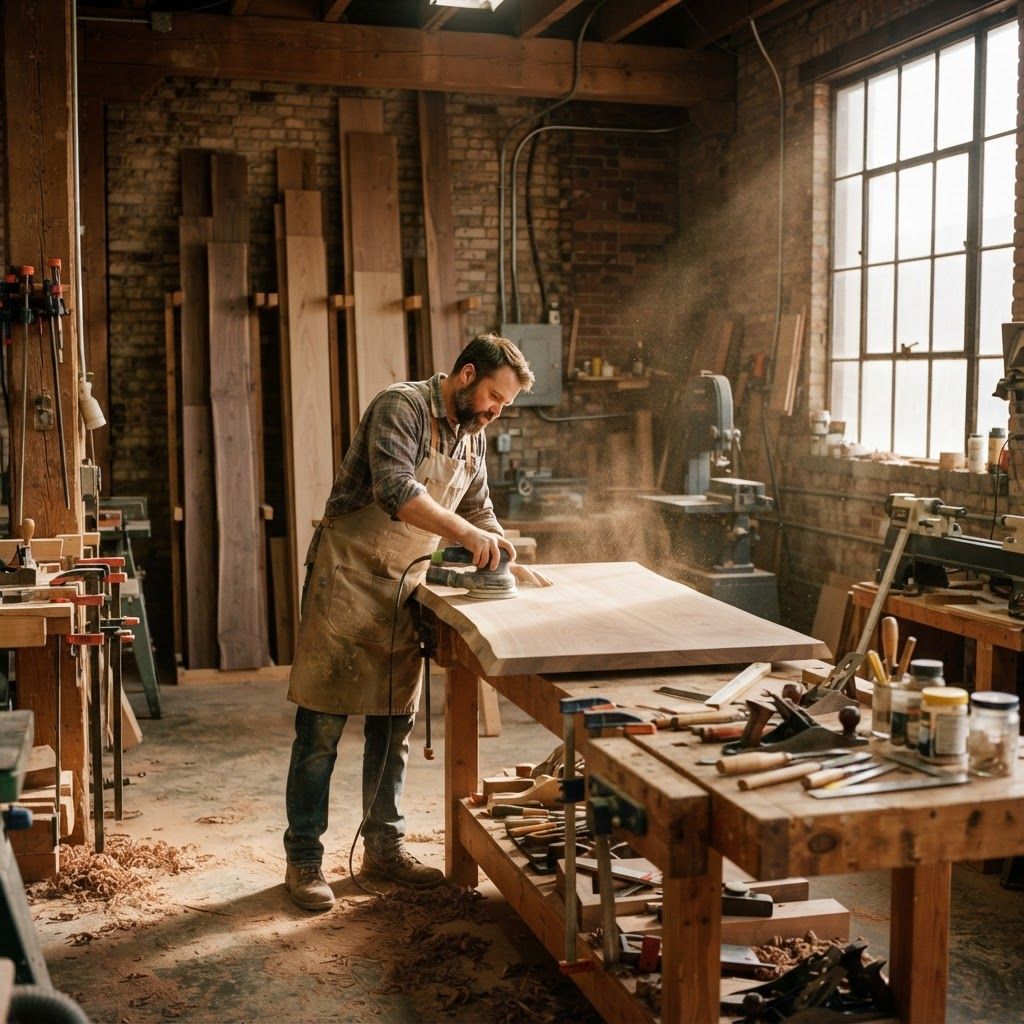
Custom furniture studios and fine woodworkers build one-of-a-kind pieces: dining tables, conference tables, built-in cabinetry, beds, and casegoods designed with a client and often with wood selected board by board. These shops compete on design collaboration, joinery quality, and finish rather than price.
Architectural millwork and casework firms serve general contractors, architects, and designers on commercial projects, producing reception desks, wall paneling, library and laboratory casework, retail fixtures, and institutional cabinetry. This is project-driven work requiring submittal drawings, product certification, and coordination with construction schedules.
Contract and commercial furniture manufacturers and dealers supply offices, healthcare facilities, schools, and hospitality operators, sometimes producing locally and sometimes fabricating custom elements to complement manufactured lines. Upholstery specialists handle both new production and restoration, and their skills overlap with the region's textile sector.
Reclaimed and salvage-based makers occupy a distinctive local niche. Demolition of century-old warehouses has released enormous quantities of old-growth heart pine, oak beams, and brick, and shops that mill and stabilize this material produce furniture with a genuine provenance story that new lumber cannot match.
What Marks Quality Furniture Manufacturing
Joinery reveals everything. Mortise-and-tenon, dovetail, domino, and properly executed dowel construction hold up over decades, while staples, pocket screws in structural locations, and reliance on adhesive alone do not. Solid wood panels should accommodate seasonal movement through floating panel construction, breadboard ends, or slotted fastening, and a shop that discusses wood movement fluently is demonstrating real competence.
Material selection matters just as much. Kiln-dried lumber at appropriate moisture content for the installed environment, grain and color matching across a piece, proper veneer core selection for large panels, and hardware rated for the intended cycle life all determine longevity. For commercial work, certification such as compliance with formaldehyde emission limits and applicable flammability standards is essential.
Finishing separates good from excellent. Surface preparation through progressive sanding, appropriate finish chemistry for the use case, adequate film build, and controlled application environments produce durable, even results. Conversion varnish and catalyzed finishes suit high-wear commercial surfaces, while oil and hardwax finishes suit residential pieces where repairability is valued. A shop with a dedicated, filtered finish room produces visibly better work than one spraying in the same space where it sands.
Trends in Regional Furniture Making
Digital fabrication has reshaped production without displacing craft. Computer numerical control routers, CNC panel saws, and digital nesting software improve accuracy and material yield, freeing skilled makers to spend time on assembly, fitting, and finishing where human judgment matters. Three-dimensional modeling and rendering have transformed client communication, allowing approval of design intent before a board is cut.
Sustainability has become a genuine market driver. Responsibly harvested and certified lumber, local species selection, reclaimed material, low-emission finishes, and repairability all factor into purchasing decisions, particularly for institutional buyers with environmental procurement standards. Furniture built to be repaired and refinished represents the most meaningful sustainability claim in the category.
Demand patterns have shifted as well. Hybrid work has changed commercial furniture needs toward collaboration spaces, acoustic solutions, and reconfigurable systems while reducing traditional workstation volume. Residential demand for home offices, custom built-ins, and outdoor furniture has strengthened. The region's active restaurant and hospitality scene continues to generate custom fixture work with fast timelines.
How to Commission Custom Furniture
Start with function and constraints: dimensions, clearances, expected use, weight requirements, and the environment including humidity and sunlight exposure. Bring inspiration images but be open to the maker's material and construction recommendations, since a design that photographs well may not survive daily use.
Discuss species and finish in person with samples. Wood color changes over time, walnut lightens while cherry darkens, and seeing actual samples in the intended room prevents disappointment. Establish the timeline realistically; quality custom work involves drying, milling, assembly, and multi-stage finishing that cannot be compressed without compromise.
Confirm commercial terms in writing: price, deposit, change order handling, delivery and installation responsibility, and warranty. Ask specifically who handles delivery of large pieces and whether stair access or crane work is required, since these logistics surprises derail otherwise smooth projects.
For Commercial Buyers
Architects and contractors should evaluate millwork firms on drafting capability, past project references at similar scale, shop capacity relative to the schedule, and installation crew quality. Review submittals carefully and require mockups for repeated elements. Verify that the shop can meet applicable certification requirements and that its finish schedule matches the specified durability rating.
The Outlook
Furniture manufacturing in St. Louis will continue to thrive in the segments where design collaboration, quality, speed, and provenance outweigh unit cost. The combination of regional hardwood access, a deep salvage material supply, skilled trades, and a design community that values local fabrication gives the sector a durable foundation. For buyers, the practical advice is simple: visit the shop, inspect the joinery, and choose the maker who asks the most questions about how you will actually use the piece.