
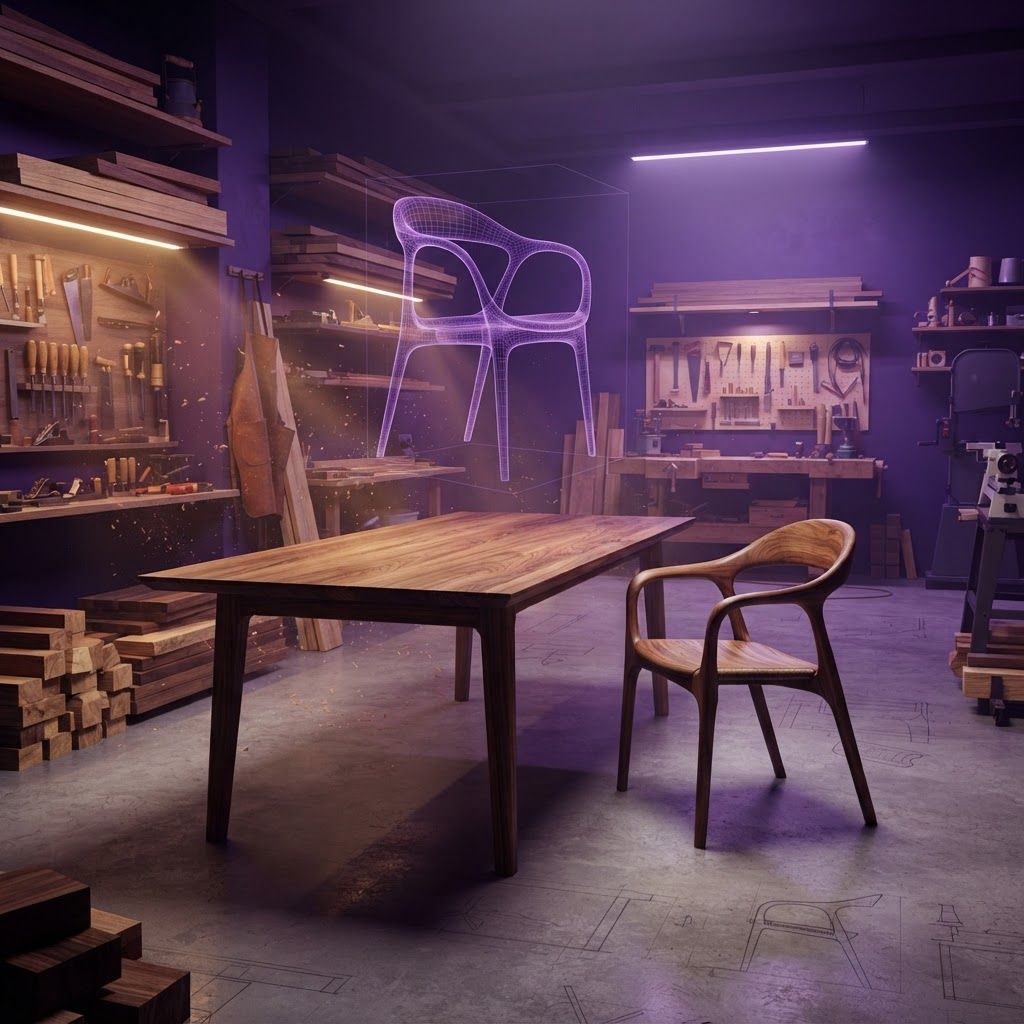
A Craft Tradition Rooted in Regional Hardwood
Western New York sits within one of North America's finest hardwood regions. Cherry, hard maple, red and white oak, walnut, and ash grow throughout the Finger Lakes and Southern Tier, and the availability of quality lumber supported furniture making in and around Rochester long before mass production existed. That tradition never fully disappeared, and it has experienced a genuine revival as buyers grow tired of disposable imported furniture.
The contemporary Rochester furniture scene has two distinct halves. On one side are custom and small-batch makers producing hardwood dining tables, casegoods, and built-ins for residential clients, often working directly with regional sawmills. On the other are commercial manufacturers producing contract furniture, casework, laboratory and healthcare furnishings, and institutional seating for the universities, hospitals, and corporate campuses that anchor the local economy.
What Separates Well-Made Furniture
Construction quality is visible to anyone who knows where to look. Solid hardwood or high-quality veneer over stable substrate outperforms particleboard. Joinery matters: mortise and tenon, dovetail, and properly reinforced corner blocks last generations, while staples and dowels alone do not. Drawer boxes should be solid wood with dovetailed corners and full-extension hardware.
Finish quality determines both appearance and durability. Catalyzed finishes resist moisture and wear well in kitchens and commercial settings, while oil and hardwax finishes offer repairability and a natural feel. For upholstered pieces, frame material, joinery, suspension system, foam density, and fabric rub count all predict lifespan far better than price alone.
Ten Furniture Manufacturers and Workshops in the Rochester Region
1. Amish furniture producers of the Finger Lakes. Workshops in the communities south and east of Rochester produce solid hardwood dining, bedroom, and living room furniture using traditional joinery and locally sourced lumber, sold through regional showrooms.
2. Rochester Woodworks and custom cabinet shops. Local custom shops build kitchens, built-in cabinetry, libraries, and freestanding furniture tailored to specific homes, offering design and installation services.
3. Gerald Rossi and independent studio furniture makers. Studio craftspeople in the region produce commissioned heirloom pieces, sculptural tables, and fine casework, often exhibiting through regional craft organizations.
4. Stickley of Central New York. Though based east of Rochester, this historic American manufacturer produces mission and traditional hardwood furniture domestically and remains widely retailed throughout Upstate New York.
5. Ethan Allen manufacturing and regional retail operations. With North American manufacturing and a long presence in the Rochester market, it supplies domestically produced upholstery and casegoods.
6. Commercial casework and laboratory furniture producers. Regional manufacturers build fume hood enclosures, laboratory benches, and institutional casework for the universities, hospitals, and research facilities in Monroe County.
7. Contract seating and office furniture dealers with local manufacturing partners. Rochester's commercial furniture suppliers work with manufacturers to configure and assemble workstations, systems furniture, and ergonomic seating for regional employers.
8. Reclaimed wood furniture builders. Several area makers salvage timber and flooring from Rochester's industrial buildings and barns, producing tables and shelving with documented provenance.
9. Upholstery and restoration workshops. Regional upholsterers rebuild and reupholster antique and contemporary furniture, extending the life of well-made frames rather than replacing them.
10. Rochester Institute of Technology furniture design program. RIT's woodworking and furniture design programs train designers and makers, and its graduates have seeded many small studios throughout the region.
Trends in Furniture Manufacturing
Sustainability has moved from marketing to specification. Buyers increasingly ask about wood sourcing certification, low-emission finishes and adhesives, and whether pieces can be repaired rather than discarded. Regional makers using local hardwood have a credible story that imported product cannot easily match.
Customization has become more accessible through digital tools. Computer numerical control routing and configurator software allow small shops to offer dimensional and finish variations without the setup penalty that once made custom work prohibitively expensive.
The commercial segment has been reshaped by hybrid work. Employers are converting individual workstation space into collaboration areas, phone rooms, and lounge seating, which has shifted demand toward flexible, reconfigurable furnishings and away from fixed cubicle systems.
Supply chain experience also pushed some buyers toward domestic sourcing. Long ocean freight lead times and container cost volatility made local manufacturers competitive on total cost for projects with tight schedules.
How to Buy Well
Start with intended use and expected lifespan. A dining table meant to survive three decades of family use justifies solid hardwood and traditional joinery; a temporary office fit-out may not. Ask makers about wood species, moisture content, joinery method, finish system, and repair options, and request to see work in progress or completed installations.
For commercial projects, verify applicable testing standards for structural performance and flammability, confirm lead times in writing, and clarify installation responsibility. For custom residential work, expect a deposit structure, a design approval stage, and a realistic schedule, since good shops are usually booked months ahead.
Final Thoughts
Rochester offers an appealing combination for furniture buyers: access to excellent regional hardwood, a living craft tradition, and commercial manufacturers serving demanding institutional clients. Whether the need is a commissioned walnut dining table or a laboratory casework package, working with local makers provides transparency about materials and construction that catalog purchasing rarely delivers.