
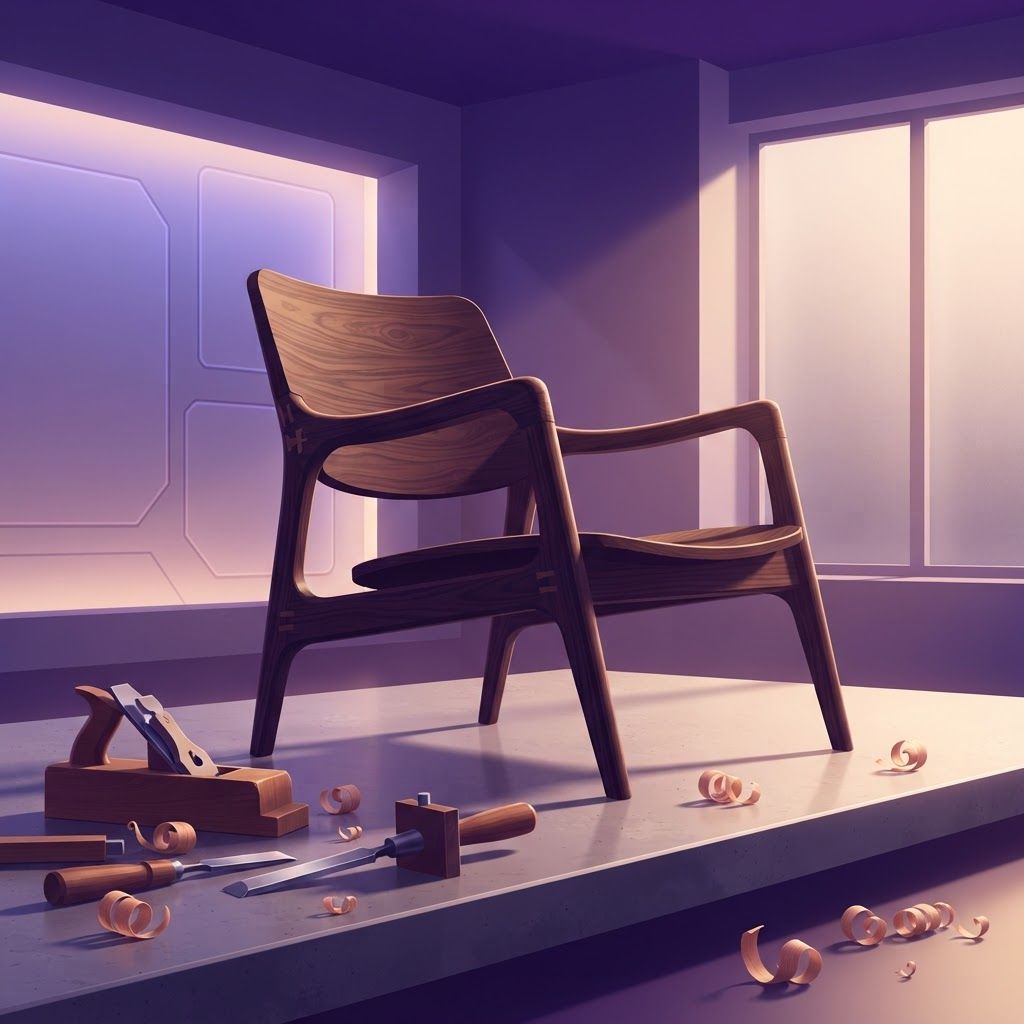
Furniture making has deep roots in Norfolk. The county's market towns supported joiners and cabinetmakers for centuries, and the tradition survives today in a mixture of small workshops, established family firms and contract manufacturers supplying hospitality and commercial projects. The combination of skilled craftspeople, affordable workshop space and a customer base that values quality over disposability has kept the sector genuinely healthy while much volume production moved overseas.
The Norfolk Furniture Landscape
Three distinct segments operate side by side. Bespoke makers produce individual commissions, typically in solid timber, for private clients wanting pieces built to specific dimensions and designs. Kitchen and fitted furniture specialists occupy a large share of the market, since built-in storage and kitchens represent the most common significant furniture purchase. Contract manufacturers supply hotels, restaurants, offices and public buildings, where durability, fire compliance and delivery scheduling dominate.
Restoration and upholstery form a fourth strand, particularly important in a county with a large stock of period property and antique furniture. These skills, including traditional frame repair, springing and hand-finishing, are increasingly rare and correspondingly valuable.
The Top 10 Furniture Manufacturers in Norfolk
1. Norfolk Bespoke Cabinetmakers
Bespoke cabinetmaking workshops across the county design and build individual pieces including dressers, wardrobes, tables and library furniture in solid hardwood. Work is typically drawn, approved and hand-finished, with joints cut for longevity rather than speed. Clients value the ability to match existing period detailing.
2. Wensum Kitchens and Joinery
Kitchen specialists in the Norwich area manufacture fitted kitchens, utility rooms and bootrooms in painted and natural timber finishes. Their advantage over imported systems is dimensional freedom, allowing awkward period rooms to be fitted precisely. Many also produce matching furniture for other rooms.
3. Breckland Contract Furniture
Contract furniture manufacturers supply hospitality and commercial clients with seating, tables and fitted units built to withstand heavy use. Compliance with fire safety requirements for upholstery and finishes is essential in this sector. Production capacity and project scheduling are as important as design.
4. Broadland Upholstery Works
Upholstery businesses in Norfolk produce new sofas and chairs and restore existing frames using traditional and modern techniques. Traditional work involves webbing, hand-tied springs and horsehair or fibre fillings, producing seating that can be renewed repeatedly. Fabric sourcing and pattern matching are core skills.
5. Fenland Oak Furniture
Solid oak furniture makers in west Norfolk produce dining, bedroom and living room pieces using kiln-dried European and British hardwood. Timber selection, moisture content control and finishing determine long-term stability. These makers often offer semi-standard ranges with bespoke sizing.
6. Norwich Design Studio Furniture
Contemporary furniture designers and makers in Norwich produce modern pieces combining timber with metal, glass and composite materials. Digital design and computer-controlled machining allow complex forms with high repeatability. Several sell nationally through galleries and direct commission.
7. Coastal Marine Joinery
Marine joinery specialists build interior fit-outs for boats and yachts, working in confined spaces with curved forms and moisture-resistant materials. The precision required in marine work is exceptional, and these skills transfer well into high-end domestic joinery. Many also undertake bespoke interior commissions.
8. Thetford Timber Products
Timber component manufacturers in the Thetford area supply mouldings, panels, doors and machined components to furniture makers and builders. Access to reliable local machining reduces lead times for workshops without extensive plant. Many operate alongside timber merchanting activity.
9. Norfolk Antique Restoration Workshops
Restoration specialists undertake veneer repair, French polishing, structural consolidation and period-appropriate finishing on antique furniture. This work preserves both objects and rare craft knowledge. Restorers typically advise on conservation ethics as well as repair options.
10. Yare Valley Office Furniture
Office and educational furniture manufacturers and refurbishers in the county supply desking, storage and seating, including refurbished and remanufactured options. Furniture reuse has grown as organisations pursue waste reduction targets. Ergonomic compliance and durability guide specification.
Understanding Quality in Furniture
Materials come first. Solid timber, properly seasoned and with sensible grain orientation, behaves predictably over decades; poorly dried timber will move and split regardless of workmanship. High-quality plywood and medium density fibreboard have legitimate uses, particularly for painted panels and large stable surfaces, so their presence is not automatically a compromise if used appropriately.
Joinery reveals the maker's standards. Dovetailed drawers, mortice and tenon frames, properly fitted backs and drawer runners that operate smoothly under load all indicate care. Finishing is equally important: hand-applied oil, wax or lacquer finishes build depth and can be repaired locally, whereas sprayed factory finishes are consistent but harder to touch up.
How to Commission Bespoke Furniture
Begin with function, not appearance. Measure the space accurately, note what will be stored and consider access routes for delivery, since large finished pieces cannot always negotiate tight staircases. Provide reference images to communicate style, but allow the maker to advise on proportion and construction.
Expect a staged process: initial discussion, drawings, timber selection, deposit, manufacture and installation. Ask about lead times honestly; good workshops are usually booked weeks or months ahead. Confirm what the quotation includes, particularly ironmongery, finishing, delivery and fitting, and agree how variations will be priced.
Finally, consider aftercare. Solid timber furniture benefits from occasional re-oiling and stable humidity. Reputable makers will provide guidance and are usually willing to service their own work years later.
Final Thoughts
Norfolk's furniture manufacturers offer a rare combination of traditional craft skill and modern production capability. Whether commissioning a single dining table or specifying furniture for a commercial project, buying locally provides direct access to the maker, genuine accountability for quality and furniture built to last generations.