
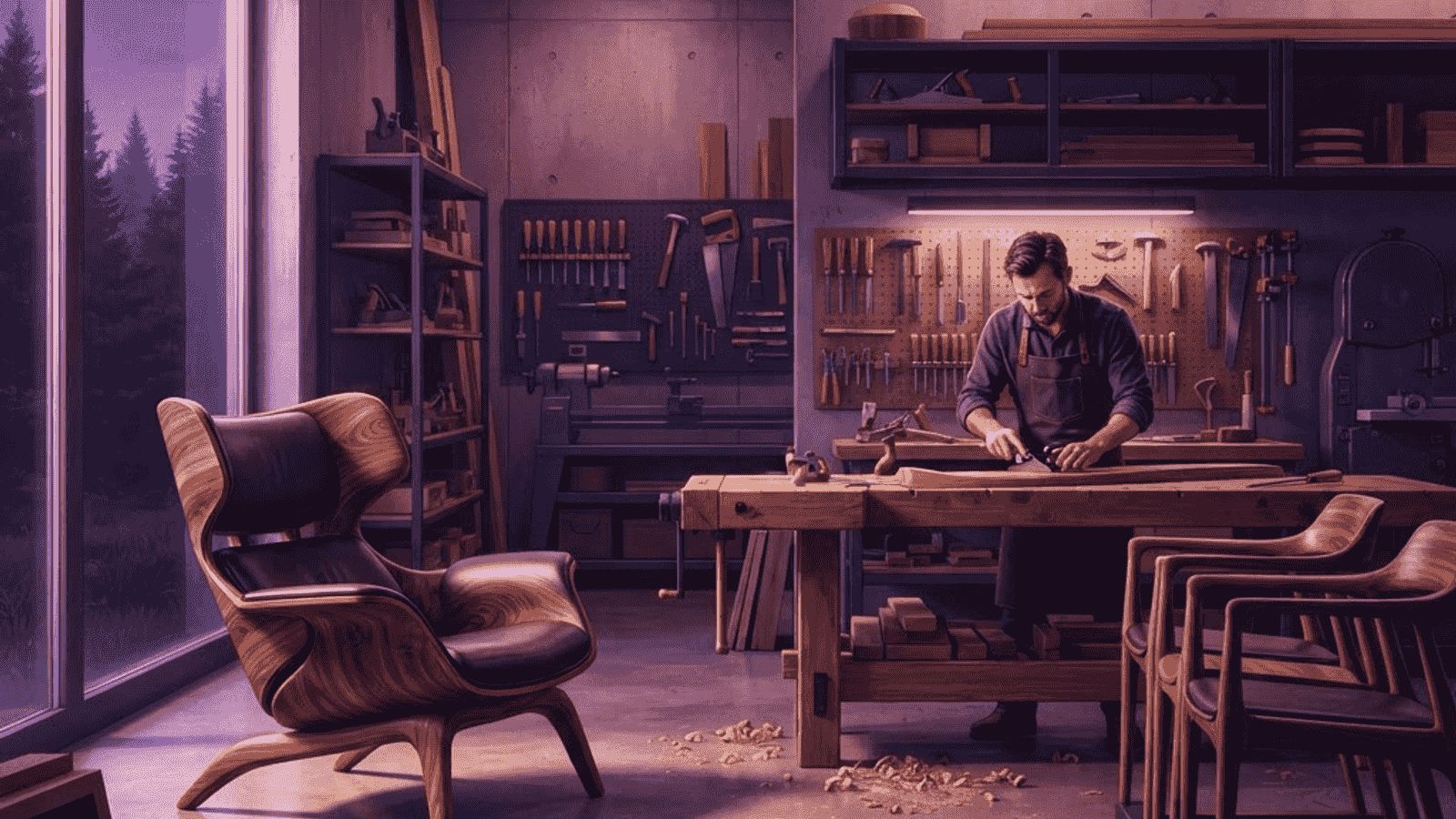
Furniture Making in Southern California
Southern California has an unusually strong claim on modern furniture history. The mid-century period saw designers working in and around Los Angeles produce work that redefined domestic interiors worldwide, and that legacy left behind a durable ecosystem of upholstery workshops, wood shops, metal fabricators, and finishing specialists. Long Beach sits inside that ecosystem, with the added benefit of port access for imported hardwoods, hardware, and components.
The modern local industry divides into several distinct segments. There are heritage design manufacturers producing licensed classics and contemporary collections. There are contract furniture makers supplying offices, hotels, restaurants, and institutions. And there is a large field of custom fabricators serving architects, interior designers, and homeowners who need pieces built to specific dimensions. Each segment has different economics, lead times, and quality expectations.
How These Manufacturers Were Evaluated
Assessment considered craftsmanship, material quality, design capability, sustainability practice, customisation flexibility, and reliability for commercial buyers. Both nationally recognised manufacturers with Southern California presence and regionally focused producers are included.
1. Herman Miller
Herman Miller, now part of MillerKnoll, is among the most influential furniture manufacturers in history, and its ergonomic seating remains a benchmark for workplace and home office use. Its differentiator is research-driven design, with substantial investment in understanding human posture and movement over long working periods. Long product warranties and parts availability also make its pieces attractive for institutional buyers focused on lifecycle cost.
2. Knoll
Knoll built its reputation on a rigorous modernist design philosophy and continues to produce both archival classics and contemporary systems furniture. Its strength lies in the coherence of its catalogue, allowing designers to specify seating, tables, storage, and textiles that work together visually. For commercial interiors in Long Beach seeking a considered, unified aesthetic, that consistency is genuinely valuable.
3. Steelcase
Steelcase specialises in workplace furniture and space planning, with deep expertise in how physical environments affect collaboration and focus. Its research into hybrid work patterns has produced furniture systems designed for flexible reconfiguration. The company's dealer network in Southern California provides space planning, installation, and post-occupancy support, which matters considerably on larger office projects.
4. Haworth
Haworth offers workplace and hospitality furniture with particular strength in adaptable architectural elements such as movable walls and raised access flooring. For Long Beach's growing base of creative and technology tenants occupying converted industrial buildings, that adaptability solves real problems. The company's organic workspace philosophy emphasises furniture that can evolve as teams change rather than requiring replacement.
5. Room and Board
Room and Board manufactures a large share of its collection through small American workshops and is notably transparent about sourcing. Its aesthetic, clean lines with solid hardwoods and natural materials, suits the relaxed coastal modernism common in Long Beach homes. The differentiator is a supply model that supports domestic craft producers while offering retail accessibility and reasonable lead times.
6. Cisco Home
Cisco Home manufactures upholstered furniture in Southern California with a strong commitment to sustainable materials, including responsibly sourced frames, natural latex, and low-impact textiles. Local production means customers can order genuinely custom dimensions and fabrics with shorter lead times than imported alternatives. For designers working on residential projects with specific spatial constraints, that flexibility is decisive.
7. Kravet
Kravet is best known as a textile house but also produces furniture and works extensively with the interior design trade. Its relevance to furniture manufacturing lies in upholstery collaboration, supplying the fabrics and leathers that define a piece's character. The company's breadth of performance textiles is particularly useful for coastal homes and hospitality projects requiring durability against sun exposure and heavy use.
8. Bernhardt Furniture Company
Bernhardt produces residential and contract furniture with a reputation for solid wood construction and considered design collaborations. Its contract division serves hospitality and corporate projects, categories with substantial activity in Long Beach given ongoing hotel and office development. Frame construction quality and eight-way hand-tied upholstery options place it firmly in the durable, long-service segment.
9. Lee Industries
Lee Industries manufactures upholstered furniture in the United States with an environmental focus, including soy-based cushioning and recycled fibre content. Its custom programme allows extensive dimensional and fabric modification, appealing to designers working on bespoke residential interiors. The company's reputation for comfort engineering, rather than purely visual design, distinguishes it in the upholstery market.
10. Design Within Reach
Design Within Reach functions as both retailer and producer of authentic modern designs, offering access to licensed classics alongside contemporary pieces. Its Southern California presence makes it a practical resource for designers and homeowners who need to physically evaluate furniture before specifying. Authenticity assurance is its clearest differentiator in a market saturated with unauthorised reproductions of iconic designs.
Trends in Furniture Manufacturing
Several developments are reshaping the industry. Sustainable material sourcing has moved from niche to expected, with certified wood, recycled textiles, and low-emission finishes now standard requirements on commercial projects. Domestic and near-shore manufacturing has gained ground as brands seek shorter, more predictable lead times. Modularity is increasing, driven by both residential space constraints and commercial reconfiguration needs. Performance textiles have improved dramatically, making light-coloured upholstery viable in family and hospitality settings. Finally, repairability and reupholstery are receiving renewed attention as buyers reject disposable furniture.
Choosing a Furniture Manufacturer
Buyers should examine frame construction and joinery, since these determine longevity far more than surface appearance. Confirm whether upholstery is performed in house, as subcontracted work introduces quality variability. For commercial projects, verify flammability and durability test compliance early, because retrofitting compliance is expensive. Lead times deserve realistic scrutiny, particularly for custom work, and buyers should confirm whether quoted timelines begin at order or at fabric receipt. Finally, ask about parts and reupholstery support, which separates furniture that lasts decades from furniture that merely looks like it will.
Final Thoughts
Furniture manufacturing around Long Beach combines genuine design heritage with practical local fabrication capability. The companies profiled here span workplace systems, heritage modern classics, domestically produced upholstery, and textile expertise. Whether the project is a coastal residence, a boutique hotel, or a flexible creative office, this group offers the craftsmanship, customisation, and reliability that serious specification demands.