
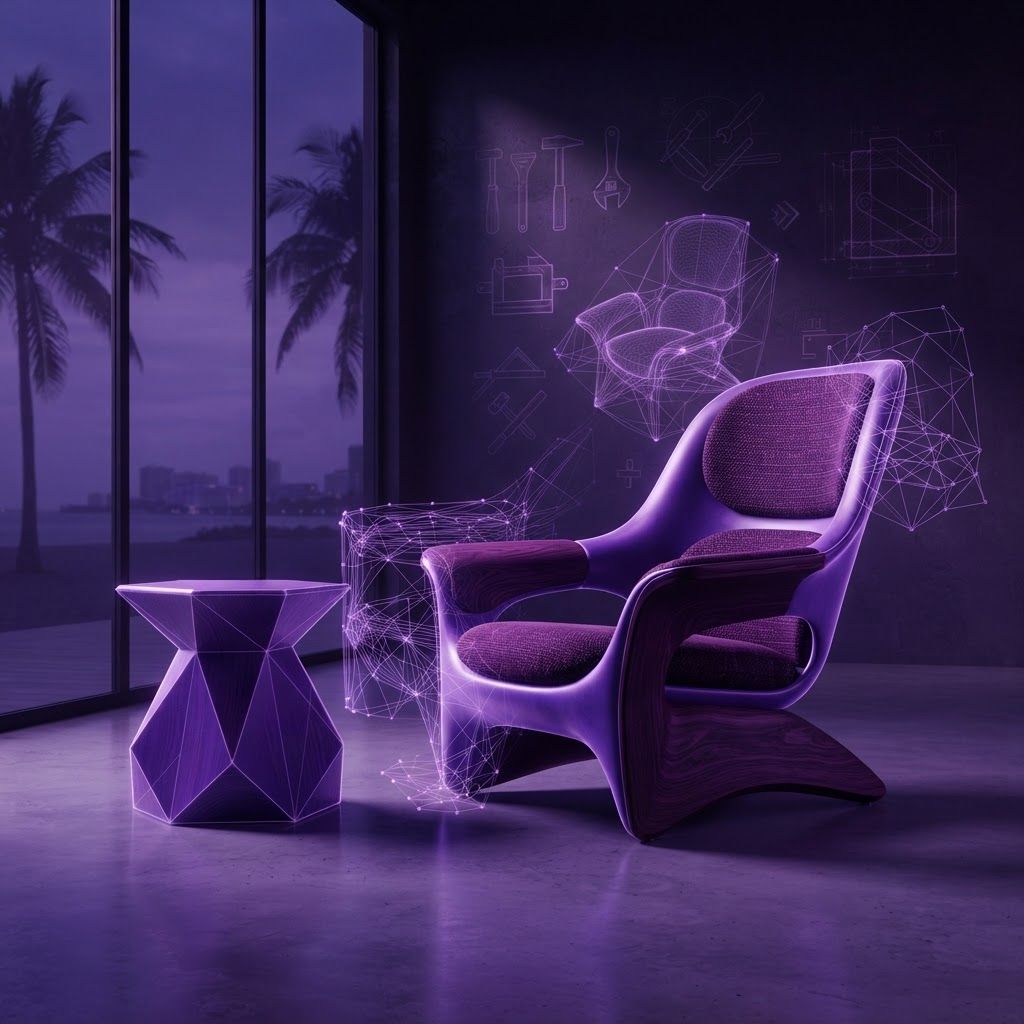
Furniture Making in a Design-Driven Market
Fort Lauderdale supports a furniture manufacturing sector that is small in volume but exceptionally high in value. The drivers are specific and local: a yachting industry that requires custom interior joinery fitted to curved hulls, a hospitality sector continuously renovating hotels and restaurants, a residential market with substantial appetite for bespoke design, and an outdoor living culture that demands furniture capable of surviving relentless sun, humidity, and salt.
These conditions reward makers who combine craft skill with materials science. Furniture that looks beautiful in a showroom but fails within two years on a South Florida terrace has no market here, and buyers have become discerning.
Ten Furniture Manufacturers and Workshops
1. Yacht interior joinery shops clustered around the Dania Cutoff Canal and Marina Mile build custom cabinetry, berths, tables, and paneling for vessels. The work demands precise templating of non-rectilinear spaces, lightweight core construction, and finishes that tolerate constant movement and humidity.
2. Hospitality casegoods manufacturers produce headboards, dressers, desks, and nightstands for hotel renovation programs. Consistency across hundreds of rooms and resistance to guest wear define the specification.
3. Outdoor and patio furniture makers fabricate collections from powder-coated aluminum, teak, and all-weather wicker paired with solution-dyed acrylic cushions. Frame corrosion resistance and quick-dry foam are the technical differentiators.
4. Custom residential furniture studios work directly with interior designers and homeowners on one-of-a-kind dining tables, built-ins, and statement pieces, often incorporating exotic hardwoods, stone, and metal.
5. Commercial millwork and fixture manufacturers build retail displays, reception desks, restaurant booths, and architectural millwork for the region's continuous commercial buildout.
6. Upholstery workrooms produce and reupholster seating using marine-grade vinyls, performance fabrics, and antimicrobial treatments. In a humid climate, foam selection and ventilation design determine whether cushions develop odor or mildew.
7. Metal furniture fabricators create tables, shelving, and structural bases in stainless steel, aluminum, and brass, often combining metalwork with wood or stone tops for designer specifications.
8. Reclaimed and sustainable wood furniture makers work with salvaged timber, including reclaimed pine and locally sourced hardwoods removed after storms, producing pieces with documented provenance that resonates with environmentally conscious buyers.
9. Office and contract furniture manufacturers supply workstations, conference tables, and storage for the region's professional services and coworking sector, increasingly designing for hybrid work patterns with flexible reconfiguration.
10. Rattan and natural fiber specialists continue a long South Florida tradition, producing woven furniture in natural and synthetic fibers that suits the region's tropical design vocabulary while resisting weather when specified correctly.
Materials That Survive the Climate
Humidity is the defining challenge. Solid wood expands and contracts with moisture, and a piece built without allowance for movement will crack or warp. Skilled Fort Lauderdale makers design floating panels, use appropriate joinery, and acclimate material before machining rather than fighting physics afterward.
Marine plywood and engineered cores are widely used in yacht and hospitality work because dimensional stability matters more than solid wood romance. Veneered over a stable core, a panel delivers the appearance of hardwood without the movement.
Finish selection is equally critical. Catalyzed conversion varnishes and two-part polyurethanes resist moisture and ultraviolet far better than simple oil finishes. For outdoor use, teak with a documented maintenance regimen or powder-coated aluminum with a properly prepared substrate are the proven choices.
Cushion construction deserves attention buyers rarely give it. Quick-dry reticulated foam allows water to drain and air to circulate, preventing the waterlogged cushions common in South Florida. Paired with solution-dyed acrylic covers and mesh ticking, it transforms outdoor seating longevity.
Design Trends in South Florida Interiors
Contemporary coastal design has moved decisively away from literal nautical motifs toward a restrained palette of natural textures, warm neutrals, and organic forms. Furniture reflecting that shift features softer edges, mixed materials, and a preference for visible craftsmanship over ornamentation.
Indoor-outdoor continuity is the second defining trend. With sliding wall systems opening living spaces to terraces, clients increasingly want furniture that reads as interior quality but performs as exterior grade. Manufacturers have responded with performance fabrics and weather-tolerant frames that no longer look institutional.
Multifunctionality has grown with denser urban living. Extending tables, nesting pieces, and storage-integrated seating command real demand in condominium interiors where every square foot is expensive.
Custom Versus Catalog
Custom furniture costs more and takes longer, and it is not always the right answer. It makes sense when space is irregular, when a piece must integrate with existing architecture, when durability requirements exceed catalog offerings, or when a client wants something genuinely unique. It rarely makes sense for standard-dimension items where quality production already exists at scale.
The best local makers advise honestly on this distinction. A workshop that tells a client to buy a well-made catalog sofa and spend the custom budget on a dining table sized to the actual room is demonstrating exactly the judgment worth paying for.
Evaluating a Furniture Manufacturer
Inspect joinery on sample pieces. Mortise and tenon, dovetail, and properly executed dowel construction outlast staples and glue alone. Open a drawer and look at the box construction and slide hardware, which reveal build philosophy immediately.
Ask about lead times honestly and expect meaningful duration for custom work; a shop promising immediate delivery on bespoke pieces is either idle or overpromising. Confirm warranty terms, particularly for outdoor pieces where frame and fabric coverage often differ.
Finally, ask to see work in a client environment several years old. In this climate, time is the only honest test of a furniture maker's decisions, and the makers with the strongest reputations in Fort Lauderdale are eager to show it.