
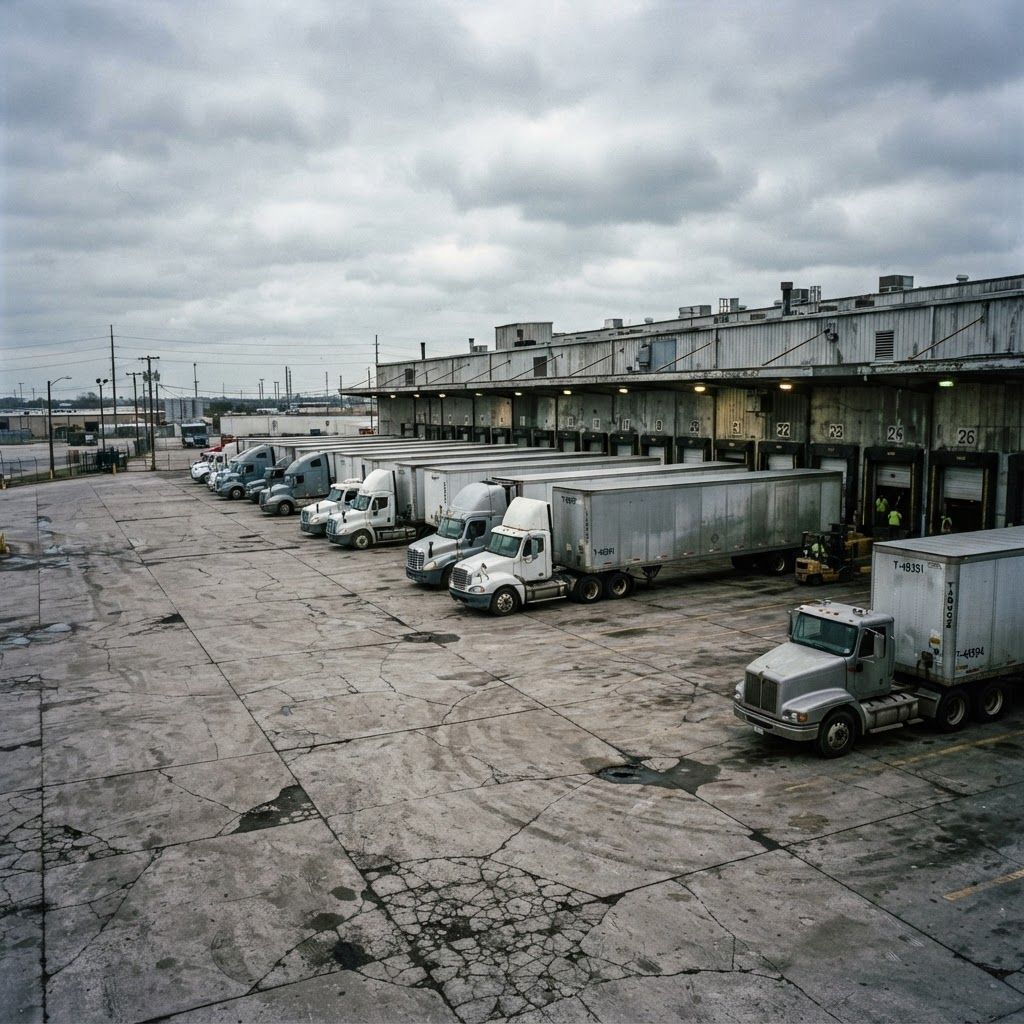
Why Buffalo Punches Above Its Weight in Freight
The Peace Bridge is one of the busiest commercial crossings on the northern border of the United States, and that single fact defines Buffalo's freight economy. Truckloads of automotive components, machinery, processed food, chemicals, paper, and consumer goods move through the region daily, and an entire service ecosystem has grown around clearing, staging, consolidating, and redistributing that volume. Add the region's manufacturing base, its rail connections, and warehouse space that remains inexpensive by coastal standards, and Buffalo becomes a natural inland freight hub rather than merely a border checkpoint.
For shippers, the practical implication is choice. Buffalo supports asset-based carriers with their own trucks and trailers, non-asset brokers who buy capacity in the market, freight forwarders handling international documentation, and hybrid third-party logistics providers that combine all three with warehousing.
Companies Frequently Cited by Western New York Shippers
Try Hours Transportation and TCI Transportation are recognized regional trucking names with a strong Great Lakes footprint. Sonwil Distribution Services and Ridge Logistics are known locally for combining warehousing with regional truckload and less-than-truckload distribution. ATC Logistics and Buffalo Logistics Group operate on the brokerage and managed-transportation side, arranging capacity across dozens of carriers rather than running large fleets themselves.
National carriers with meaningful Buffalo terminals include XPO, Old Dominion Freight Line, Estes Express Lines, and ArcBest, all of which serve the less-than-truckload market where most small and mid-sized shippers live. On the cross-border side, Livingston International and other customs brokerage specialists provide the clearance expertise that makes the corridor function, while intermodal providers connect Buffalo to inland ports and coastal terminals through rail ramps in the region.
Service Types and When to Use Them
Truckload service makes sense when volume fills or nearly fills a trailer, when transit time is tight, or when a shipment should not be handled at intermediate terminals. Less-than-truckload service pools freight from multiple shippers and suits pallet-count shipments where cost matters more than speed. Intermodal moves containers or trailers by rail for the long middle portion of a journey, trading a day or two of transit for meaningful savings on lanes over roughly seven hundred miles.
Specialized freight is a real strength in the Buffalo market. Flatbed and step-deck equipment supports the region's steel, machinery, and construction sectors. Temperature-controlled capacity serves food processors and pharmaceutical distributors. Heavy-haul and oversize permitting expertise is available locally, which matters when moving industrial equipment across state and provincial lines.
What Separates a Strong Freight Partner
Capacity is table stakes. The differences show up in four areas. Visibility comes first: shippers now expect tracking that updates automatically, with proactive alerts when a shipment falls behind rather than a phone call after it arrives late. Second is claims handling, because damage and shortage disputes are inevitable and the speed and fairness of resolution tells you more about a carrier than any sales presentation.
Third is cross-border competence. Documentation errors at the Peace Bridge create expensive delays, and carriers that pre-file electronic manifests correctly and maintain strong relationships with customs brokers simply move faster. Fourth is pricing transparency. Accessorial charges for detention, layover, reconsignment, liftgate service, and residential delivery can add substantially to a base rate, and the best partners disclose them clearly up front.
Industry Trends Affecting Buffalo Shippers
Freight markets have become more volatile, cycling between capacity shortages and rate softness faster than they once did. Shippers who maintain relationships with both asset carriers and brokers weather those swings better than those relying on a single channel. Digital freight matching has compressed quote times from hours to minutes, though experienced shippers still value a human who understands their unusual lanes.
Sustainability reporting has moved from optional to expected, particularly for shippers serving large retailers and automotive customers. Carriers are responding with emissions data, aerodynamic equipment, and modest electric deployment on short regional runs. Meanwhile, driver availability continues to shape service quality, and carriers with strong retention consistently deliver better on-time performance than those cycling through new hires.
How to Run a Sensible Selection Process
Begin by documenting your actual freight profile: lanes, weights, commodity types, seasonality, dock hours, and service expectations. Vague requirements produce vague quotes. Request rates for your real lanes rather than generic zones, and ask each provider to identify which lanes they consider core and which they would broker out.
Verify operating authority, insurance limits, and safety scores. Ask for references from shippers of similar size, since a carrier excellent at moving fifty loads a week for one large customer may not serve a company shipping five. Finally, start with a trial period on a subset of lanes. Freight relationships reveal themselves under pressure, and a limited pilot exposes problems before they affect your whole network.
Final Thoughts
Buffalo's freight sector combines border expertise, industrial heritage, and affordable warehouse capacity in a way few midsize markets can match. The strongest providers here are not necessarily the largest; they are the ones who understand cross-border documentation, communicate proactively when plans change, and price honestly. Define your requirements precisely, test with real volume, and the region offers freight partners capable of supporting serious growth.