
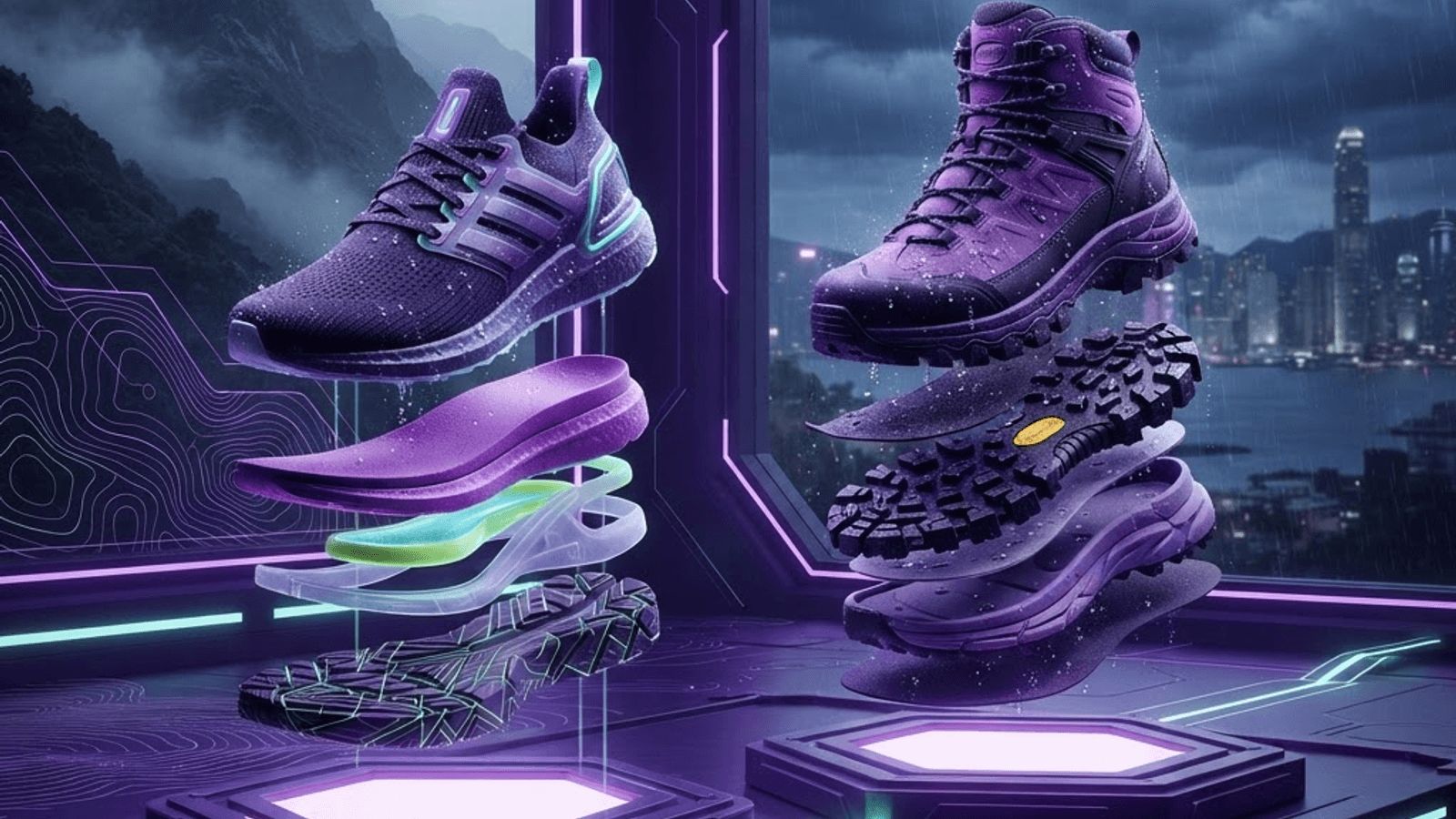
What Vancouver Demands from Footwear
Vancouver's climate is specific in ways that matter enormously for shoes. The city receives substantial rainfall spread across many months rather than concentrated in storms, which means footwear is not occasionally soaked but persistently damp. Temperatures rarely fall to extremes, so heavy insulation is unnecessary, but cool wet conditions are relentless. Meanwhile, the North Shore mountains put technical trails within a short drive, the seawall invites long walks, and the city's hills and frequently slick pavement demand real traction.
This produces an unusual requirement set. The ideal Vancouver shoe is waterproof or at least water-resistant, breathable enough to be comfortable in mild temperatures, grippy on wet surfaces, and presentable enough for ordinary life. Very few shoes do all four well, which is why most residents end up with a small, deliberate rotation rather than a single pair.
Ten Brands That Perform in the Region
Arc'teryx extends its technical outerwear philosophy into footwear with approach shoes, trail runners and hiking boots built around precise fit and minimal-seam construction. The design priority is a shoe that behaves predictably on wet rock and steep terrain, which is exactly what the North Shore delivers, and the brand's Vancouver origins mean its products are tested in local conditions.
Salomon has a very strong following among the city's trail runners and hikers. Its aggressive lug patterns handle the mud and root-laden trails of the Coast Mountains well, its quick-lace systems are genuinely convenient, and its waterproof membrane models are among the most widely worn on local trails during the wet season.
Blundstone occupies a specific and beloved place in Vancouver's footwear culture. The pull-on Chelsea boot design has no laces to soak, sheds water well, and is acceptable in almost any setting from a job site to a restaurant. Its popularity in the city is genuinely functional rather than merely fashionable, though it has become both.
Vessi was founded in Vancouver and built its entire proposition around the local problem, producing knit sneakers with a fully waterproof construction rather than a waterproof liner inside a permeable upper. A lightweight, breathable, machine-washable waterproof sneaker addresses the daily-wear gap precisely, and the brand's growth reflects how real that gap was.
Hoka has become widely worn for road running, walking and standing all day, on the strength of substantial midsole cushioning and a rocker geometry that reduces strain. Vancouver's seawall, extensive walking culture and large healthcare workforce all favour maximum-cushion footwear, and the brand's waterproof trail models handle local conditions well.
Merrell covers the accessible end of hiking and outdoor footwear with a broad range of waterproof models at moderate prices. For someone who hikes occasionally rather than seriously, the brand offers most of the functional benefit without the specialist price, and its fit tends to suit wider feet better than several competitors.
Sorel handles the coldest and wettest end of the spectrum with insulated waterproof boots. While Vancouver itself rarely gets severely cold, residents travel to the interior, to Whistler and to the prairies, and slush on city streets during a cold snap is genuinely unpleasant in inadequate footwear.
Allbirds appeals to the sustainability-conscious segment with wool and eucalyptus fibre uppers and renewable-material soles. The wool models are comfortable in Vancouver's mild temperatures and manage moisture reasonably well, though they are water-resistant rather than waterproof and are best treated as fair-weather shoes.
Vans maintains deep roots in the city's skate and board sports culture, and its influence on Vancouver street style has been persistent for decades. Its waterproof and weather-resistant editions have made the aesthetic more practical for local conditions without abandoning the original design language.
Dayton Boots deserves a place for heritage reasons and for genuine build quality. Manufactured in Vancouver, its welted leather boots are made to be resoled repeatedly, which makes them an unusual proposition in an industry oriented toward replacement. For someone willing to invest and maintain, a resoleable boot can outlast a dozen pairs of ordinary shoes.
Understanding Waterproofing
Waterproofing claims are often loosely worded, and the distinctions matter. A waterproof membrane bonded inside the shoe blocks liquid water while allowing some vapour to escape, which is the standard approach in hiking footwear. It works well until the membrane is punctured or the upper becomes saturated, at which point water enters through seams or the collar. Water-resistant treatments applied to the surface repel light rain but wet out under sustained exposure and need periodic reapplication.
Fully waterproof constructions, where the upper material itself is impermeable, avoid the membrane failure problem but generally sacrifice breathability. In Vancouver's mild temperatures that trade-off is often acceptable, which explains the local popularity of this approach for everyday shoes.
The practical wisdom among long-term residents is that no shoe stays dry through a genuinely wet day of walking, and the more useful question is how quickly it dries overnight. A shoe that soaks through but dries by morning is more liveable than one that keeps water out until it fails and then stays damp for two days.
Traction and Fit
Wet traction depends on both tread pattern and rubber compound, and the compound often matters more. Softer rubber grips wet surfaces better and wears faster, which is a genuine trade-off rather than a defect. For city walking on wet concrete and painted crosswalks, a softer compound with fine siping outperforms deep aggressive lugs, which are designed for soft ground and can actually reduce contact area on hard wet surfaces.
Fit deserves more attention than most buyers give it. Feet swell during the day and on long walks, so trying shoes late in the day gives a more accurate result. Allow roughly a thumb's width of space at the toe for anything you will walk downhill in, since your foot slides forward on descents. Heel lock matters more than overall snugness, because a heel that lifts creates blisters regardless of how well the rest fits.
Making Footwear Last in a Wet Climate
Maintenance has an outsized effect on lifespan in this climate. Dry shoes away from direct heat, since radiators and heaters crack leather and can delaminate adhesives. Boot dryers that use gentle airflow are far better. Rotate between two pairs so each has a full day to dry properly, which is probably the single most effective habit for extending footwear life in Vancouver.
Reapply water-repellent treatment periodically rather than once, and clean off accumulated dirt first because grime prevents treatments from bonding. Condition leather to prevent it drying out and cracking. And for welted boots, resole before the sole wears through into the welt, since repair becomes far more expensive once structural components are damaged.
Final Thoughts
Building a footwear rotation for Vancouver usually means three things: a waterproof everyday shoe for the wet season, a trail-capable boot or shoe with real wet traction, and something comfortable and breathable for the genuinely lovely dry summer. The brands profiled here each solve part of that problem well, from the locally invented waterproof sneaker approach of Vessi to the alpine engineering of Arc'teryx and the resoleable longevity of Dayton. Choose for the conditions you actually encounter, prioritize fit over specification, and maintain what you buy, because in this climate care matters as much as the purchase.