
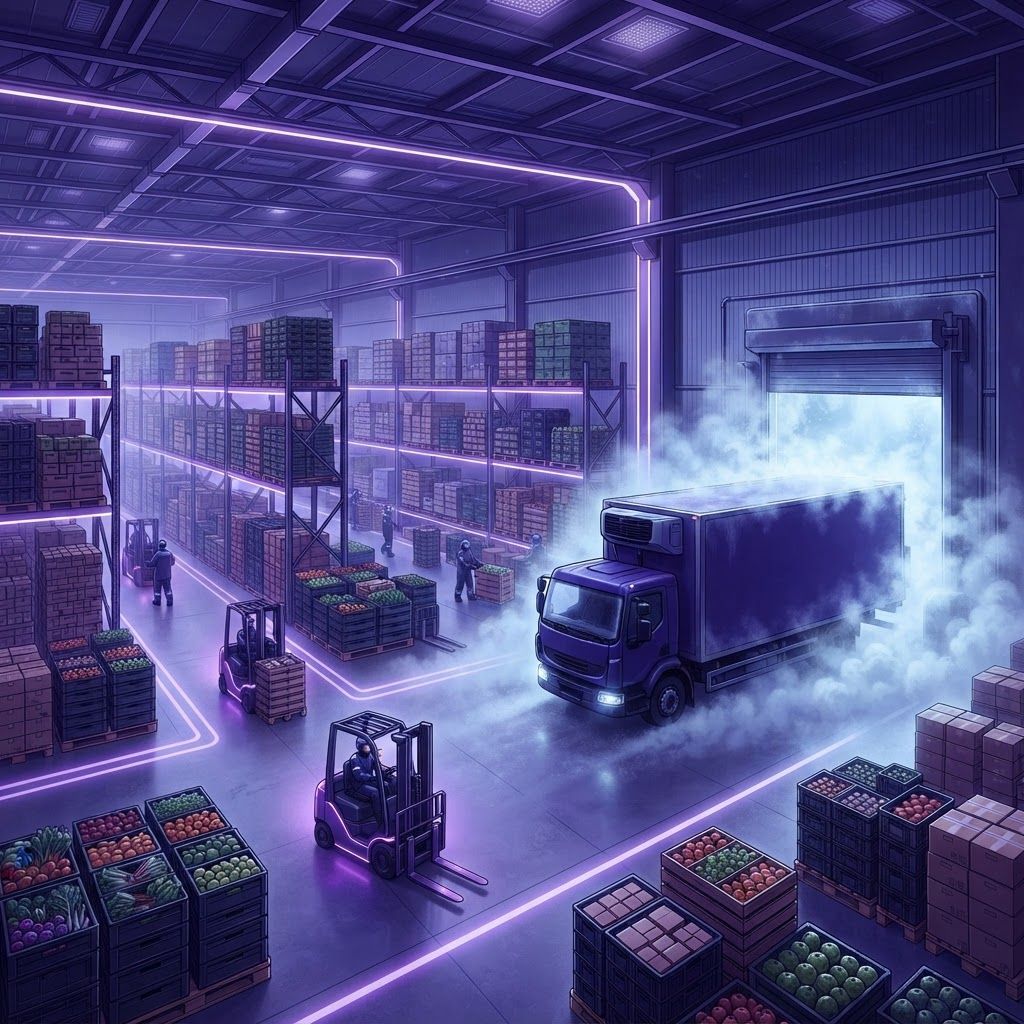
Feeding a Region: Food Distribution in Toledo
Food wholesale is one of the most demanding forms of distribution because the product is perishable, the regulations are strict, and the customers operate on daily cycles that leave no room for late deliveries. Toledo's food distribution network serves restaurants, institutional kitchens in schools and hospitals, grocery retailers, convenience stores, and food manufacturers, and it does so from a genuinely advantageous position.
Northwest Ohio sits inside one of the most productive agricultural regions in the country, with grain, produce, dairy, and protein production nearby. The metropolitan area also has excellent highway access and substantial cold storage capacity. That combination allows distributors to offer both broadline coverage and locally sourced items with short transit times, which matters increasingly to chefs and grocers whose customers ask where food comes from.
Ten Food Wholesalers and Distribution Categories
1. Broadline Foodservice Distributors
These distributors carry thousands of items across frozen, refrigerated, dry, disposables, and cleaning supplies, allowing an operator to consolidate purchasing into a few deliveries per week. Their strengths are one-stop convenience, ordering technology, and consultative support on menu costing.
2. Produce Wholesalers
Fresh fruit and vegetable specialists manage the most perishable category, requiring daily buying, careful grading, and rapid turns. The best operations maintain relationships with regional growers during Ohio's season while sourcing nationally year-round.
3. Meat and Protein Purveyors
Beef, pork, poultry, and seafood suppliers offer custom cutting, portion control, and grading expertise. For restaurants, a purveyor who can deliver consistent portion weights protects food cost more reliably than any menu adjustment.
4. Dairy and Refrigerated Distributors
Milk, cheese, butter, eggs, and yogurt require tight temperature control and frequent delivery. Regional dairy processing means short supply chains and strong freshness dating for Toledo operators.
5. Bakery and Frozen Dough Suppliers
Par-baked breads, frozen dough, and finished pastries allow kitchens without bakeries to serve fresh baked product. Consistency in proofing and baking instructions is what separates good suppliers from difficult ones.
6. Specialty and Ethnic Food Importers
Toledo's diverse communities and restaurant scene support importers of Middle Eastern, Latin American, Asian, and European ingredients. These wholesalers provide authenticity and depth that broadline catalogs cannot match.
7. Beverage Distributors
Soft drinks, juices, coffee, tea, and non-alcoholic beverages, along with dispensing equipment and service, form a distinct distribution channel with its own equipment maintenance obligations.
8. Institutional and School Food Suppliers
Schools, hospitals, and correctional facilities purchase under nutritional guidelines and competitive bidding rules. Suppliers serving them must provide detailed nutritional documentation and rigid delivery scheduling.
9. Cash and Carry Wholesale Outlets
Warehouse-style outlets let small operators, caterers, and food trucks buy in bulk without meeting delivery minimums, providing valuable flexibility for emergency needs and variable volume businesses.
10. Local Farm Aggregators and Food Hubs
Aggregators consolidate output from multiple small farms into a single order and invoice, making local sourcing practical for restaurants and institutions that cannot manage dozens of individual grower relationships.
Cold Chain and Food Safety Expectations
Food safety is not a differentiator among credible wholesalers; it is the entry requirement. Buyers should confirm that suppliers operate under a documented food safety plan, maintain third-party audit certification, monitor and record temperatures throughout storage and transport, and can trace any lot backward to its source and forward to every customer who received it.
Recall readiness deserves specific attention. Ask how quickly a supplier can identify affected customers, how notification occurs, and what the credit process looks like. An operator who discovers these answers during an actual recall is already behind.
Delivery practice matters as much as warehouse practice. Refrigerated trucks with functioning monitoring, drivers trained to protect temperature during unloading, and delivery windows that avoid leaving product on a dock unattended all protect the food after it leaves the warehouse.
Trends Shaping Foodservice Distribution
Labor pressure in kitchens has increased demand for value-added products: pre-cut produce, portioned proteins, and prepared components that reduce skilled prep labor. Distributors have expanded these lines substantially, and operators are weighing the higher unit cost against reduced labor and waste.
Menu transparency continues to grow. Allergen documentation, ingredient statements, and sourcing information are requested routinely, and distributors with clean, complete product data win business from those with incomplete catalogs.
Sustainability has become concrete rather than aspirational. Food waste reduction programs, recyclable and compostable disposables, and reduced-packaging bulk formats are increasingly specified, particularly by institutional buyers with published environmental commitments.
Technology adoption has accelerated. Online ordering with real-time inventory, order guides tied to recipe costing, and delivery tracking are now standard expectations. Distributors offering integration with restaurant management systems help operators control food cost with far less manual work.
Selecting a Food Wholesaler
Evaluate fill rate above all else. A distributor with excellent pricing and an eighty-five percent fill rate will cost you more in menu substitutions and emergency purchases than a slightly pricier supplier who delivers what you ordered. Ask for documented fill rate performance, not a general assurance.
Then consider account support. A knowledgeable representative who understands your menu, alerts you to market changes in commodity categories, and helps plan around seasonal pricing adds measurable value. Finally, structure your supply base intentionally: a broadline distributor for breadth, specialists for the categories that define your food, and a cash and carry option for gaps.
Conclusion
Toledo's food wholesalers combine access to a rich agricultural region with the cold chain infrastructure and logistical position to serve a wide territory reliably. For any operator, the right mix of broadline convenience and specialist quality, backed by verifiable food safety practice and honest fill rates, is what keeps a kitchen running and a menu profitable.