
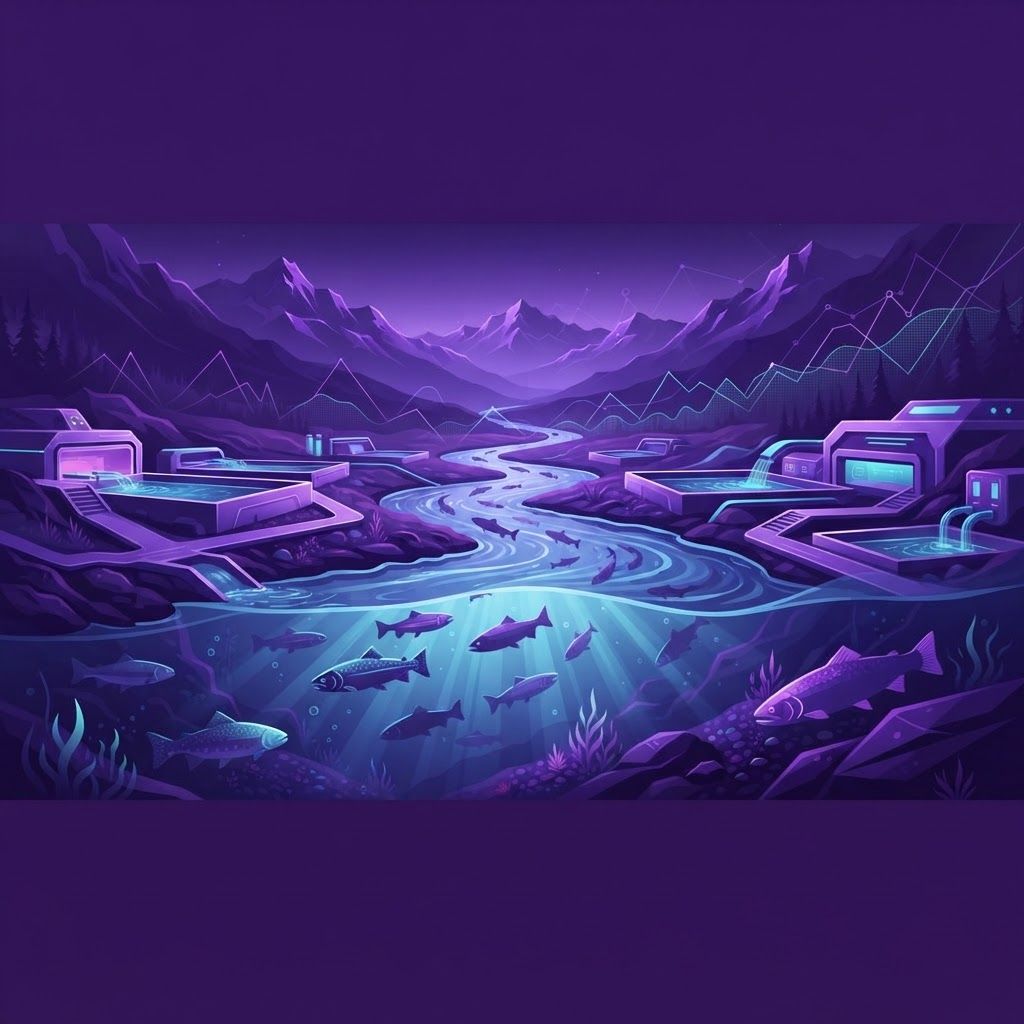
Idaho is one of the largest producers of farmed trout in the United States, and the corridor running through and beyond Boise City plays a central role in that industry. Cold, high-volume spring water, consistent year-round temperatures and clean aquifers create nearly ideal conditions for salmonid aquaculture. Around that natural advantage has grown a cluster of fishery businesses that handle production, processing, hatchery genetics, equipment supply and fisheries consulting.
Why Fishery Companies Matter in the Boise City Region
The fishery sector connects several parts of Idaho's economy. It supplies restaurants and grocery chains with regionally raised protein, provides stocking fish for public waters and private ponds, exports processed product nationally, and supports recreational fishing, which is itself a significant tourism driver. Because aquaculture is highly sensitive to water quality, these companies also function as stewards and monitors of the watersheds they depend on, often maintaining more detailed water data than any other private operators in the area.
What Sets a Quality Fishery Operation Apart
Evaluating a fishery company begins with water. Flow rate, temperature stability, oxygenation and effluent management determine both fish health and regulatory standing. Next comes biosecurity: disease prevention protocols, quarantine practices and certified pathogen-free stock protect not just one facility but the entire regional industry. Feed conversion efficiency and welfare practices influence cost and product quality alike. Finally, processing standards, cold-chain integrity and traceability determine whether product can reach premium retail and foodservice channels.
The Top 10 Fishery Companies in Boise City
1. Snake River Trout Company
The most established name in the regional trout trade, Snake River Trout Company raises rainbow trout in spring-fed raceways and handles its own filleting and cold storage. Consistent sizing, careful harvest handling and rapid chilling have made it a dependable supplier to restaurants and specialty grocers across the Northwest.
2. Boise Valley Aquaculture
Boise Valley Aquaculture operates recirculating aquaculture systems that reuse and filter water rather than relying on continuous flow. This approach reduces water withdrawal dramatically and allows precise control of temperature and oxygen, supporting year-round production of trout and specialty species.
3. Idaho Spring Water Fisheries
Focused on hatchery production, Idaho Spring Water Fisheries supplies fingerlings and eyed eggs to grow-out farms and pond owners. Its selective breeding program emphasizes growth rate, disease resistance and uniformity, and its certified health status is a significant asset for buyers concerned about biosecurity.
4. Treasure Valley Seafood Distributors
Serving as the market bridge, Treasure Valley Seafood Distributors moves locally farmed trout alongside coastal seafood into Idaho restaurants and retailers. Its strength lies in cold-chain logistics and inventory discipline, allowing chefs in Boise City to build menus around reliable weekly availability.
5. Sawtooth Sport Fish Hatchery Services
Sawtooth Sport Fish Hatchery Services specializes in stocking private lakes, reservoirs and community fishing ponds. Beyond delivering fish, it provides habitat assessment, aeration recommendations and long-term population management plans, which has made it a frequent partner for landowners and municipal recreation programs.
6. Owyhee Cold Water Fish Farms
Operating multiple raceway sites, Owyhee Cold Water Fish Farms raises trout and char with a strong emphasis on effluent treatment and settling pond management. Its investment in nutrient capture has positioned it well as discharge standards have tightened across the region.
7. Capital City Fish Processing
Capital City Fish Processing focuses exclusively on the post-harvest side, offering custom filleting, smoking, portioning and vacuum packaging for regional producers. By providing certified processing capacity, it allows smaller farms to reach value-added markets without building their own plants.
8. High Desert Aquatic Systems
An equipment and engineering specialist, High Desert Aquatic Systems designs and installs pumps, aerators, filtration units and monitoring sensors for aquaculture facilities. Its technicians are widely used across Idaho for system commissioning and emergency response, since oxygen failure in a raceway is measured in minutes rather than hours.
9. Foothills Fisheries Consulting Group
Foothills Fisheries Consulting Group provides biological surveys, permitting assistance, water quality monitoring and fish health diagnostics. Its work supports both commercial operators and conservation projects, giving it unusual visibility into how aquaculture and wild fisheries interact in Idaho watersheds.
10. Basin Sturgeon and Specialty Species
Rounding out the list, Basin Sturgeon and Specialty Species pursues niche production including sturgeon and alternative cold-water species. Long production cycles demand patient capital and meticulous husbandry, and the company's research partnerships have contributed practical knowledge to the broader industry.
Trends in Idaho Aquaculture
Water efficiency is the defining trend. Recirculating systems, improved effluent treatment and precise feeding strategies all aim to produce more protein from less water. Consumer interest in traceable, domestically raised seafood is strengthening demand for Idaho trout, particularly among chefs who can name the source watershed. Automation in feeding, grading and monitoring is reducing labor pressure, while genetics work continues to improve feed conversion and disease resilience. Regulatory attention to nutrient discharge is likely to keep rising, rewarding operators who invested early.
Choosing the Right Fishery Partner
Restaurants and retailers should prioritize consistency, cold-chain reliability and clear traceability. Pond owners and private landowners need stocking expertise and honest habitat assessment rather than the largest available fish. Producers expanding capacity should focus on engineering support and hatchery health certification. Across all of these needs, the Boise City region offers a depth of aquaculture knowledge that few inland markets can match, built on the simple advantage of abundant cold, clean water and decades of accumulated expertise.