
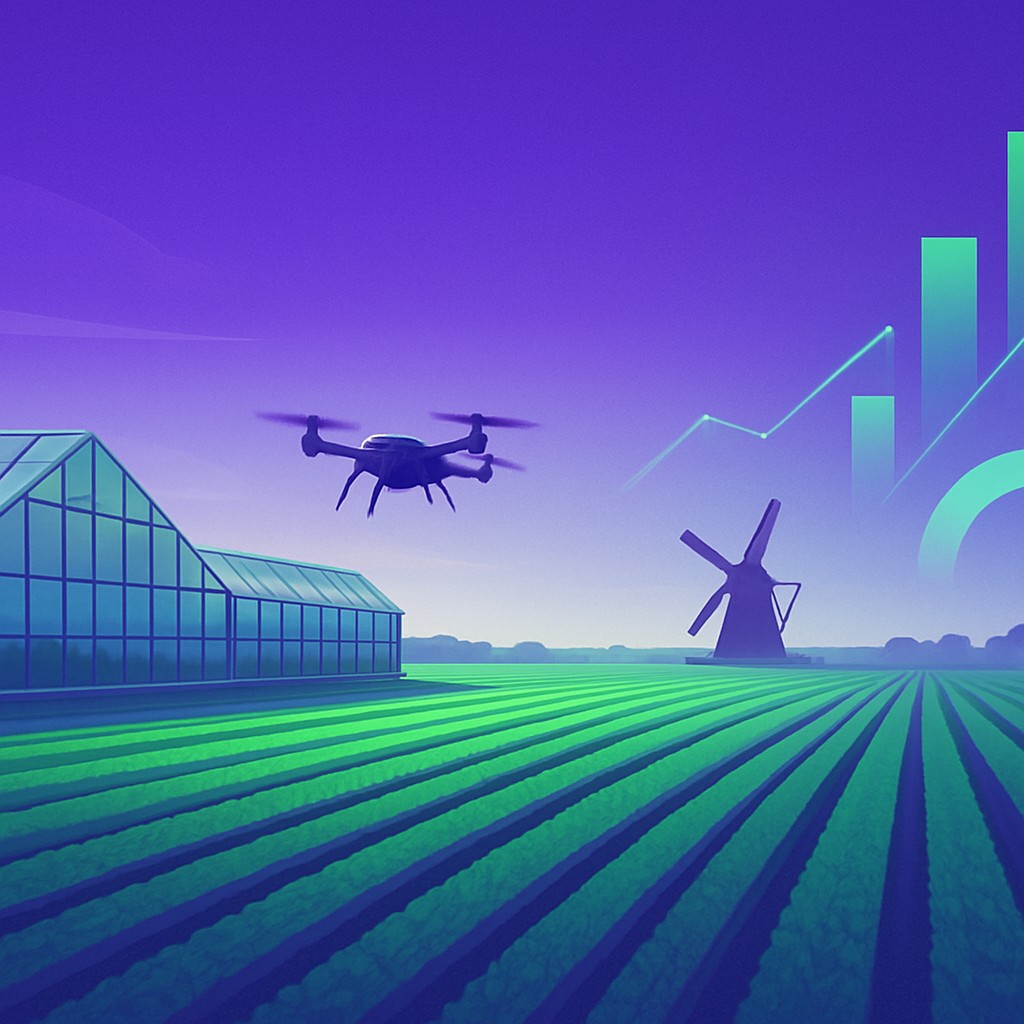
The Netherlands: A Global Agricultural Leader
Despite its modest size, the Netherlands ranks among the world's largest agricultural exporters, a remarkable achievement rooted in innovation, efficiency, and a culture of relentless improvement. Dutch farming companies have pioneered techniques in greenhouse cultivation, precision agriculture, and circular farming that are now studied and adopted across the globe. The phrase "twice as much food using half as many resources" has become a guiding philosophy for the sector.
This success is no accident. It stems from close collaboration between farmers, researchers at institutions such as Wageningen University, and technology companies that supply data-driven tools. Together, they have transformed a country with limited arable land into an agricultural model admired worldwide.
What Defines a Top Dutch Farming Company
The leading farming enterprises in the Netherlands combine scale with sustainability. They invest heavily in technology, from climate-controlled greenhouses and automated harvesting to soil sensors and artificial intelligence that optimize water and fertilizer use. Equally important is their commitment to environmental stewardship, with many adopting circular practices that reuse nutrients, reduce emissions, and minimize waste.
Strong export networks are another hallmark. Dutch farming companies supply fresh produce, dairy, flowers, and seeds to markets throughout Europe and beyond. Their reputation for quality, traceability, and food safety underpins this global reach.
Leading Farming Companies in the Netherlands
Royal A-ware stands out as a vertically integrated dairy company, managing everything from milk production to cheese maturation and distribution. FrieslandCampina, one of the largest dairy cooperatives in the world, is owned by thousands of member farmers and produces a vast range of dairy products exported globally. In horticulture, Royal ZON and large greenhouse operators such as Duijvestijn Tomaten demonstrate how energy-efficient, geothermal-powered greenhouses can produce premium vegetables year-round.
Agrifirm is a major agricultural cooperative supporting farmers with feed, crop inputs, and expertise, while Vion Food Group is a leading player in meat production with a focus on sustainability and animal welfare. Lamb Weston / Meijer processes potatoes into globally distributed products and works closely with Dutch growers. HZPC and Agrico are renowned for seed potato breeding, supplying varieties to farmers in dozens of countries.
In flowers and ornamental crops, Dümmen Orange is a global leader in breeding and propagation, while Beekenkamp Group spans plant production and horticultural systems. These companies collectively showcase the breadth of Dutch agriculture, from dairy and meat to potatoes, vegetables, and flowers.
Innovation and Technology in Dutch Farming
Technology is at the heart of Dutch agricultural success. Precision farming uses GPS-guided machinery, drones, and sensors to apply water, seeds, and nutrients with extraordinary accuracy, boosting yields while reducing inputs. Vertical farming and high-tech greenhouses allow crops to grow in controlled environments that are largely independent of weather, dramatically increasing productivity per square meter.
Circular agriculture, a concept strongly promoted in the Netherlands, aims to close nutrient loops by reusing organic waste as fertilizer and animal feed. This reduces dependence on imported resources and lowers the environmental footprint of farming. Many Dutch companies are also exploring alternative proteins and insect farming as part of a broader shift toward sustainable food systems.
Sustainability and the Future of Dutch Agriculture
Dutch farming companies face the dual challenge of feeding a growing population while reducing their environmental impact. Nitrogen emissions, water management, and biodiversity preservation are pressing concerns that the industry is actively addressing through innovation and policy collaboration. Many leading firms have committed to ambitious carbon reduction goals and are investing in renewable energy, including geothermal heating for greenhouses and solar power for farm operations.
Consumer demand for transparency and sustainability is also shaping the market. Shoppers increasingly want to know where their food comes from and how it was produced, prompting companies to invest in traceability systems and clear labeling.
Export Strength and Global Influence
The export prowess of Dutch farming companies is staggering for a country of its size. Strategically located ports such as Rotterdam, combined with efficient logistics and cold-chain infrastructure, allow Dutch agricultural products to reach markets across Europe, the Middle East, Asia, and the Americas. Dairy, flowers, vegetables, seeds, and processed foods flow outward in vast quantities, generating substantial economic value and reinforcing the country's reputation for quality and reliability.
This global influence extends beyond physical exports. Dutch agricultural expertise is itself a valuable commodity, with companies and research institutions sharing knowledge, technology, and training with farmers around the world. Many Dutch firms operate internationally, establishing greenhouses, breeding stations, and distribution networks on multiple continents. In this way, the innovations developed in the Netherlands ripple outward, raising productivity and sustainability standards globally.
Collaboration and the Knowledge Economy
A defining feature of Dutch agriculture is the close collaboration between farmers, businesses, research institutions, and government, often referred to as the "golden triangle." Wageningen University and Research stands at the center of this ecosystem, conducting world-leading studies that feed directly into commercial innovation. Farming companies partner with researchers to test new varieties, refine cultivation techniques, and solve emerging challenges such as disease resistance and climate adaptation. This culture of shared knowledge accelerates progress and ensures that scientific breakthroughs translate quickly into practical, on-farm improvements that benefit the entire sector.
Conclusion
The Netherlands continues to set the global standard for productive, sustainable agriculture. Its leading farming companies blend cutting-edge technology with deep agronomic expertise and a strong commitment to environmental responsibility. As the world grapples with food security and climate change, the innovations pioneered by Dutch farming enterprises offer a compelling blueprint for the future of agriculture.