
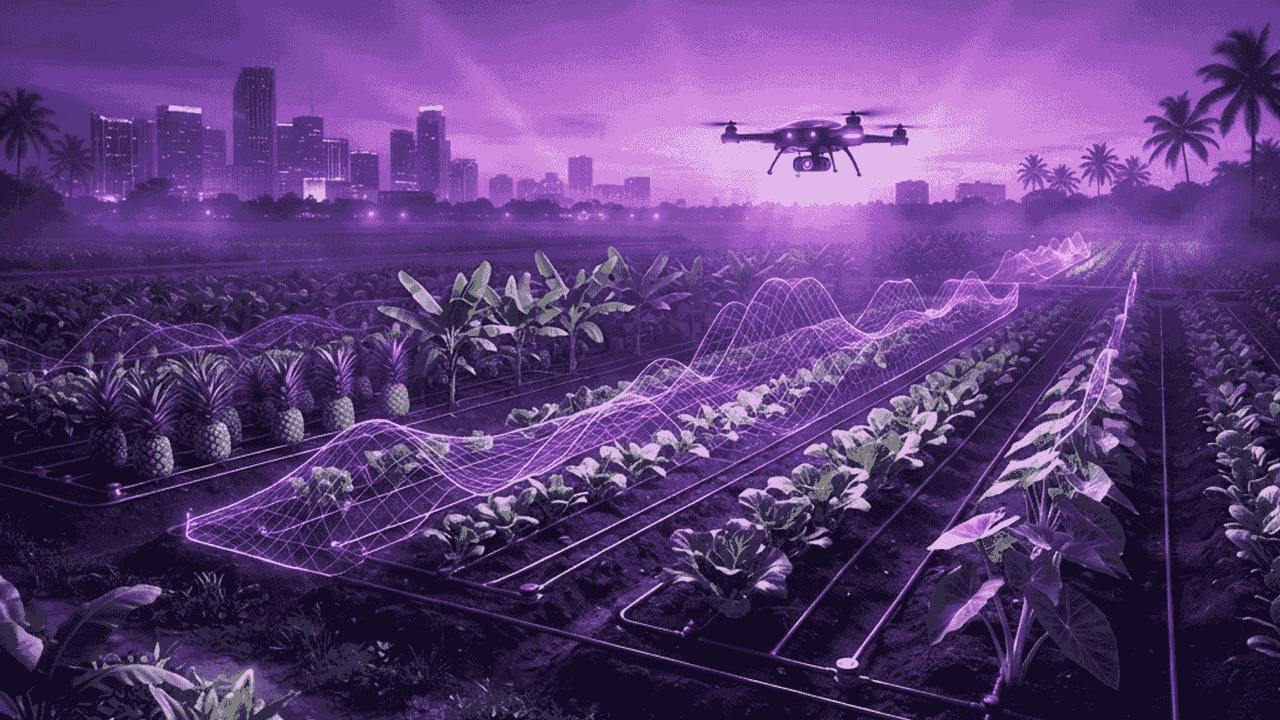
Agriculture in the Shadow of the Skyline
Visitors are often surprised to learn that Miami-Dade County ranks among the nation's leading agricultural counties by value of production. South of the urban core, the Redland agricultural area and the Homestead corridor support tens of thousands of acres of tropical fruit groves, winter vegetable fields, ornamental nurseries and specialty crops. The county's subtropical climate allows growers to produce during months when most of the country cannot, and its proximity to both a major airport and seaport gives producers direct access to domestic and international markets.
The industry operates under real pressure. Urban expansion competes for land, water management is governed by a complex regional system, labor availability fluctuates, and hurricane exposure can eliminate a season's income in a single afternoon. The companies that succeed here tend to be the ones that diversified — combining wholesale production with agritourism, direct retail, value-added processing or nursery operations that carry different risk profiles.
What Makes Miami Farming Distinctive
Crop mix is the clearest differentiator. Avocados, mangoes, lychee, longan, papaya, guava, dragon fruit and passion fruit grow commercially here in ways they cannot elsewhere in the continental United States. Winter production of green beans, sweet corn, tomatoes, squash and okra supplies national markets from November through April. The ornamental nursery sector — foliage, palms, tropical landscape plants — is among the largest in the country and serves construction and landscaping demand across the eastern seaboard.
Soil is also unusual. Much of the Redland is characterized by shallow, rocky oolitic limestone soils that require specialized planting techniques and intensive nutrient management. Growers who thrive here possess accumulated local knowledge that cannot easily be transferred from other regions.
The Top 10 Farming Companies in Miami
1. Brooks Tropicals is one of the best-known names in tropical produce, associated for decades with avocados, papayas and specialty tropical fruit. Its strength lies in the integration of growing, packing and national distribution, giving it consistent presence in retail produce departments well beyond Florida.
2. Robert Is Here Farm has become a regional institution combining working farm operations with a high-traffic retail and agritourism business. The model demonstrates how direct consumer engagement can stabilize revenue for a tropical fruit grower exposed to volatile wholesale pricing.
3. Redland Organics represents the certified organic segment, coordinating production of tropical fruit and vegetables under organic protocols. Its role in supplying restaurants and specialty grocers reflects sustained South Florida demand for verified organic tropical produce.
4. Teena's Pride Farm is recognized for greenhouse and hydroponic vegetable production, particularly tomatoes and specialty greens supplied to chefs. The operation illustrates how controlled-environment methods reduce weather exposure while achieving quality that commands premium pricing.
5. Paradise Farms built its reputation on sustainable growing practices and close relationships with the culinary community, supplying microgreens, edible flowers and specialty produce alongside hosting farm dinners that connect consumers directly to production.
6. Fresh King operates in the winter vegetable segment, growing and packing crops such as beans and squash for national distribution during the northern off-season. Efficiency in harvest logistics and cold chain management defines competitiveness in this category.
7. Costa Farms is a major force in ornamental horticulture, producing houseplants and landscape material at very large scale from South Florida operations. Its significance extends beyond agriculture into retail supply chains, as it serves national home improvement and garden retailers.
8. Homestead Grove Management serves grove owners with orchard care, harvest coordination and marketing support. Contract management services like these allow smaller landholders to remain in production without operating full farming enterprises themselves.
9. Little River Cooperative works within Miami's urban and peri-urban agriculture movement, cultivating vegetables and herbs on smaller parcels and supplying farmers markets and community-supported agriculture subscriptions. It reflects growing interest in hyper-local food production inside the city footprint.
10. Verde Farms of South Dade focuses on diversified vegetable and herb production with an emphasis on supplying regional distributors, restaurants and institutional kitchens seeking short supply chains and traceable sourcing.
Trends Shaping South Florida Agriculture
Controlled-environment agriculture continues to expand, with greenhouses and hydroponic systems reducing weather and pest exposure while improving water efficiency. Water conservation technology — precision irrigation, soil moisture sensing and fertigation control — has become standard among competitive growers given regulatory attention to the regional water system. Climate adaptation is an active area of investment, including rootstock selection for salt tolerance and cultivar trials for heat resilience. Direct-to-consumer channels have grown substantially, as farm stands, subscription boxes and agritourism improve margins relative to wholesale. Finally, ongoing pressure from invasive pests and plant diseases keeps integrated pest management and grove sanitation at the center of operational planning.
Working With Miami Growers
Buyers sourcing locally should plan around seasonality rather than expecting year-round availability of any single crop. Mango and avocado windows in particular are narrow and variable. Establish relationships well before peak season, since allocation favors committed accounts. For restaurants and retailers, flexibility on variety and grade unlocks better pricing and stronger partnerships. And for anyone entering the sector, recognize that hurricane insurance, water permitting and labor planning are as fundamental to the business model as agronomy.
Final Thoughts
Miami's farming companies operate at an unusual intersection of tropical agriculture, urban proximity and international logistics. Their continued viability depends on diversification, technology adoption and the deep local expertise required to grow productively in limestone soils under subtropical conditions. For consumers and buyers in South Florida, the payoff is access to fruit and vegetables of a quality and variety available almost nowhere else in the country.