
Agriculture and the Identity of Lubbock
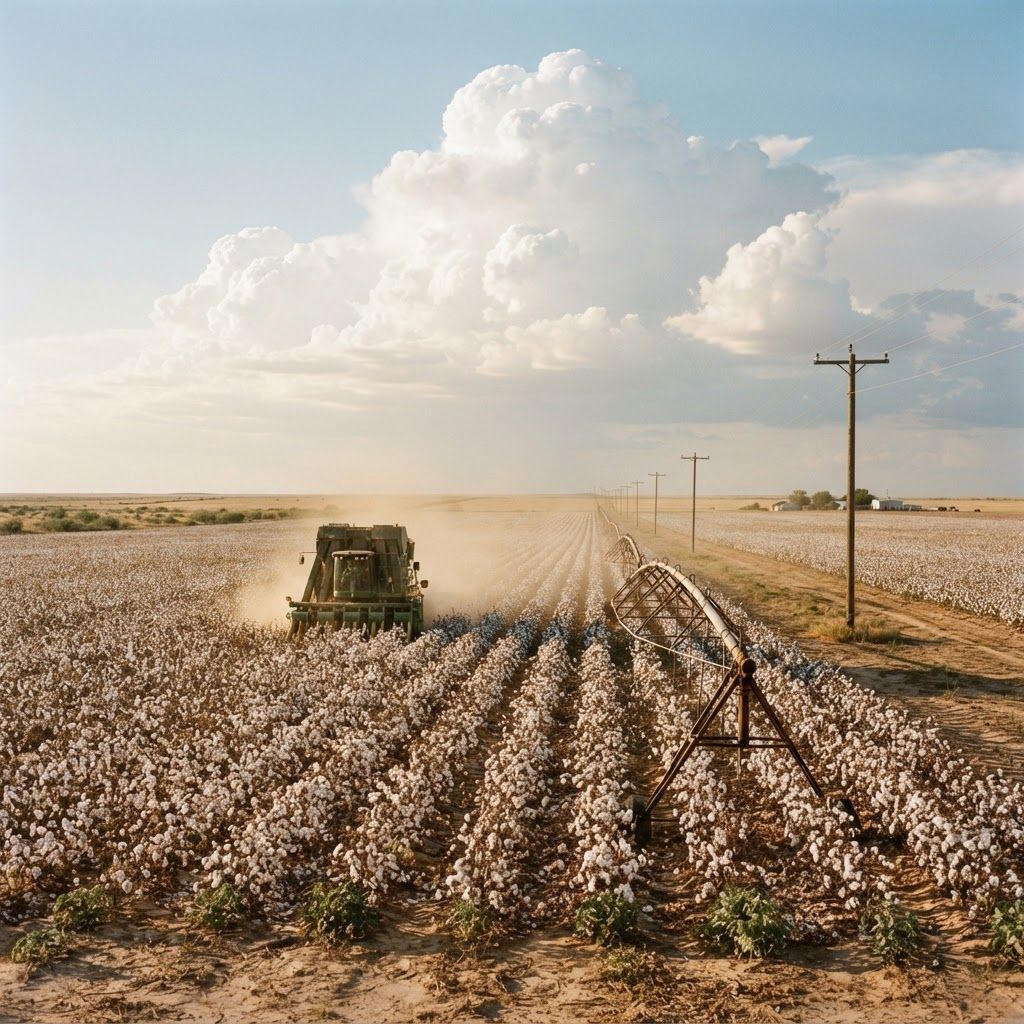
Few American cities are as closely tied to farming as Lubbock. The surrounding counties form the core of the High Plains cotton belt, and the city's economy, research institutions and business culture all reflect that. Grain sorghum, corn, wheat, peanuts, sunflowers and an expanding vineyard sector share the landscape with cotton, while cattle feeding and dairy operations anchor the livestock side.
What makes farming here distinctive is the constraint set. This is a semi-arid environment drawing heavily on the Ogallala Aquifer, with high wind, wide temperature swings and a short but intense growing window. Success depends on water efficiency, variety selection and disciplined timing rather than abundance. The companies that thrive are the ones treating agronomy as a data problem as much as a tradition.
How Leading Farming Companies Are Assessed
Growers and industry observers in the region judge operations on water-use efficiency, soil health practices, yield consistency across dry years, adoption of precision technology, and the quality of relationships with gins, elevators and buyers. Scale alone is not a marker of excellence; some of the most respected operations here are mid-sized farms with exceptional agronomic discipline.
The Top 10 Farming Companies in the Lubbock Region
1. Caprock Cotton Farms
A large-scale cotton producer operating across several counties around Lubbock, Caprock Cotton Farms is known for advanced irrigation scheduling and variety trials conducted on its own acreage. It has invested consistently in subsurface drip and low-pressure pivot systems, and its fibre quality record makes it a preferred supplier for merchants seeking predictable grades and staple length.
2. Llano Estacado Agricultural Enterprises
A diversified operation spanning cotton, grain sorghum and wheat, this company is often cited for rotation discipline that protects soil structure and breaks pest cycles. Its management approach uses field-level yield mapping to retire marginal acres from irrigation rather than spreading water thinly, an increasingly common strategy as aquifer levels decline.
3. South Plains Family Farms
A multi-generational operation that has grown by acquiring neighbouring acreage while retaining a family management structure, South Plains Family Farms combines conventional row-crop production with cattle grazing on cover crops. That integration improves soil organic matter and adds a revenue stream that cushions commodity price swings.
4. Hub City Grain & Livestock Company
Operating both cropland and feeding facilities, this company represents the integrated model common in the wider Panhandle economy. Growing its own feed grain and silage reduces exposure to input price spikes, and its proximity to processing infrastructure keeps transport costs low. It is frequently referenced for careful herd health management and record keeping.
5. Redland Peanut & Specialty Crops
Peanuts and specialty crops require different agronomy and different market relationships than cotton, and Redland Peanut & Specialty Crops has built expertise in both. Contract production for shellers and food processors gives it revenue predictability, while its rotation with cotton improves nitrogen cycling and reduces disease pressure across the whole operation.
6. Texas Plains Irrigation Farming Company
This operation has effectively made water management its core competency, running soil moisture probe networks, variable rate irrigation and deficit irrigation strategies calibrated by growth stage. Its published on-farm trial results have influenced neighbouring growers, and it is often used as a reference point for what achievable water savings look like in the region.
7. Panhandle Organic Growers
Certified organic production is demanding in a high-pest, high-wind environment, which makes Panhandle Organic Growers notable. It supplies organic cotton and food grains into premium supply chains, relying on cover cropping, mechanical cultivation and long rotations. Its buyers value the traceability documentation as much as the certification itself.
8. Cotton Belt Producers Cooperative
Co-operatives remain central to the South Plains, and this producer-owned organisation aggregates acreage for marketing leverage, shares equipment costs and provides agronomic services to members. For smaller growers it delivers the input pricing and market access that would otherwise require far greater scale, which is a significant reason mid-sized farms remain viable here.
9. Yellow House Ranch & Farming
Combining dryland cropping with extensive rangeland cattle production, Yellow House Ranch & Farming is a strong example of risk management in a low-rainfall environment. Its dryland cotton and sorghum programmes are built around residue retention and minimal tillage, preserving moisture that conventional cultivation would lose to evaporation and wind.
10. High Plains Viticulture Company
The Texas High Plains has quietly become the state's dominant grape-growing region, and this company farms vineyard acreage supplying wineries across Texas. Elevation, wide diurnal temperature ranges and low disease pressure suit viticulture well, and the operation's trellising and canopy management practices have helped establish the region's reputation for consistent fruit quality.
Trends Defining the Next Decade
Water is the central issue. Declining aquifer levels are driving conversions to drip irrigation, shifts toward drought-tolerant varieties and, in some cases, planned transitions of irrigated acres to dryland production. Precision agriculture has moved past novelty: variable rate application, satellite and drone imagery, and yield mapping are now standard tools on well-run operations.
Regenerative practices such as cover cropping, reduced tillage and grazing integration are gaining ground, partly for soil health and partly because downstream brands are beginning to pay for verified practices. Meanwhile, labour availability and equipment costs continue to push consolidation and automation, from autonomous tractor guidance to module-building harvest equipment.
What This Means for Buyers and Partners
For textile brands, food processors and input suppliers, the Lubbock region offers scale with increasingly sophisticated documentation. Buyers seeking verified sustainability claims should look for operations already running soil and water monitoring, since retrofitting data collection after a contract is signed is far harder than selecting a partner who already measures.
Final Thoughts
Farming around Lubbock is a discipline of managing scarcity well. The operations profiled here have earned their reputations by pairing generational knowledge of the Llano Estacado with genuine investment in irrigation efficiency, soil health and data-driven agronomy. As water constraints tighten, these are the practices that will determine which farms remain productive, and the South Plains is fortunate to have a leading edge that is already well ahead of the curve.