
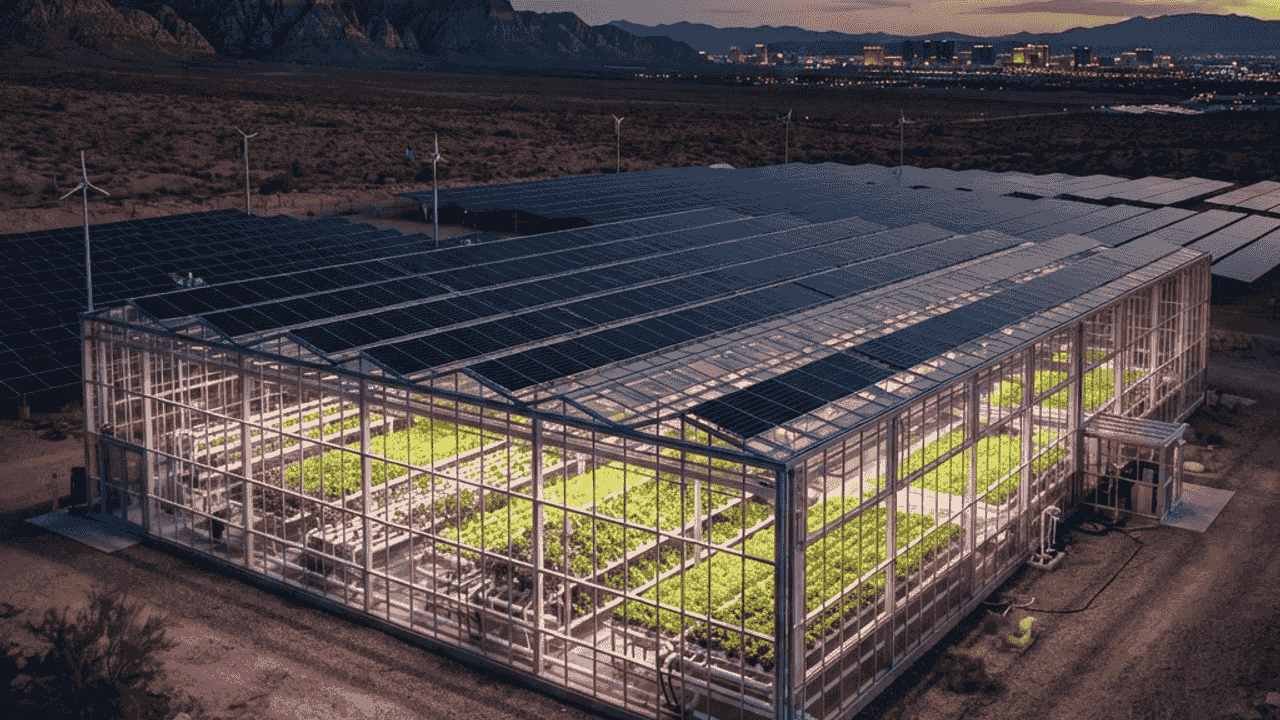
Agriculture in the Mojave Desert
Farming around Las Vegas looks different from agriculture in wetter regions. Extreme summer heat, low rainfall, water constraints, alkaline soils, and rapid urban growth make conventional production difficult. Yet Southern Nevada also offers intense sunlight, strong hospitality demand, proximity to consumers, and opportunities for greenhouses, hydroponics, aquaponics, indoor growing, and carefully managed desert farms.
The organizations below represent commercial farms, controlled-environment innovators, and significant agricultural resources connected to the Las Vegas region. Not every organization sells through the same channel, and operations can evolve, so buyers should verify current products, seasons, and availability.
1. Green Life Productions
Green Life Productions is known for growing produce in Southern Nevada using controlled and water-conscious methods. Local leafy greens can travel fewer miles to Las Vegas kitchens, supporting freshness and responsive harvesting. Restaurant buyers should coordinate forecasts and accept seasonal variation rather than expecting a small regional grower to mimic unlimited national supply.
2. Desert Bloom Eco Farm
Desert Bloom Eco Farm represents the region's interest in ecological and desert-adapted food production. Smaller farms can offer freshness, unusual varieties, and a direct connection between growers and chefs. Buyers should ask about harvest schedules, post-harvest cooling, food-safety practices, and realistic weekly capacity.
3. Gilcrease Orchard
Gilcrease Orchard is a long-established agricultural destination in the Las Vegas Valley, known for seasonal produce and pick-your-own experiences. Beyond food production, it helps residents understand local seasonality and the work behind agriculture. Its popularity demonstrates demand for authentic farm experiences within a highly urban tourism economy.
4. Las Vegas Livestock
Las Vegas Livestock is associated with local animal agriculture and community access to livestock-related products or experiences. Livestock operations in a desert environment require careful attention to shade, water, feed, biosecurity, and animal welfare. Commercial buyers should confirm processing, inspection, and distribution arrangements for any food products.
5. The Farm at Green Valley Ranch
The Farm at Green Valley Ranch reflects hospitality's use of gardens and on-site growing to connect food, landscape, and guest experience. Resort gardens may not replace commercial distributors, but they can provide herbs, seasonal produce, education, and a compelling sense of place. Their greatest value often combines culinary quality with storytelling.
6. MGM Resorts International Sustainable Food Programs
MGM Resorts International is a major food purchaser whose sustainability and sourcing programs influence regional supply chains. Although it is not a conventional farm, its procurement scale can create demand for responsible agriculture, food-waste reduction, and traceable products. Growers seeking hospitality customers need dependable specifications, insurance, food safety, and the capacity to meet receiving requirements.
7. Freight Farms
Freight Farms develops container-based hydroponic growing systems that can be deployed in urban and arid markets. This technology is relevant to Las Vegas because it enables controlled production near customers while reducing exposure to outdoor heat. Operators must still evaluate energy, water quality, crop economics, labor, maintenance, and market demand.
8. CropKing
CropKing supplies controlled-environment agriculture systems, greenhouse equipment, growing supplies, and technical knowledge. Its solutions can support growers designing hydroponic production for desert climates. Success depends on matching greenhouse structure, cooling, water treatment, crop selection, and sales strategy rather than purchasing equipment in isolation.
9. Gotham Greens
Gotham Greens is a prominent controlled-environment agriculture company known for greenhouse-grown leafy greens and herbs. While its production footprint is broader than Las Vegas, its model illustrates how regional greenhouses can serve urban markets with consistent crops and reduced field exposure. Local buyers can apply similar criteria when comparing controlled-environment suppliers: freshness, food safety, packaging, and resource efficiency.
10. University of Nevada, Reno Extension
University of Nevada, Reno Extension is not a commercial farm, but it is an essential agricultural resource for Southern Nevada. Its research-based education supports horticulture, food systems, water-efficient landscapes, integrated pest management, and community growing. New producers can reduce costly mistakes by using region-specific guidance before scaling a crop or facility.
How to Evaluate a Las Vegas Farm Supplier
Ask what is grown, where it is grown, the expected harvest calendar, minimum order, delivery method, food-safety practices, and contingency plans. Controlled-environment claims should be evaluated with measurable information about water, energy, nutrients, and waste. Outdoor farms should explain heat, pest, and soil-management practices relevant to the Mojave.
For restaurants, consistency matters, but collaboration creates better outcomes. Share menu forecasts and discuss acceptable sizes or varieties. A chef who can use cosmetically imperfect produce or flexible pack sizes may improve farm economics and reduce waste. Institutions should align purchasing requirements with the capacity of smaller growers rather than imposing unnecessary complexity.
Trends Shaping Desert Agriculture
Hydroponics, greenhouse cooling, water recirculation, solar integration, precision nutrient management, drought-tolerant crops, and urban production are attracting attention. Technology does not automatically guarantee sustainability or profit. Farmers must calculate energy costs, replacement parts, labor, crop loss risk, and realistic selling prices. The most resilient businesses select crops based on local demand and operational capability.
The Future of Farming in Las Vegas
Green Life Productions, Desert Bloom Eco Farm, Gilcrease Orchard, and local livestock or hospitality gardens demonstrate regional diversity. Freight Farms and CropKing represent enabling technology, while Gotham Greens offers a broader controlled-environment model. MGM's procurement influence and Extension education strengthen the ecosystem. Las Vegas agriculture will remain specialized, but water-smart production and close relationships with chefs and residents can give local growers a meaningful advantage.