
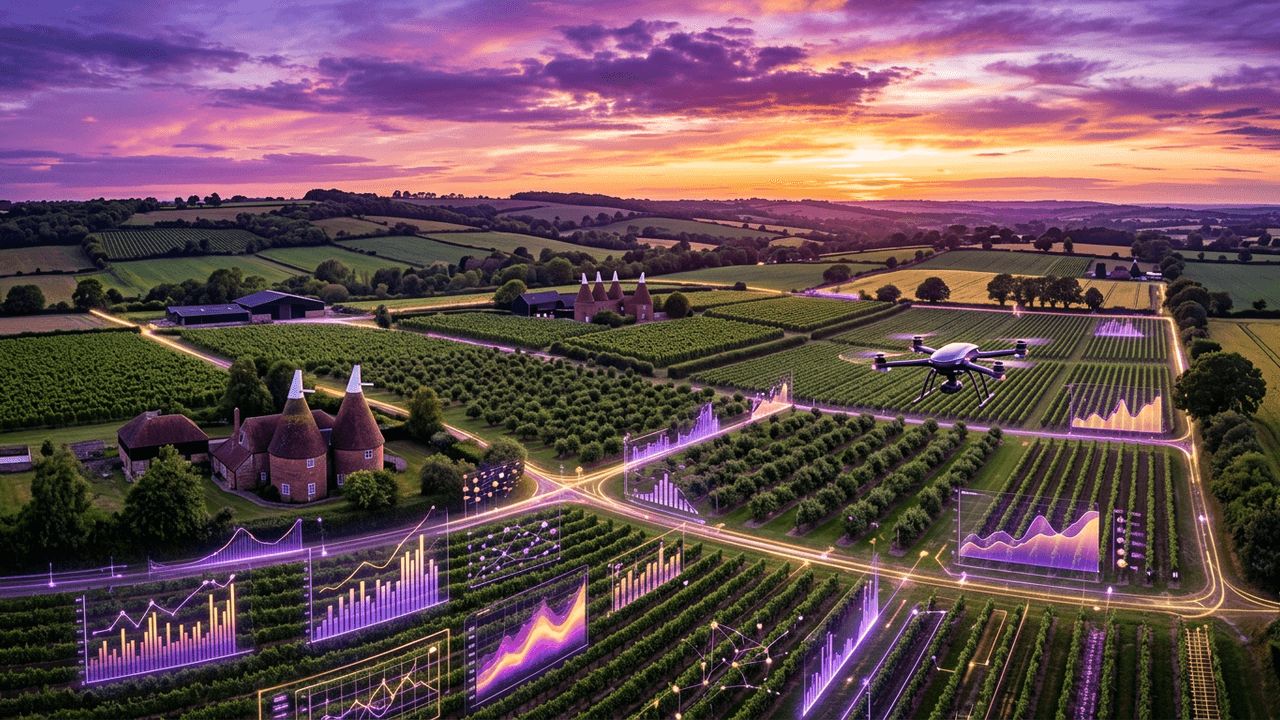
Farming in the Garden of England
Kent has been called the Garden of England for centuries, and for good reason. Its fertile soils, mild climate and long growing season make it ideal for apples, pears, cherries, strawberries, hops and vegetables. Oast houses, once used for drying hops, remain iconic features of the Kent landscape. In recent decades, the county has also become one of the heartlands of English sparkling wine, with chalk soils similar to those found in Champagne.
This guide celebrates ten of the best farming companies in Kent, from fruit growers and glasshouse producers to vineyards and heritage hop farms.
Why Kent Is Ideal for Farming
Kent benefits from a combination of good soils, relatively high sunshine levels and proximity to London's huge consumer market. Its fruit-growing tradition has created deep expertise in orchard management, storage and packing. The county's chalk downland supports vineyards, while flat areas such as Thanet and Romney Marsh suit arable crops and vegetables. Strong links with research institutions and agricultural colleges also support innovation.
The Top 10 Farming Companies in Kent
1. AC Goatham & Son
AC Goatham & Son is one of the UK's largest growers of apples and pears, with orchards across Kent. The family business supplies major supermarkets and is known for investment in modern orchard systems, storage technology and sustainable growing practices.
2. Thanet Earth
Thanet Earth is one of the largest glasshouse complexes in the UK, producing tomatoes, peppers and cucumbers year-round. Its advanced growing systems, energy efficiency and water recycling make it a model of modern controlled-environment agriculture.
3. Hugh Lowe Farms
Hugh Lowe Farms, based in Mereworth, is a leading grower of strawberries, raspberries and other soft fruit. With a long family history, it is known for quality, flavour and innovation in soft fruit production.
4. Chapel Down
Chapel Down, based in Tenterden, is one of England's best-known wine producers. Its sparkling and still wines have won numerous awards, and its vineyards across Kent have helped establish the county as a premium wine region.
5. Gusbourne
Gusbourne produces premium English sparkling wines from its estate near Appledore. Its focus on quality and estate-grown fruit has earned international recognition and placed Kent firmly on the global wine map.
6. Biddenden Vineyards
Biddenden Vineyards is one of Kent's longest-established vineyards, producing wines, ciders and juices. The family-run estate is known for its Ortega wines and traditional Kentish ciders, and it welcomes visitors throughout the year.
7. Hush Heath Estate
Hush Heath Estate, home to Balfour wines, produces acclaimed English sparkling rosé and other wines. Its estate combines vineyards, orchards and ancient woodland, and its focus on sustainability and biodiversity is notable.
8. Brogdale Collections
Brogdale near Faversham is home to the National Fruit Collection, one of the largest collections of fruit tree varieties in the world. It plays a vital role in preserving genetic diversity and supporting research and education in fruit growing.
9. Hukins Hops
Hukins Hops is a family farm growing traditional and modern hop varieties in the Kent Weald. It supplies craft brewers and keeps alive the county's centuries-old hop-growing tradition.
10. Fresca Group
Fresca Group, with operations in Paddock Wood, connects growers to retailers through fresh produce sourcing, packing and distribution. Its long-standing involvement in Kent's fruit sector helps local growers reach national markets.
How to Work With Kent Farming Businesses
Retailers, restaurants and food manufacturers seeking Kent produce should consider seasonality, volume requirements and quality specifications. Building direct relationships with growers can improve traceability and provide a compelling local story for customers. Look for accreditations relating to food safety, environmental stewardship and worker welfare. Farm shops, farmers' markets and cellar doors also offer opportunities for consumers to buy directly from producers.
Farming Trends in Kent
Kent farmers are embracing precision agriculture, using sensors, drones and data analytics to manage irrigation, nutrition and pest control. Regenerative practices that improve soil health and biodiversity are spreading. The English wine industry continues to grow rapidly, with new vineyards planted across the county. Labour availability, water scarcity and climate change are significant challenges, driving interest in automation, robotics and water storage.
Frequently Asked Questions About Farming in Kent
Why is Kent called the Garden of England?
Kent earned the name thanks to its abundance of orchards, hop gardens and market gardens, which have supplied fruit, vegetables and hops to London and beyond for centuries. Its mild climate and fertile soils make it one of the most productive horticultural regions in Britain.
What are oast houses?
Oast houses are buildings designed to dry hops, often recognisable by their distinctive round or square kilns topped with white cowls. Many have been converted into homes, but they remain iconic symbols of Kent's hop-growing history.
Can visitors experience Kent farms?
Yes. Many Kent farms and vineyards offer farm shops, pick-your-own fruit, cellar door tastings and guided tours. These experiences are a great way to enjoy fresh local produce and learn about the county's agricultural heritage.
Conclusion
Kent's farming businesses continue to live up to the county's reputation as the Garden of England. The ten companies featured here showcase the diversity, quality and innovation of Kent agriculture, from orchards and glasshouses to vineyards and hop gardens. Farm operations and visitor offerings change seasonally, so check current details directly with each business.