
Farming at the Edge of a Growing City
Elk Grove occupies an interesting position in California agriculture. The city has expanded substantially, yet productive farmland remains immediately adjacent, and parts of the surrounding area still operate as working agricultural land. That proximity creates both tension and opportunity: land pressure is real, but so is direct access to a large local customer base that many rural producers would envy.
The agricultural profile around Elk Grove is diverse. Wine grapes have a long history in the surrounding area, supported by soils and a climate with hot days and cooling delta influence. Orchard crops, field crops, vegetables, livestock, and specialty producers all operate within a short radius, and many have added direct-to-consumer channels alongside wholesale production.
Ten Farming Companies in and Around Elk Grove
Cosumnes Valley Farms operates as a diversified row crop producer, rotating vegetables and field crops to maintain soil health. Its rotation discipline is the kind of unglamorous practice that sustains yields over decades.
Elk Grove Vineyard Company farms wine grapes with attention to canopy management and irrigation timing, working with regional wineries that buy fruit by block rather than by tonnage alone.
Laguna Creek Orchards produces tree fruit and nuts, managing the long investment horizon that orchard agriculture requires, where planting decisions commit land for decades.
Franklin Family Ranch raises livestock on pasture with rotational grazing, supplying regional processors and selling directly to local customers who want to know where their meat originated.
Sierra Organic Produce Growers farms certified organic vegetables, managing pest and fertility challenges without synthetic inputs and maintaining the records that certification demands.
Stonelake Dairy Operations manages a dairy herd with modern nutrition management, water recycling, and manure handling systems that address both efficiency and environmental requirements.
Bond Road Greenhouse Growers produces vegetables and nursery stock under protected cultivation, extending growing seasons and dramatically improving water efficiency compared with open field production.
Harvest Moon Community Farm operates a community supported agriculture program and farm stand, connecting Elk Grove households directly with seasonal produce and building the kind of relationship that insulates a farm from commodity price swings.
Emerald Fields Grain and Forage grows grain and forage crops supporting regional livestock operations, with storage and handling infrastructure that lets it market strategically rather than at harvest prices.
Grove Specialty Crop Growers focuses on high-value specialty items including herbs, microgreens, and ethnic vegetables serving the region's diverse restaurant and grocery market, an area where local growers compete effectively against distant producers.
Water Is the Defining Challenge
No discussion of Central Valley agriculture is complete without water. Groundwater sustainability legislation has fundamentally changed planning, requiring basins to reach balanced extraction over a defined horizon. For growers, that means water availability is now a long-term planning variable rather than an annual one.
The response has been substantial investment in efficiency. Drip and micro-sprinkler systems deliver water directly to root zones with far less evaporative loss than flood irrigation. Soil moisture sensors and evapotranspiration data allow irrigation scheduling based on actual crop demand rather than calendar habit. Some operations have shifted crop mix toward lower water requirement options or reduced acreage to concentrate water on their most productive ground.
Technology on the Modern Farm
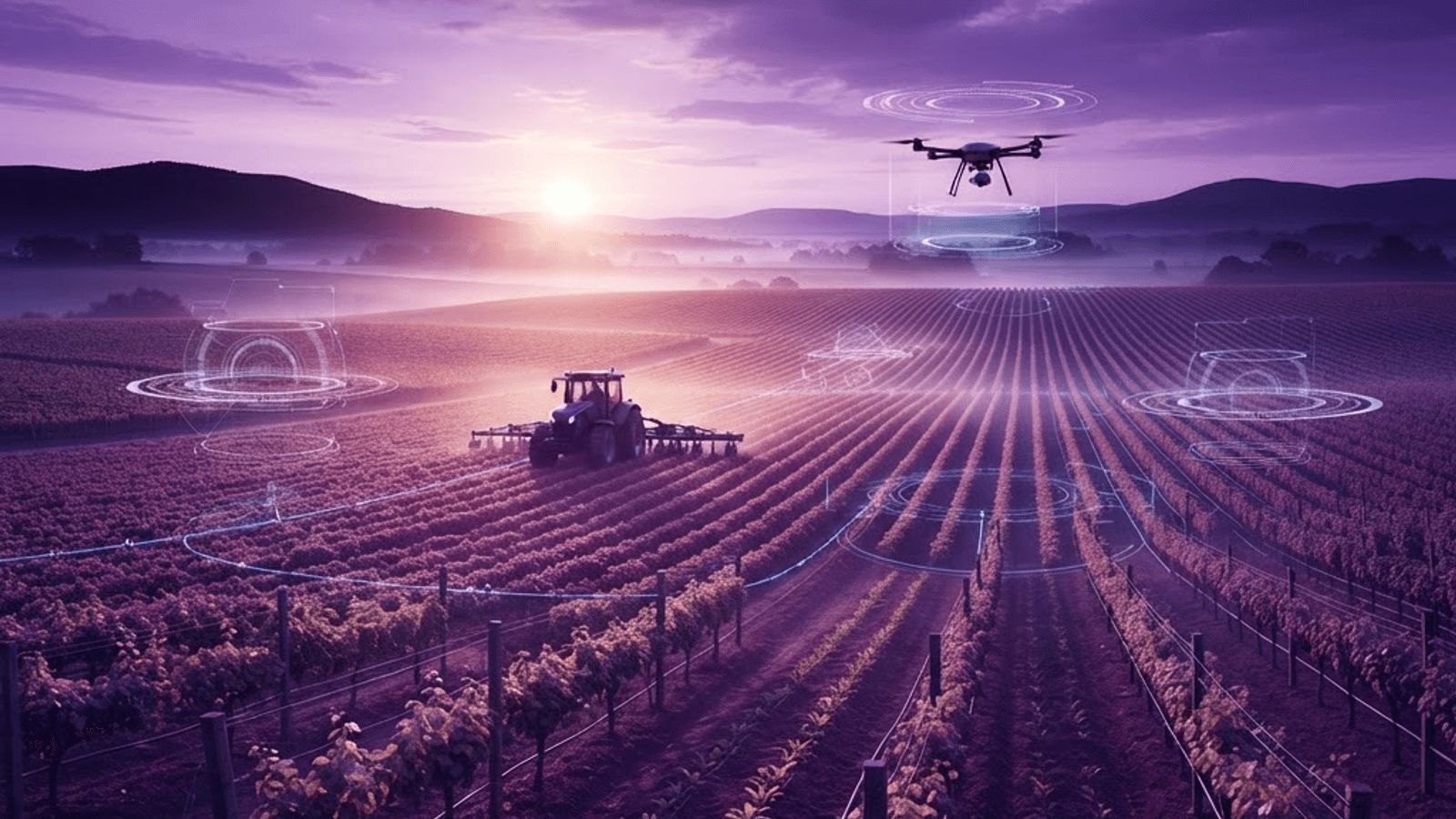
Precision agriculture has moved from experimental to routine. Global positioning guidance reduces overlap on every pass, saving fuel and inputs. Variable rate application matches fertilizer and amendments to field variability rather than treating a field as uniform. Aerial imagery reveals stress patterns days before they are visible from the ground.
Labor pressure is driving mechanization in crops that historically resisted it. Harvest aids, automated weeding systems, and sorting technology are appearing across operations of moderate scale, not just the largest farms.
Integrated pest management has become standard practice, combining monitoring, beneficial insects, targeted treatments, and cultural controls. It reduces chemical use, manages resistance, and increasingly satisfies buyer requirements.
Direct Marketing and Local Demand
Elk Grove's population is one of the most valuable assets available to nearby farms. Farmers markets, community supported agriculture subscriptions, farm stands, and direct restaurant sales all capture a far larger share of the retail dollar than wholesale commodity marketing.
Agritourism has grown alongside it. U-pick operations, farm dinners, and seasonal events generate revenue from the same land while building the community relationships that matter when land use debates arise.
Labor, Succession, and the Next Generation
Beyond water and markets, two quieter pressures shape farming around Elk Grove. The first is labor. Skilled agricultural workers are in short supply, and competition from other industries has pushed wages higher while the work itself remains seasonal. Operations that provide year-round employment, better housing support, and clear advancement paths retain crews that others lose every season.
The second is succession. A significant share of farmland is operated by people approaching retirement, and transferring a farming business to the next generation involves land value, tax structure, equipment, and the willingness of heirs to continue. Farms that plan succession early, often with outside advisors, remain intact; those that do not frequently end up sold and converted. Several operations around Elk Grove have addressed this by bringing younger family members or employees into ownership gradually, which preserves both the business and the knowledge that makes it work.
Final Thoughts
Farming around Elk Grove is a business of long horizons managed under short-term pressure: water allocations, labor availability, market prices, and development interest all press on operators simultaneously. The companies above have each found a workable answer, whether through efficiency, specialization, organic certification, or direct connection with local customers. Their continued presence keeps a genuine agricultural character in a city that keeps growing, and that is worth recognizing.