
Agriculture in a Coastal City
Chesapeake is often described as a suburban city, yet it retains one of the largest land areas of any city in Virginia, and a substantial share of that land remains in agricultural production. The southern portion of the city, stretching toward the Great Dismal Swamp and the North Carolina line, contains thousands of acres of farmland producing soybeans, corn, wheat, cotton and vegetables. This working landscape sits alongside neighborhoods and commercial corridors, making Chesapeake one of the more interesting examples of urban-adjacent agriculture on the East Coast.
Farming here operates under specific conditions. Soils are generally flat and productive but require careful drainage management. Proximity to the Chesapeake Bay watershed means nutrient management and runoff control are regulated and closely monitored. Hurricane season introduces genuine risk during harvest. Farms that thrive combine technical skill with diversification, whether through direct sales, agritourism or specialty crops.
Ten Notable Farming Operations and Agricultural Companies
1. Cullipher Farm
Cullipher Farm is well known in the region for fresh produce, seasonal strawberries, sweet corn and a farm market experience that connects consumers directly to growers. Operations like this demonstrate how direct-to-consumer sales can substantially improve margins compared with commodity marketing alone.
2. Bergey's Breadbasket
Bergey's is a longstanding local dairy and family farm operation whose creamery, bakery and market draw visitors year round. Its integration of dairy production with retail, dining and educational farm activities is a strong example of vertical diversification.
3. Brookdale Farm
Family row crop operations such as Brookdale Farm form the backbone of Chesapeake agriculture, producing soybeans, corn and small grains at scale. These farms increasingly use precision agriculture tools, including variable rate application and yield mapping, to improve efficiency while meeting nutrient management requirements.
4. Hillcrest Farms
Established multi-generational operations in the southern city area manage large acreages with a focus on soil health, cover cropping and conservation tillage. Their long-term stewardship practices matter both agronomically and for watershed protection.
5. Batten Bay Farm
Farms in the low-lying areas near the waterways face particular drainage and salinity challenges, and operations here have developed practical expertise in water table management, ditch maintenance and crop selection suited to variable field conditions.
6. Chesapeake Nursery and Sod Growers
Turfgrass and nursery operations represent a substantial agricultural segment in the region, supplying landscapers, builders and municipalities. Sod farms provide steady demand tied to construction cycles and are less exposed to commodity price swings than grain producers.
7. Local Produce and Community Supported Agriculture Farms
Smaller vegetable farms operating community supported agriculture subscriptions and farmers market stalls serve a growing customer base interested in local, seasonal food. Their scale allows crop diversity, extended season production with high tunnels and rapid response to consumer preferences.
8. Poultry and Livestock Producers
Livestock operations in and around Chesapeake supply eggs, pastured poultry, beef and pork to local markets and restaurants. Many emphasize rotational grazing and transparent husbandry practices, attributes that command premium pricing at direct sales channels.
9. Agricultural Service and Input Companies
Agronomy service providers, seed and crop protection dealers and grain handlers are essential parts of the farming ecosystem. They deliver soil testing, prescription fertility programs, scouting and marketing advice that materially affect farm profitability.
10. Agritourism and Pick-Your-Own Operations
Farms offering strawberry picking, pumpkin patches, corn mazes and educational tours have become important economic contributors. Agritourism converts proximity to a large urban population from a constraint into an asset, generating revenue per acre far above commodity returns while building public support for farmland preservation.
Trends Shaping Chesapeake Agriculture
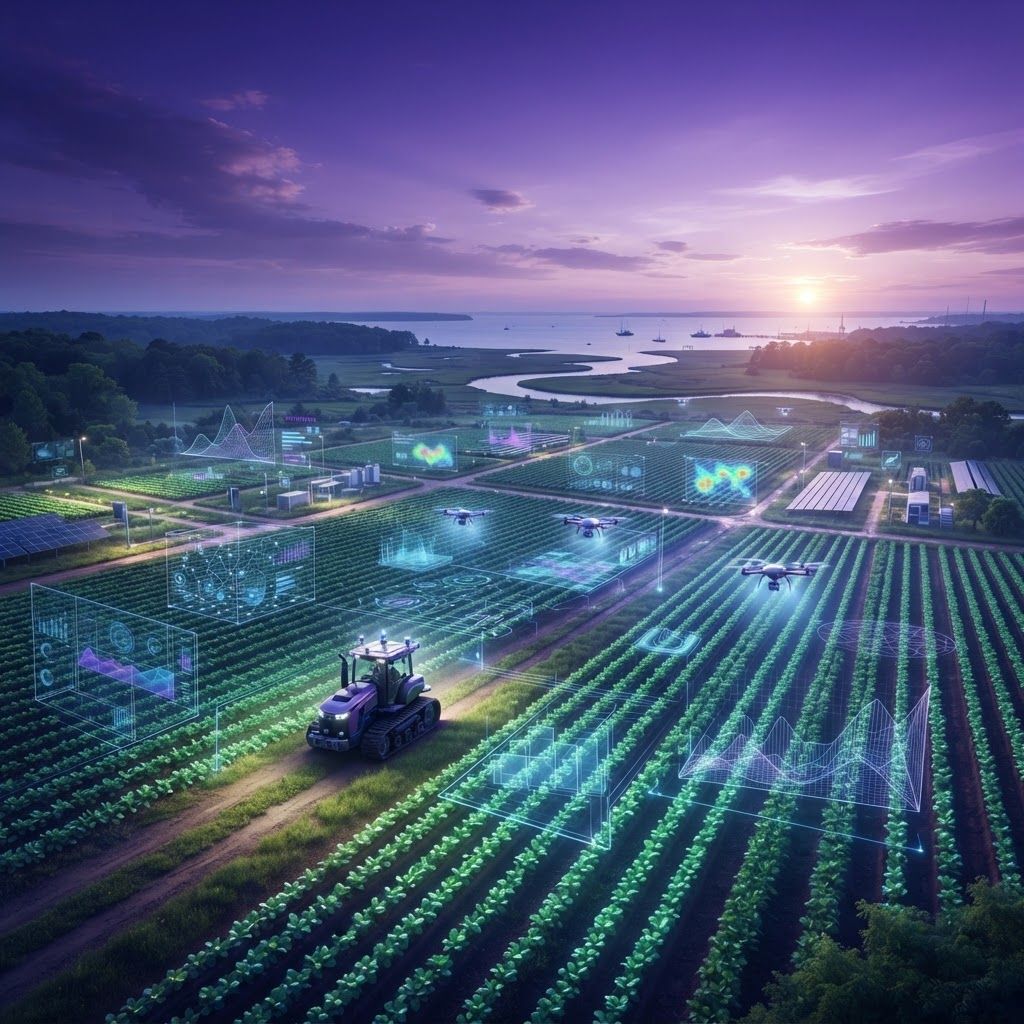
Precision agriculture continues to spread, with guidance systems, variable rate technology and drone-based crop scouting now common even on mid-sized farms. These tools reduce input waste, which is both an economic and environmental gain in a sensitive watershed.
Conservation practice adoption is accelerating, driven by Chesapeake Bay water quality goals. Cover crops, buffer strips, precision nutrient management and drainage water management are increasingly standard, often supported by cost-share programs. Meanwhile, development pressure remains the most serious structural threat to local agriculture, making land preservation programs and profitable diversification critical to keeping farms viable.
Consumer interest in local food shows no sign of fading. Farms with strong direct marketing, clear storytelling and consistent product quality are capturing more value than at any point in recent decades.
How to Support and Work With Local Farms
For consumers, buying at farm markets, joining a subscription program and choosing local produce in season directly strengthens these operations. For businesses, sourcing from nearby growers can improve freshness and provide compelling provenance for menus and retail shelves, though it requires flexibility around seasonality and volume.
For prospective farmers, the practical priorities are securing suitable land, understanding drainage and soil limitations, building relationships with input suppliers and marketers, and developing at least one revenue stream that is not exposed to commodity price cycles.
Final Thoughts
Chesapeake's farming companies illustrate that agriculture and urban growth can coexist when producers innovate. Between large row crop operations, diversified family farms, nursery and sod growers, livestock producers and thriving agritourism destinations, the city retains a genuine agricultural economy. Supporting it through purchasing decisions, land use policy and continued adoption of conservation practices keeps both the working landscape and the local food supply intact for future generations.