
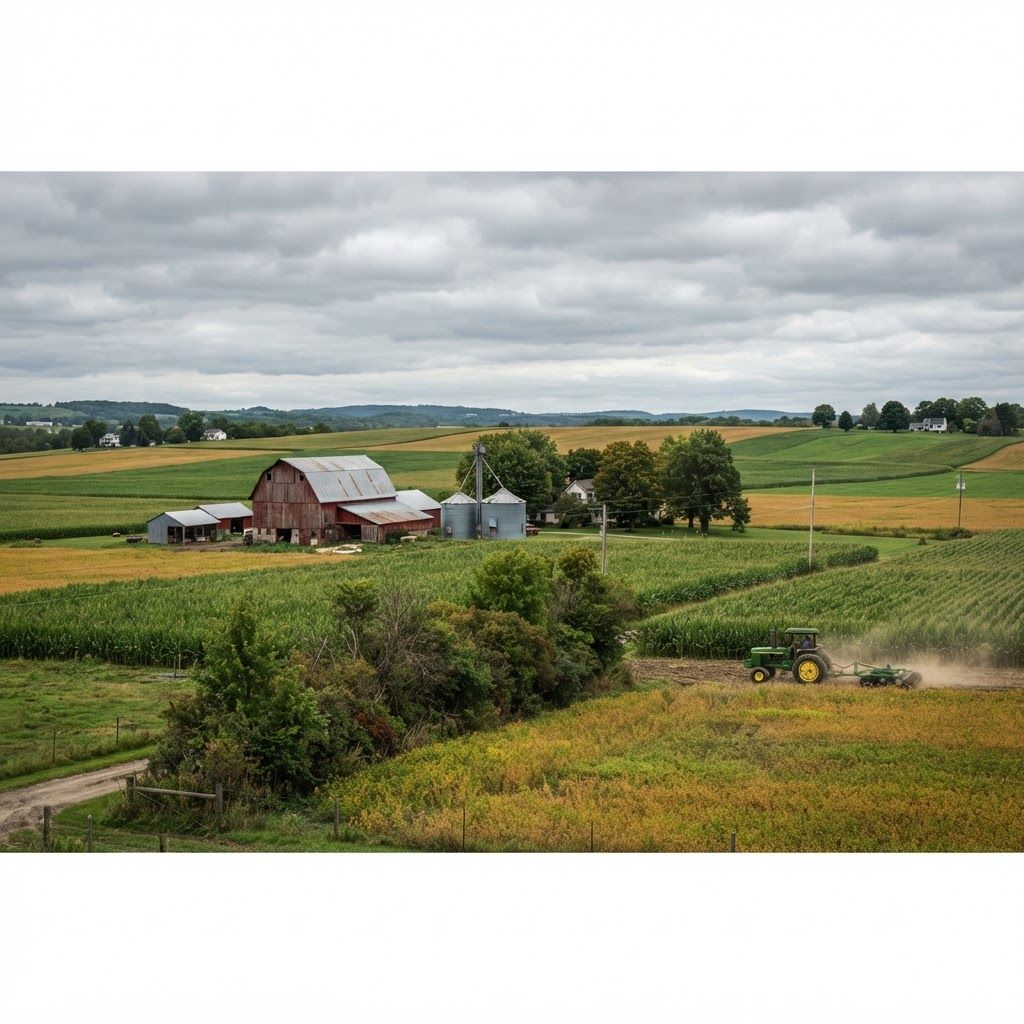
Buffalo is often described purely as an industrial city, which understates the agricultural landscape immediately beyond its boundaries. Erie, Niagara, Wyoming and Chautauqua counties together form one of New York's more productive agricultural regions, moderated by the lake effect that makes fruit growing viable at this latitude and supported by deep glacial soils well suited to dairy forage and row crops.
Understanding Agriculture Around Buffalo
The defining feature of local farming is the lake. Lake Erie and Lake Ontario buffer temperature extremes, delaying spring bud break enough to protect fruit from late frost and extending the fall growing window. That microclimate underpins the region's grape, apple, cherry and stone fruit production, some of which sits within an hour of downtown Buffalo.
Away from the lakeshore, the profile shifts to dairy, corn, soybeans, wheat and hay, with a substantial and growing vegetable sector serving both wholesale distribution and direct markets. Season length is the persistent constraint, which is why greenhouse production, high tunnels and controlled-environment agriculture have expanded rapidly in recent years.
The Top 10 Farming Companies in the Buffalo Region
1. Queen City Family Dairy Farms
A multi-generation dairy operation combining traditional herd management with modern robotic milking and precision feed monitoring. Strong emphasis on animal welfare and nutrient management makes it a frequently cited example of sustainable intensification in the region.
2. Niagara Orchards and Fruit Growers
Produces apples, cherries, peaches and pears across lakeshore acreage, supplying wholesale packers, cider producers and farm markets. Extensive varietal diversity spreads harvest labor and hedges against weather affecting any single window.
3. Lakeshore Vineyard Company
Cultivates both native and hybrid wine grapes along the Lake Erie belt, serving wineries and juice processors. Careful canopy management and site selection allow consistent quality despite the region's challenging vintage variability.
4. Erie County Grain and Oilseed Partners
Focuses on corn, soybeans and small grains at commercial scale, using variable-rate application, satellite imagery and yield mapping to manage inputs field by field. Their agronomic data practices are among the more advanced locally.
5. Buffalo Urban Farm Initiative
Operates intensive vegetable production on reclaimed city parcels, supplying neighborhood markets, restaurants and food access programs. Beyond production, the operation functions as a workforce training pipeline for urban agriculture careers.
6. Great Lakes Greenhouse Growers
Runs year-round controlled-environment production of tomatoes, cucumbers, peppers and leafy greens. Supplemental lighting, hydroponic systems and heat recovery allow winter harvests that would be impossible in open field conditions here.
7. Southtowns Livestock and Beef Producers
Raises pasture-based beef and lamb with rotational grazing systems that improve soil carbon and forage resilience. Direct wholesale relationships with regional butchers and restaurants support premium pricing for a clearly differentiated product.
8. Allentown Specialty Crop Collective
Grows high-value specialty items — culinary herbs, microgreens, mushrooms, heirloom vegetables and edible flowers — for the restaurant trade. Short harvest-to-kitchen intervals give chefs quality that distant suppliers cannot replicate.
9. Cheektowaga Maple and Honey Producers
Combines maple syrup production with apiary operations, supplying syrup, honey and value-added products. Pollination services provided to neighboring fruit and vegetable growers make the operation agriculturally significant beyond its own output.
10. Chautauqua Organic Row Crop Farms
Certified organic production of grains, legumes and cover crop seed, with long rotations and integrated soil health practices. Their transition experience makes them a practical knowledge resource for conventional growers considering organic certification.
Challenges and Opportunities in Local Farming
Labor availability remains the most cited constraint, driving investment in mechanization for planting, weeding and harvest. Weather volatility has increased, with heavier rainfall events, unpredictable frost timing and drought episodes complicating planning. Land pressure near the city creates both a threat from development and an opportunity for growers able to serve premium direct markets.
On the opportunity side, consumer demand for local food is durable rather than faddish. Farmers markets, community supported agriculture subscriptions, farm-to-restaurant relationships and institutional local purchasing by hospitals and universities have all expanded, giving producers channels with better margins than commodity sales.
Technology and Sustainability Trends
Precision agriculture is now standard among larger operations, using soil sampling grids, GPS guidance and variable-rate inputs to reduce fertilizer waste while protecting water quality in the Great Lakes watershed. Cover cropping and reduced tillage have gained wide adoption for erosion control and soil structure. Controlled-environment agriculture continues to grow, supported by the region's relatively affordable land and available industrial buildings. Anaerobic digestion on dairy farms converts manure into energy while reducing nutrient runoff, and renewable energy installations increasingly supplement farm income.
Final Thoughts
Agriculture around Buffalo is more diverse and more technologically sophisticated than its reputation suggests. Dairy and grain provide the economic backbone, lakeshore fruit provides regional distinction, and urban and specialty growers connect production directly to the city's food culture. For buyers, chefs and residents, engaging with these operations through markets, subscriptions and local purchasing keeps working farmland viable in a region where the pressure to convert it is constant.