
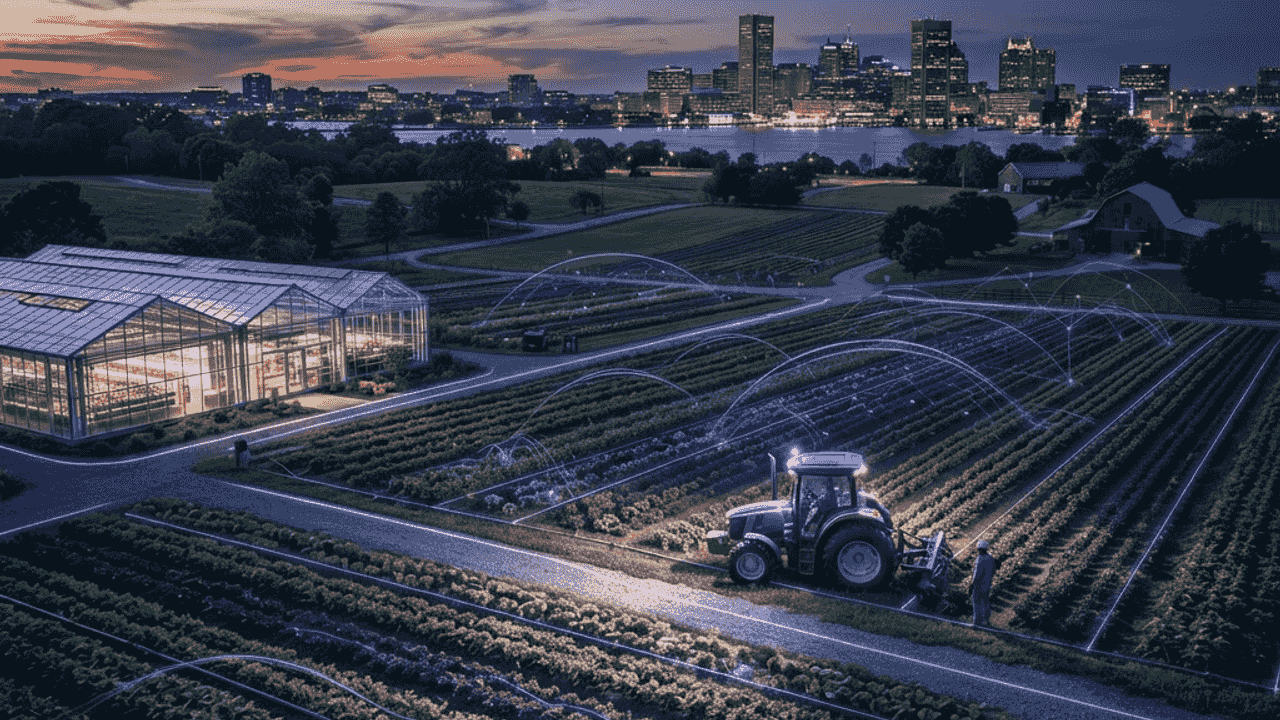
Agriculture in and Around Baltimore
While Baltimore is known as a port and industrial city, agriculture remains woven into the fabric of the surrounding region. Maryland's fertile land supports a mix of traditional farms producing grains, vegetables, and livestock, alongside a growing movement of urban and peri-urban farming operations within the city itself. Together they supply fresh produce to local markets, restaurants, and residents who increasingly value locally grown food.
The farming companies serving the Baltimore area range from established family operations that have worked the land for generations to innovative ventures experimenting with vertical growing, hydroponics, and community-supported agriculture. This diversity gives the region a resilient and varied food system rooted in local production.
The Landscape of Farming Operations
Traditional row-crop and mixed farms in the counties surrounding Baltimore produce staples that feed both people and livestock. These operations often combine seasonal vegetable production with grain, hay, and specialty crops, selling through wholesale channels, farmers markets, and direct-to-consumer programs.
Within the city, urban farms have transformed vacant lots and underused land into productive growing spaces. These operations frequently pair food production with community engagement, education, and job training, addressing food access in neighborhoods that need fresh options. The blend of rural production and urban agriculture makes the Baltimore farming scene distinctive within the Mid-Atlantic.
What Sets a Strong Farming Company Apart
Quality and freshness define success in the farming sector. Operations that deliver consistent, high-quality produce build loyal relationships with restaurants, grocers, and consumers. Increasingly, buyers care about how food is grown, favoring farms that use sustainable practices, minimize chemical inputs, and steward soil health responsibly.
Efficient distribution is another differentiator. Farms that can reliably harvest, pack, and deliver on schedule, whether to a farmers market stall or a wholesale account, earn trust and repeat business. Those that diversify revenue through community-supported agriculture subscriptions, agritourism, or value-added products often prove more resilient to seasonal and market swings.
Trends Transforming Local Agriculture
Demand for local and sustainably grown food continues to climb, driven by consumer interest in freshness, transparency, and environmental impact. This trend rewards Baltimore-area farms that can market their proximity and growing practices directly to buyers. Farm-to-table partnerships with local restaurants have become a meaningful sales channel and a source of brand credibility.
Technology is also reshaping farming. Precision agriculture tools, controlled-environment growing, and data-driven planning help farms increase yields and reduce waste. Urban farming ventures in particular are experimenting with hydroponic and vertical systems that maximize output in limited space, pointing toward the future of food production in dense cities.
Supporting the Region's Food Future
The farming companies serving Baltimore are more than food producers; they are stewards of the region's agricultural heritage and contributors to local food security. For buyers, choosing partners who prioritize quality, sustainability, and reliable delivery strengthens the entire local food system.
Whether sourcing from a long-established county farm or a pioneering urban grower, Baltimore residents and businesses have meaningful options for fresh, locally produced food. Supporting these operations helps sustain green space, create local jobs, and keep the region's agricultural traditions vibrant for years to come.