
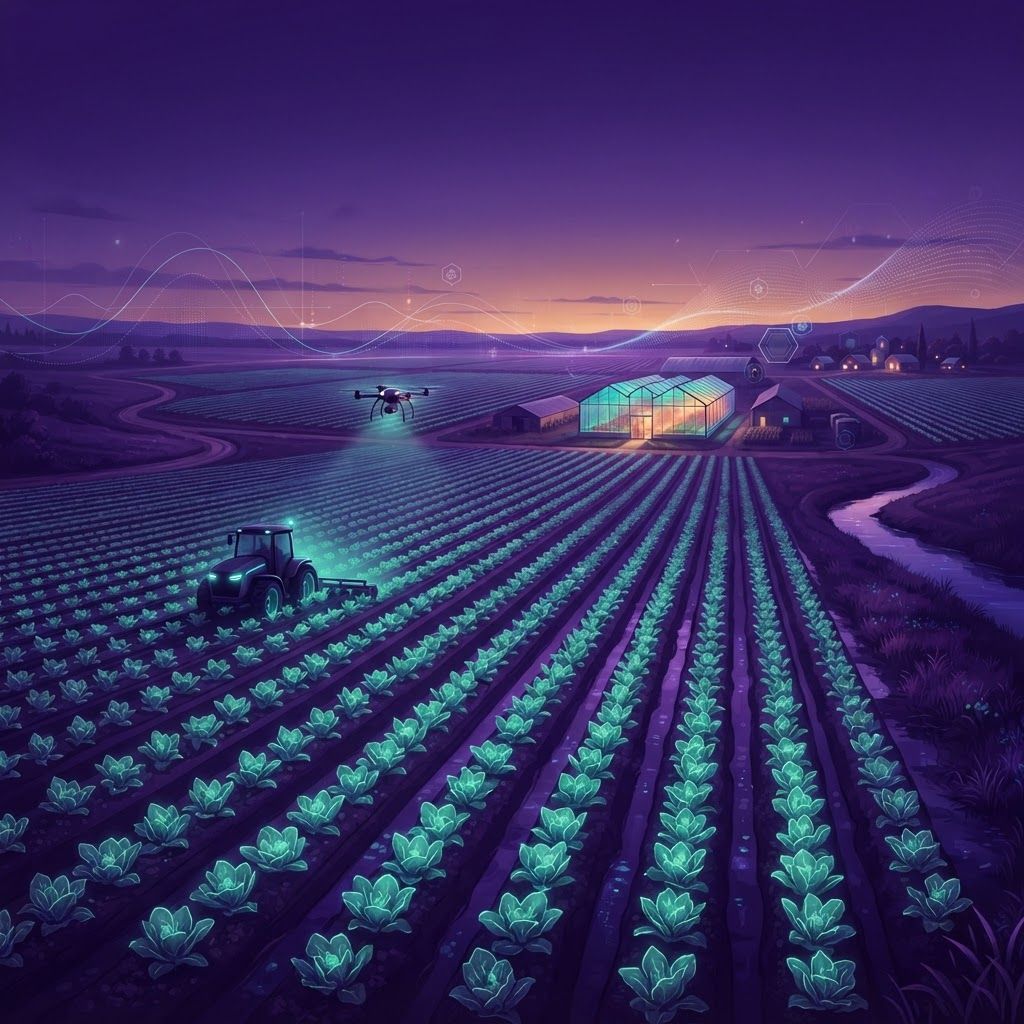
Agriculture in a High-Value Landscape
Farming near Babylon operates under conditions that would challenge most agricultural regions. Land is expensive, parcels are small and often fragmented, and suburban neighbors sit close to field edges. Yet agriculture persists and in some segments thrives, because the same density that raises land costs also puts millions of consumers within a short drive of the farm gate. That proximity supports direct sales at prices no commodity market would pay.
The result is a farming sector built on value rather than volume. Operations here focus on high-value crops, controlled environment production, nursery and horticultural stock, and direct-to-consumer models that capture retail margin instead of surrendering it to distributors.
The Models That Work Locally
Four approaches dominate. Direct market vegetable farming sells through farm stands, community supported agriculture subscriptions, and farmers markets. Controlled environment agriculture, including greenhouses and hydroponic systems, extends seasons and increases yield per acre dramatically. Nursery and sod production serves the enormous residential landscaping demand of surrounding suburbs. Specialty and agritourism operations combine production with experiences such as pick-your-own, events, and education, monetizing land through visitors as well as harvest.
1. Great South Bay Family Farms
A diversified vegetable operation selling through a farm stand and subscription boxes. Direct market farms of this type succeed on variety, harvest freshness, and a customer relationship that tolerates seasonal fluctuation.
2. Babylon Greenhouse Growers
Produces tomatoes, cucumbers, herbs, and leafy greens under glass year round. Controlled environments reduce weather risk and water use while delivering consistent quality that restaurants and grocers can plan around.
3. South Shore Hydroponic Farms
Operates soilless production systems in a compact footprint, often indoors. Yield per square foot and drastically reduced water consumption make this model well suited to land-constrained areas.
4. Suffolk Nursery & Sod Company
Grows trees, shrubs, perennials, and turf for landscapers and garden centers. Nursery production is one of the most economically significant agricultural sectors on Long Island precisely because suburban development creates continuous demand.
5. Coastal Organic Produce Cooperative
A cooperative of certified organic growers pooling distribution and marketing. Cooperation lets small farms reach wholesale accounts that would otherwise require volumes none of them could supply alone.
6. Island Berry & Orchard Farms
Focuses on strawberries, blueberries, and tree fruit with pick-your-own operations. Agritourism converts a single harvest into both product sales and admission revenue while building lasting customer loyalty.
7. Harborline Herb & Microgreen Growers
Supplies chefs with culinary herbs, edible flowers, and microgreens on short delivery cycles. High value per pound and rapid growth cycles make this category viable on very small acreage.
8. Sunrise Poultry & Egg Farms
Produces pasture-raised eggs and poultry for local markets. Consumers willing to pay premiums for animal welfare and freshness support this model where commodity production could not compete.
9. Babylon Community Farm Project
Combines food production with education, workforce training, and food access programs. Community-oriented farms often blend earned revenue with grants and partnerships, serving social as well as agricultural purposes.
10. Bayview Aquaponics Ventures
Integrates fish production with hydroponic crops in a closed-loop system. Aquaponics remains technically demanding but demonstrates how resource efficiency can substitute for land availability.
Trends Driving Local Agriculture
Controlled environment agriculture continues to expand as energy-efficient lighting and climate control improve economics. Soil health practices including cover cropping and reduced tillage are gaining ground as growers work to sustain productivity on land they cannot easily replace. Direct-to-consumer channels have matured, with online ordering and subscription models smoothing cash flow across a season. Water quality regulations, important in an area dependent on a sole-source aquifer, are pushing precise nutrient management and irrigation scheduling. And farmland preservation programs remain critical, since development pressure is the single largest long-term threat to agriculture in the region.
Considerations for Growers and Buyers
For farmers, the economics here favor differentiation over scale. Investing in season extension, storage, and value-added processing typically returns more than acquiring additional acreage. Building a recognizable local identity supports premium pricing that commodity channels cannot match. For chefs and grocers, buying locally requires planning around genuine seasonality and committing to volumes in advance so growers can plant with confidence. Both sides benefit from multi-year relationships rather than spot purchasing.
Labour, Regulation, and Long-Term Viability
Beyond land and weather, two forces shape farm viability in this region more than any other. The first is labour. Skilled agricultural workers are scarce and housing costs make recruitment difficult, which pushes operations toward mechanization, season extension that spreads work more evenly, and crop choices that avoid extreme harvest labour peaks. Farms that invest in worker retention through predictable schedules and year-round employment consistently outperform those relying on short-term hiring.
The second is regulation. Water quality rules protecting the aquifer, nutrient management requirements, food safety certification for wholesale buyers, and pesticide record keeping all demand administrative capacity that small farms rarely budget for. Growers who treat compliance as a business function, with dedicated time and proper record systems, find it opens wholesale and institutional markets that informal operations cannot access. Together, labour strategy and regulatory readiness often determine which farms survive the next generational transition.
Final Thoughts
Farming around Babylon is a study in adaptation. With limited land and high costs, local operations have shifted toward greenhouse and hydroponic production, nursery stock, specialty crops, and direct customer relationships that capture full retail value. It is a demanding model, but it keeps working farms in a densely populated region and gives residents access to food grown within a few miles of where they eat it.