
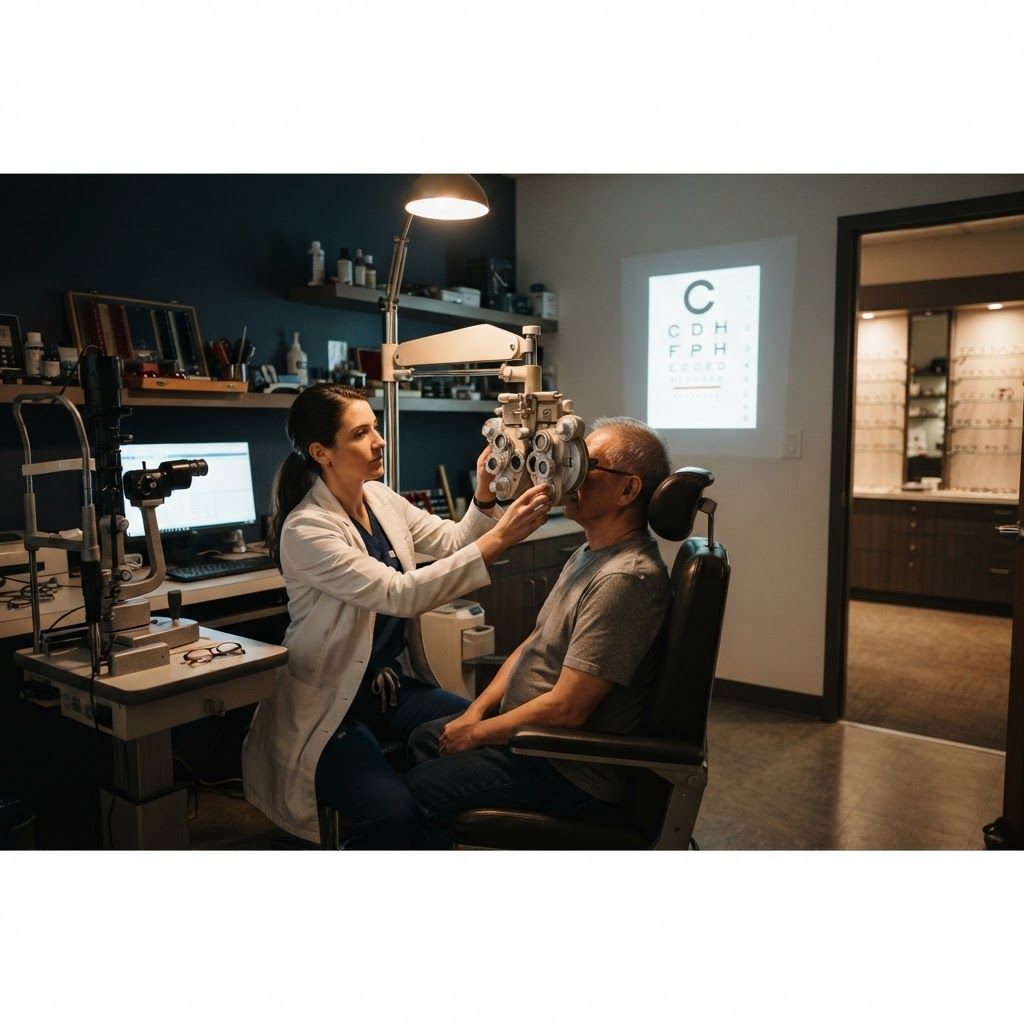
Understanding Who Does What in Eye Care
Optometrists, ophthalmologists, and opticians
Patients frequently choose the wrong provider because the three main eye-care roles are easy to confuse. Optometrists perform comprehensive eye examinations, prescribe glasses and contact lenses, diagnose disease, and manage many conditions medically. Ophthalmologists are physicians who additionally perform surgery, including cataract extraction, retinal procedures, and glaucoma operations. Opticians fit and dispense eyewear but do not examine or diagnose.
For most residents, the right entry point is a comprehensive optometric examination, which should include dilated or wide-field retinal evaluation rather than a vision screening alone. Screenings measure how well someone reads a chart; examinations look for glaucoma, macular degeneration, diabetic retinopathy, and retinal detachment risk, none of which produce symptoms in early stages.
Why Retinal Screening Deserves Local Emphasis
Diabetes prevalence and preventable vision loss
South Bay communities carry a higher-than-average diabetes burden, and diabetic retinopathy remains a leading cause of working-age blindness despite being highly treatable when caught early. Annual dilated retinal examination is the standard of care for anyone with diabetes, yet adherence nationally sits well below recommended levels. Choosing a center that performs retinal imaging routinely, and that has a clear referral pathway to a retinal specialist when findings appear, is one of the highest-value healthcare decisions a diabetic patient can make.
Ten Eye Care Centers Serving Chula Vista
1. South Bay Vision Institute
A combined optometry and ophthalmology practice offering routine care and surgical management in one organization, which simplifies handoffs for cataract and glaucoma patients. Wide-field retinal imaging is standard on comprehensive exams rather than an upsell.
2. Chula Vista Family Eye Care
A general optometric practice with strong pediatric capability, including binocular vision assessment for children struggling with reading. Bilingual staff and evening availability make it practical for working families.
3. Bayfront Ophthalmology Associates
A surgical practice concentrating on cataract extraction with premium and standard lens options, plus medical glaucoma management. Notable for detailed preoperative counseling on lens choice, where realistic expectation-setting matters more than technology.
4. Eastlake Optometry Group
Serving eastern Chula Vista with a modern dispensary and specialty contact lens fitting, including scleral lenses for keratoconus and severe dry eye. A good option for patients whose corneas do not tolerate conventional lenses.
5. Otay Retina Specialists
A retina-focused referral practice managing diabetic retinopathy, macular degeneration, and retinal tears with intravitreal injection therapy and laser treatment. Access to same-week appointments for acute findings is its most clinically important attribute.
6. Third Avenue Vision Center
A community-oriented practice with transparent pricing on exams and eyewear, serving many uninsured and cash-paying patients. Straightforward, efficient care with an emphasis on affordable frames.
7. Bonita Pediatric Eye Care
Dedicated to children's vision, including amblyopia treatment, strabismus co-management, and myopia control therapy, an area with rapidly strengthening evidence. Particularly relevant given rising childhood myopia rates.
8. Rancho del Rey Laser Vision
Refractive surgery focused, offering LASIK and related corneal procedures with thorough candidacy screening. Its reputation comes partly from a willingness to disqualify unsuitable candidates rather than proceed on marginal corneal measurements.
9. Palomar Optical and Eye Clinic
A neighborhood clinic combining exams with same-day single-vision lens fabrication, useful for patients who need replacement glasses quickly. Also handles routine dry eye and allergy management.
10. Harborview Glaucoma and Cornea Center
A subspecialty practice for glaucoma monitoring and corneal disease, equipped for visual field testing and optic nerve imaging over time. Long-term trend data, not single measurements, is what actually protects the optic nerve.
How to Get the Most From an Eye Exam
Preparation and follow-through
Bring current glasses and contact lens boxes, a list of medications including anything for blood pressure or diabetes, and family history of glaucoma or macular degeneration, which meaningfully changes screening intensity. Expect dilation on a comprehensive exam and arrange not to drive immediately afterward if light sensitivity is likely.
Interpreting recommendations
Ask what was seen on the retina, not merely whether the prescription changed. Ask whether findings should be re-imaged for comparison next year, since progression matters more than any single image. If surgery is proposed, ask specifically what happens with no intervention over the next year, and what the realistic range of visual outcomes is, including the possibility of still needing glasses afterward.