
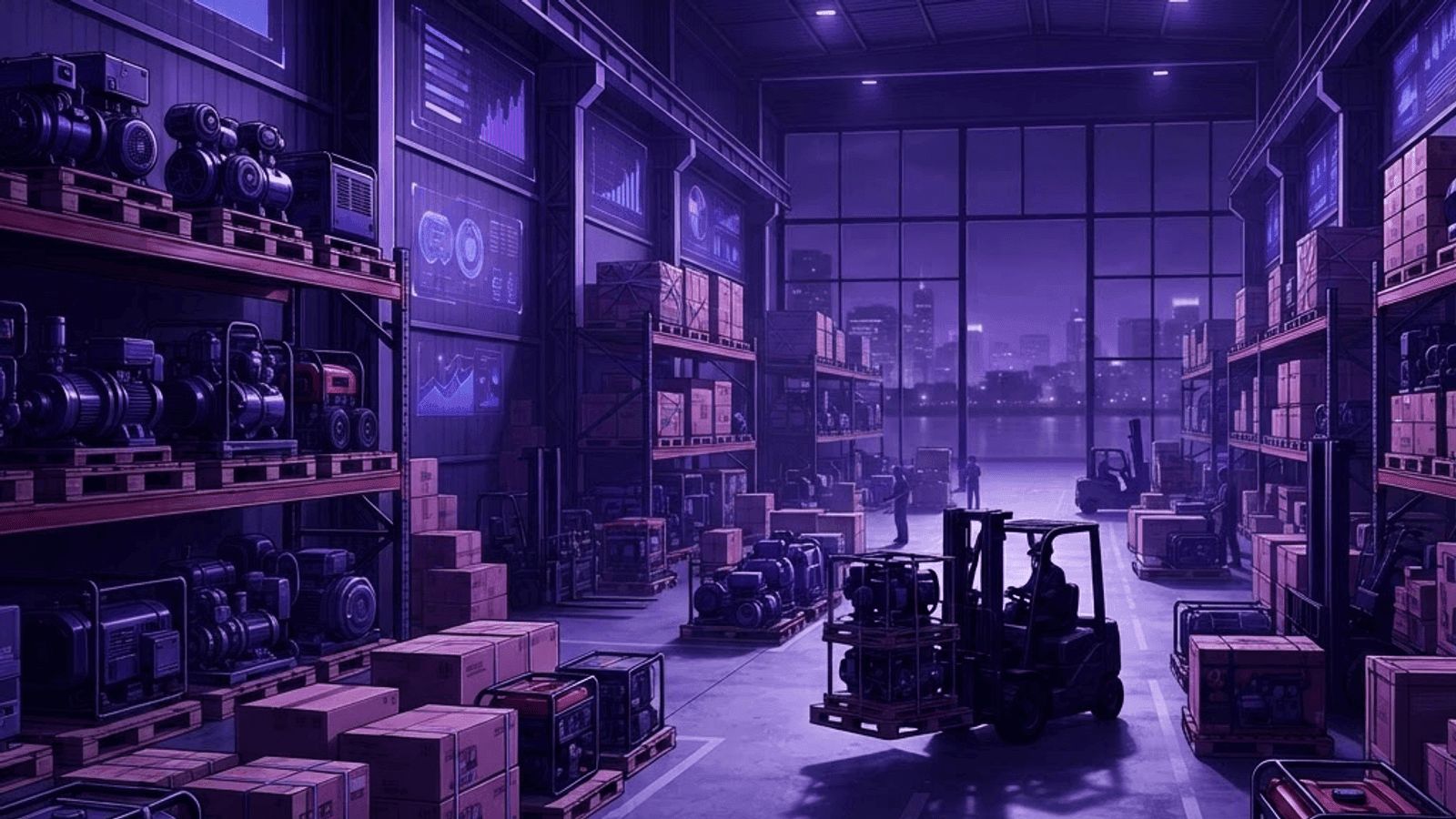
Equipment Distribution in an Equipment Town
Peoria's identity is tied to machinery, and that heritage extends well beyond manufacturing into distribution. Contractors, farmers, plant maintenance teams, warehouses, and commercial operators all need equipment sourced, serviced, and supported locally. The regional wholesale market developed alongside that demand and offers unusually broad capability for a city of its size.
Equipment distribution differs from general wholesale in one crucial respect: the sale is only the beginning. Machines need parts, service, operator training, warranty administration, and eventually resale or trade. The best equipment wholesalers therefore behave more like long-term partners than transactional vendors, and buyers should evaluate them accordingly.
How These Wholesalers Were Evaluated
Criteria included product range, brand representation, parts availability, service capability, technical knowledge, financing and rental options, and customer reputation. Because downtime is the dominant cost in equipment ownership, service response and parts depth weighed heavily in the assessment.
The Top 10 Equipment Wholesalers in Peoria
1. Altorfer Cat
As a long-established heavy equipment dealer serving central Illinois, Altorfer Cat distributes construction machinery, power systems, and related equipment alongside extensive parts and service support. Its technician depth, field service fleet, and parts inventory keep contractors productive. Rental and used equipment options give buyers flexibility across project cycles.
2. Midwest Industrial Equipment Supply
This distributor supplies pumps, compressors, blowers, and industrial process equipment to plants and municipalities. Application engineering ensures equipment is sized properly rather than simply sold, which prevents efficiency losses and premature failure. In-house repair capability supports assets already installed.
3. Prairie Material Handling
Prairie Material Handling distributes forklifts, pallet jacks, conveyors, racking, and warehouse equipment. Site assessment, load capacity guidance, and layout planning help operations improve throughput rather than just replace equipment. Fleet service programs and operator training support safe, continuous operation.
4. RiverBend Agricultural Equipment
Serving farms across the region, this distributor supplies tractors, implements, grain handling equipment, and precision agriculture technology. Seasonal service scheduling and parts stocking align with the narrow windows agriculture allows. Technology support for guidance and yield monitoring systems has become a major part of its value.
5. Heartland Power Generation Equipment
This wholesaler distributes generators, transfer switches, and backup power systems for commercial, healthcare, and industrial customers. Load analysis, installation coordination, and maintenance programs ensure systems actually work when needed. Testing and documentation support regulatory requirements for critical facilities.
6. Illinois Valley Tool and Equipment Distributors
Supplying power tools, hand tools, fasteners, and jobsite equipment, this distributor serves contractors and industrial maintenance teams. Broad stock and repair services reduce downtime on tools that see daily abuse. Volume programs and jobsite delivery simplify procurement for larger contractors.
7. Peoria Commercial Kitchen Equipment
This wholesaler supplies ranges, refrigeration, dishwashing, and food preparation equipment to restaurants and institutional kitchens. Layout planning, utility coordination, and installation management prevent expensive buildout errors. Service contracts and parts availability protect operations where equipment failure stops service immediately.
8. Bradley Landscaping and Turf Equipment
Serving landscape contractors, municipalities, and golf courses, Bradley Landscaping and Turf Equipment distributes mowers, trimmers, utility vehicles, and turf care machinery. Seasonal service programs and parts stocking match the intense demand of growing season. Growing interest in battery-electric equipment has expanded its portfolio.
9. Central Illinois Welding and Cutting Equipment
This distributor supplies welding machines, plasma cutters, fume extraction, and consumables to fabrication shops and maintenance departments. Process guidance on machine selection and parameter setup improves weld quality directly. Equipment repair and calibration services support certified welding operations.
10. Prairie Cleaning and Facility Equipment
Focused on floor scrubbers, sweepers, pressure washers, and facility maintenance equipment, this wholesaler serves building service contractors and institutions. Equipment demonstrations on the customer's actual floors prevent mismatched purchases. Maintenance training and parts support extend machine life considerably.
Buy, Rent, or Lease: Making the Right Call
Utilization drives the decision. Equipment used consistently, typically above roughly sixty to seventy percent of available time, usually justifies ownership. Occasional or project-specific needs generally favor rental, which converts capital expense into project cost and shifts maintenance responsibility to the supplier.
Leasing sits between the two, offering predictable payments, newer equipment, and often bundled maintenance, which appeals to operations that value cash flow predictability over asset accumulation. Rental purchase options let buyers try equipment on real work before committing, which is particularly sensible for unfamiliar machine categories or emerging technologies such as battery-electric equipment.
Trends in Equipment Distribution
Telematics and connected equipment have moved from premium features to standard expectations. Utilization tracking, fault code reporting, and predictive maintenance alerts reduce unplanned downtime and support better fleet decisions. Buyers increasingly compare data platforms alongside mechanical specifications.
Electrification is progressing steadily, especially for equipment used indoors, in noise-restricted areas, or in emissions-sensitive settings. Battery-electric forklifts are already mainstream, and compact construction and turf equipment are following. Distributors are building charging infrastructure knowledge and high-voltage service capability accordingly.
Automation and operator assistance features also continue to spread, helping address skilled operator shortages while improving safety and consistency. Meanwhile, supply chain caution has increased interest in distributors carrying meaningful local inventory rather than relying entirely on factory shipment.
How to Evaluate Total Cost of Ownership
Purchase price is a minority of lifetime cost. Build a comparison that includes fuel or energy consumption, routine maintenance, expected wear parts, insurance, expected downtime, and residual value at disposal. Ask distributors for realistic maintenance cost estimates based on similar customers.
Investigate service capability concretely. Ask how many technicians serve your area, typical response time for a breakdown, whether field service is available, and what percentage of common parts are stocked locally. Request references from customers with similar duty cycles and ask them specifically about downtime experiences.
Review training and documentation, since improper operation causes a large share of equipment failures. Confirm warranty terms, what voids coverage, and how claims are processed. Finally, discuss disposal or trade-in expectations at the outset, because resale value differs substantially between brands and materially affects lifetime cost.
Final Thoughts
Peoria's equipment wholesalers combine strong brand representation with the parts inventory, service depth, and technical guidance that equipment ownership demands. Whether you need heavy construction machinery, industrial process equipment, material handling systems, agricultural technology, commercial kitchen gear, or facility maintenance machines, capable distributors are close by. Evaluate on service capability and total cost of ownership rather than purchase price, and your equipment will deliver productivity instead of frustration.