
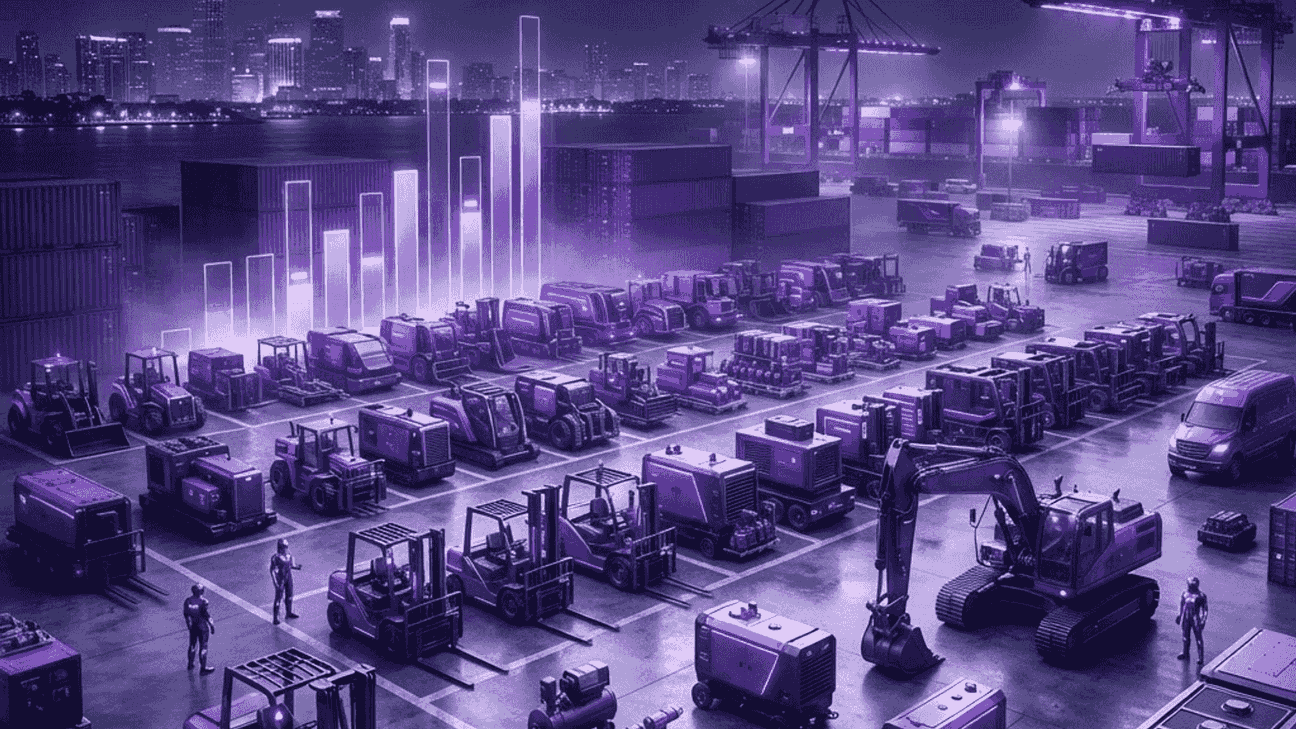
Equipment Distribution in a High-Demand Market
Miami's economy runs on equipment. Construction cranes and compact machinery shape the skyline, warehouses near the airport and seaport depend on forklifts and conveyors, thousands of restaurants and hotels rely on commercial kitchen and laundry systems, and hurricane season creates predictable demand for generators and pumps. Equipment wholesalers and distributors sit at the center of all of it, supplying machinery, tools, attachments, parts and service to businesses that cannot afford extended downtime.
The local environment shapes buying decisions in specific ways. Heat and humidity stress engines, hydraulics, electronics and cooling systems, so build quality and maintenance access matter more than in temperate climates. Salt air accelerates corrosion on anything used near the water or at the port. Storm risk makes backup power and dewatering equipment essential rather than optional. The best distributors here understand these realities and steer buyers toward configurations that hold up.
Categories of Equipment Wholesale
Construction and earthmoving covers excavators, loaders, compaction and concrete equipment, typically sold with financing and service contracts. Material handling includes forklifts, pallet jacks, racking and conveyors for warehouse operations. Power and generation spans generators, transfer switches, compressors and pumps. Commercial kitchen and laundry equipment serves hospitality. Industrial tools and shop equipment includes lifts, welders, compressors and hand tools. Finally, specialty categories such as landscaping, cleaning and marine equipment serve their own distinct customer bases.
Because equipment purchases are capital decisions, the distributor relationship extends far beyond the transaction. Parts availability, technician capability and response time often matter more than the original purchase price.
The Top 10 Equipment Wholesalers in Miami
1. Biscayne Industrial Equipment Supply. A broad-line distributor covering compressors, pumps, generators, shop equipment and industrial consumables. Buyers cite inventory availability and in-house service capability, which shortens repair turnaround significantly.
2. Doral Construction Machinery Distributors. Supplies excavators, skid steers, compaction equipment and attachments for contractors. Its strengths are operator training, attachment matching and preventive maintenance programs that extend machine life in demanding conditions.
3. Atlantic Material Handling Company. Focuses on forklifts, electric pallet trucks, racking systems and dock equipment for warehouses and logistics operators. Fleet customers value scheduled maintenance and rapid response on downed units.
4. Everglades Power Systems Wholesale. Concentrates on standby and portable generators, transfer switches, fuel systems and load bank testing. Given storm-season demand, its planning support and pre-season inspection services are a significant differentiator.
5. Magic City Restaurant Equipment Supply. Distributes commercial ranges, refrigeration, dishwashing, ventilation and smallwares to hospitality operators. Restaurant groups appreciate kitchen layout assistance and coordination with permitting requirements.
6. Hialeah Tool and Fastener Wholesale. Serves industrial and construction customers with power tools, hand tools, abrasives, fasteners and safety supplies. High stock depth and volume pricing make it a routine resource for shops and jobsites.
7. Port Marine and Dock Equipment Supply. Specializes in winches, hoists, marine hardware, pumps and corrosion-resistant equipment for waterfront and port operations. Its expertise in saltwater durability addresses a need generic suppliers often miss.
8. Kendall Landscaping Equipment Distributors. Supplies commercial mowers, trimmers, blowers, chippers and irrigation equipment to landscape contractors. Buyers value parts availability and quick service, which is critical during year-round growing seasons.
9. South Florida Cleaning and Facility Equipment. Offers floor scrubbers, pressure washers, extractors and janitorial systems to facility services companies and property managers. Its reputation rests on equipment training and dependable consumable supply.
10. Wynwood Event and Staging Equipment Wholesale. Provides staging, rigging, lighting trusses, portable power distribution and climate equipment for venues and production companies. Event operators cite reliability under tight setup schedules and outdoor conditions.
Trends in the Equipment Sector
Electrification and emissions standards are reshaping product lines. Battery-powered compact machinery, electric forklifts and cordless tool platforms continue to gain share, driven by indoor air quality requirements, noise limits and lower operating costs. Telematics has become standard on larger equipment, giving owners visibility into utilization, fault codes and maintenance intervals, which in turn supports data-driven fleet decisions rather than guesswork.
Business models are shifting as well. Rental and rent-to-own arrangements are increasingly common as operators preserve capital and match equipment to project duration. Service contracts bundling parts, labor and scheduled maintenance are growing because skilled technicians are scarce and predictable costs are attractive. Meanwhile, supply chain volatility has raised the value of distributors who carry local parts inventory instead of relying on distant warehouses.
How to Select an Equipment Wholesaler
Evaluate service before evaluating price. Ask how many technicians the distributor employs, what average response time looks like, whether mobile service is available, and how quickly common wear parts can be supplied. Confirm whether loaner or rental units are available during major repairs, because that provision alone can protect a project schedule.
Calculate total cost of ownership rather than purchase price. Factor in fuel or energy consumption, maintenance intervals, parts pricing, expected service life in humid coastal conditions and residual value. Request documented specifications and warranty terms in writing, including what voids coverage, and ask about training so operators do not damage equipment through misuse.
Finally, consider readiness for local realities. Ask how the distributor handles storm-season surges, whether critical items can be reserved in advance, and how it prioritizes existing customers during shortages. In Miami, where weather disruption and relentless operating conditions are part of doing business, a distributor with local inventory, capable technicians and honest communication is worth far more than the cheapest quote on a spec sheet.