
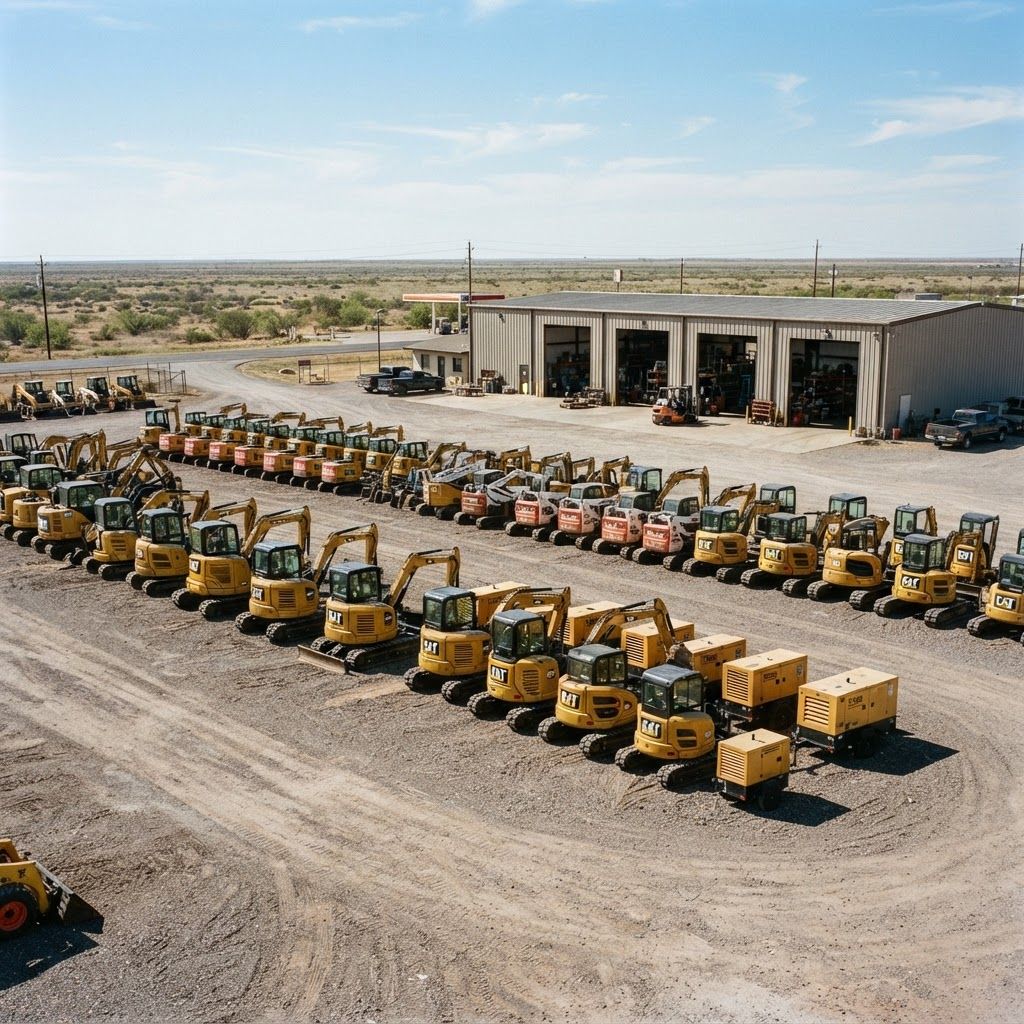
Equipment Distribution in a Working Region
Equipment wholesale is a broad category, covering everything from handheld power tools to skid steers, generators, compressors, forklifts and irrigation pumps. What unites these products is that customers buy them to produce work, which means downtime carries direct financial consequences. Around Lubbock, where agriculture, construction, energy services and manufacturing all operate on demanding schedules, that consequence is acute.
The city's distributors have shaped themselves accordingly. Parts inventory, service departments, rental fleets and financing support are as important as the equipment itself. Buyers here rarely choose a machine purely on specification; they choose the combination of machine, parts availability and service response that minimizes total downtime over years of ownership.
The Top 10 Best Equipment Wholesalers in Lubbock
1. Caprock Construction Equipment Distribution
Wholesale supply of compact excavators, skid steers, loaders, attachments and compaction equipment. Parts stocking and factory-trained service technicians support contractors who cannot afford extended repair waits.
2. Llano Agricultural Equipment Wholesale
Distributors of tractors, implements, sprayers, tillage equipment and harvest support machinery. Seasonal service scheduling and pre-season inspection programs help producers avoid failures during critical windows.
3. Hub City Power Tool Distribution
Wholesale power tools, batteries, accessories and consumables for contractors, industrial customers and retailers. They handle warranty administration and repair, which keeps crews equipped rather than waiting on manufacturer returns.
4. South Plains Material Handling Supply
Forklifts, pallet jacks, conveyors, racking and warehouse equipment, offered new, used and on rental. Site surveys and operator training support are included with larger installations.
5. Red Raider Generator and Power Systems
Distribution of portable and standby generators, transfer switches, light towers and power distribution equipment. Given severe weather risk in the region, standby power is a common requirement for facilities and agricultural operations.
6. Panhandle Air Compressor and Pneumatics
Wholesale compressors, dryers, air tools and pneumatic components, with system design and piping guidance. Proper sizing and moisture control prevent the recurring failures that plague poorly designed shop air systems.
7. Yellowhouse Pump and Irrigation Equipment
Suppliers of submersible and centrifugal pumps, motors, controls and irrigation hardware. Water efficiency drives product recommendations, and their service capability supports both agricultural and municipal customers.
8. Texas Plains Welding and Shop Equipment
Distribution of welders, plasma cutters, gas equipment, benches and shop machinery. They serve fabrication shops, schools and maintenance departments, with consumables ordering programs to prevent stockouts.
9. Monarch Landscape and Turf Equipment
Wholesale mowers, trimmers, blowers, sprayers and turf maintenance equipment for commercial landscapers, municipalities and golf operations. Fleet service programs keep seasonal crews running.
10. Cotton Belt Used Equipment and Auction Sales
Dealers in used machinery, trade-ins and auction inventory across construction, agricultural and industrial categories. Inspected used equipment offers a practical entry point for growing operations managing capital carefully.
Trends in Equipment Distribution
Telematics has become standard on serious equipment, giving owners visibility into hours, fuel use, fault codes and location. That data increasingly drives maintenance scheduling and utilization decisions, and distributors who help customers actually use it hold an advantage over those who simply sell machines. Electrification and battery-powered equipment are also expanding, particularly in compact construction, landscape and material handling categories where noise and emissions matter.
Rental and rental-purchase options continue to grow as buyers hedge against uncertain workloads. Meanwhile, technician availability constrains the whole sector, which has made service capacity a genuine differentiator and pushed distributors toward remote diagnostics and better parts forecasting.
How to Choose an Equipment Wholesaler
Evaluate the ownership experience, not the purchase. Total cost over the life of the machine is dominated by uptime, parts and service, so those factors deserve most of your attention.
- Ask about parts inventory depth and typical availability for common failures.
- Confirm service response times and whether field service is available.
- Compare warranty coverage and what voids it.
- Request utilization data or references from similar operations.
- Consider rental or trial periods before committing to a purchase.
Final Thoughts
Equipment purchases are among the largest capital decisions most operations make, and the distributor you choose affects productivity for years. Lubbock's wholesalers span construction, agricultural, power tool, material handling, generator, pneumatic, pump, welding, turf and used equipment categories, giving regional buyers substantial choice. Define your duty cycle honestly, weigh service and parts capability heavily, and consider rental before buying when demand is uncertain. The machine that can be repaired quickly nearby almost always outperforms the cheaper one that cannot.