
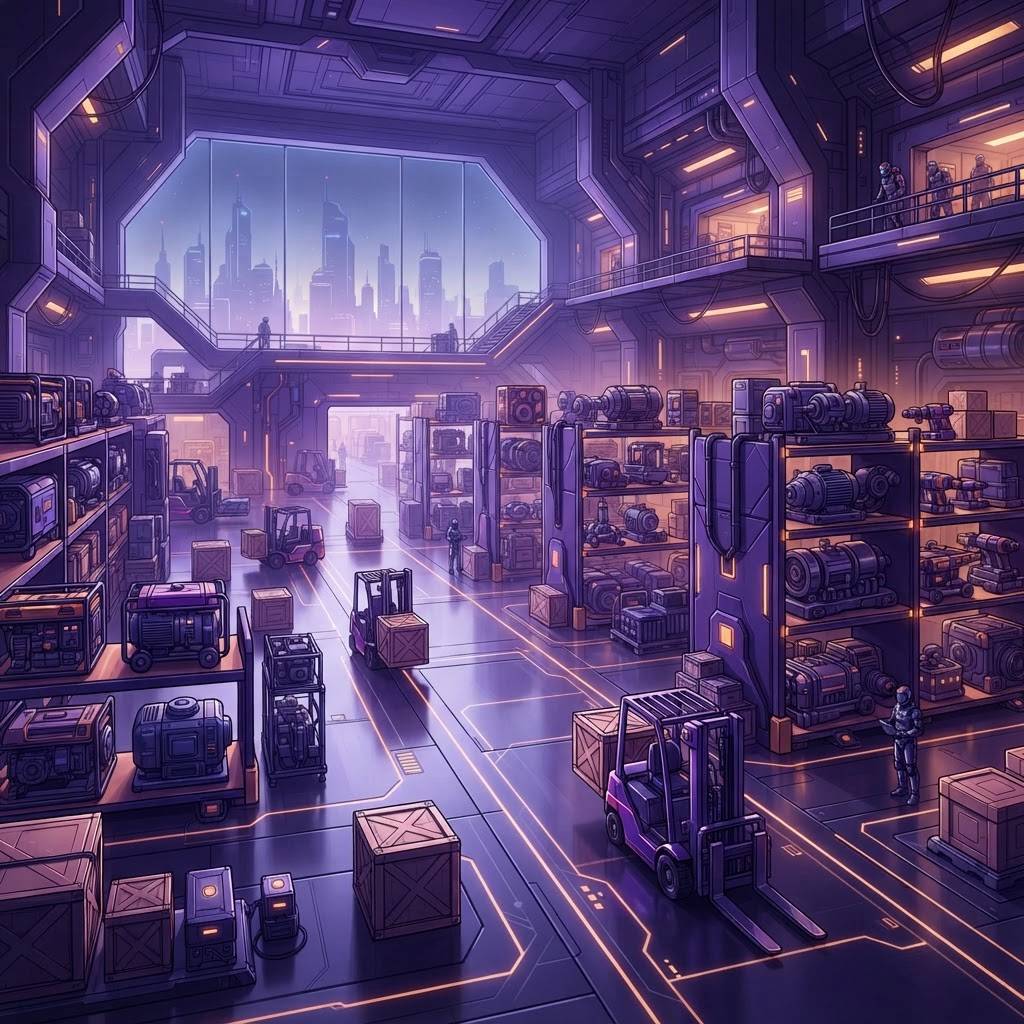
Equipment Supply in a City That Never Slows Down
Hollywood's equipment demand is unusually varied. Construction and renovation run continuously across commercial and residential properties. Production companies need rigging, lighting support structures, and power distribution. Restaurants, hotels, and gyms require commercial-grade machinery with service contracts. Facility teams need everything from floor care machines to HVAC components.
Equipment wholesalers serving this market must therefore balance breadth with genuine technical competence. Selling a machine is straightforward; supporting it with parts, service, and correct specification is what separates a distributor that lasts from one that does not.
How Buyers Evaluate Equipment Suppliers
The first question is always specification fit. Undersized equipment fails early and oversized equipment wastes capital, so a supplier who asks about duty cycle, throughput, and operating environment before quoting is already demonstrating value.
Parts availability is the second consideration, and it is often decisive. A machine that is down for three weeks waiting on a component can cost far more than the price difference between brands. Buyers increasingly ask about local parts stock and average service response time before signing.
Financing and rental options round out the evaluation. Many operators prefer to rent for short projects and buy only for sustained use, so suppliers offering both create flexibility that pure sellers cannot match.
Ten Equipment Wholesalers Serving Hollywood
Sunset Industrial Equipment carries a broad general industrial catalog with strong parts backing, serving contractors and facility teams that need a single dependable source.
Hollywood Production Equipment Supply focuses on the entertainment sector with rigging hardware, power distribution, and staging support built to industry safety standards.
Vine Street Construction Machinery handles compact machinery, compaction, and concrete equipment for urban jobsites where space and noise constraints matter.
Highland Commercial Kitchen Equipment supplies restaurant ranges, refrigeration, and warewashing with installation coordination and service agreements.
Cahuenga Power Systems distributes generators, transfer equipment, and temporary power solutions for events and continuity planning.
Franklin Material Handling Co. covers forklifts, pallet jacks, and storage systems for warehouses and distribution operations.
Argyle HVAC Wholesale serves mechanical contractors with air handling, refrigeration components, and controls, backed by technical support.
Studio Row Tool Distributors stocks professional hand and power tools, fasteners, and consumables with counter service that keeps crews moving.
Cherokee Lane Fitness Equipment supplies commercial gym machines and strength equipment with preventive maintenance programs.
Beachwood Facility Maintenance Supply rounds out the list with floor care machinery, janitorial equipment, and the consumables that keep large buildings serviceable.
Trends Reshaping Equipment Distribution
Electrification is the dominant theme. Battery-powered tools and compact machinery are replacing gas equivalents on urban jobsites because of emissions rules, noise limits, and indoor work requirements. Distributors with deep battery-platform inventory are gaining share quickly.
Telematics and connected equipment are also changing service models. Machines that report usage hours and fault codes allow proactive maintenance scheduling, reducing unplanned downtime. Suppliers who help customers use that data become advisors rather than order-takers.
Rental penetration continues to grow. Rather than owning equipment used a few weeks per year, operators increasingly rent, which shifts the wholesaler's role toward fleet management, logistics, and maintenance capability.
Practical Purchasing Advice
Define the duty cycle honestly before shopping. Equipment specified for occasional use will fail under daily production demands, and the resulting downtime dwarfs the initial savings. Ask for total cost of ownership estimates including consumables, service intervals, and expected component replacement.
Verify service capability independently. Ask how many technicians the supplier employs locally, what the average response window is, and whether loaner equipment is available during extended repairs. A strong service organization is the most reliable predictor of long-term satisfaction.
Building Supply Resilience
Operators who depend on equipment uptime typically maintain relationships with a primary supplier for core categories and secondary sources for specialty items and surge rental capacity. Keeping a documented list of critical spare parts on site further reduces exposure to supply delays.
The equipment wholesalers serving Hollywood have adapted to a market that expects speed, technical accuracy, and genuine support after the sale. Buyers who choose on those criteria rather than sticker price alone consistently see fewer disruptions and better project outcomes.
Rent, Lease, or Buy
The financing decision deserves as much analysis as the equipment selection. Buying makes sense for equipment used consistently, where utilization is high enough that ownership cost per hour falls below rental rates. Renting suits project-specific needs, seasonal peaks, and situations where a newer machine would be preferable in two years.
Leasing occupies the middle ground, preserving capital while providing consistent access and often including maintenance. For growing operations uncertain about future scale, leasing reduces the risk of committing to equipment that no longer fits the business a year later.
Training and Safety Considerations
Equipment is only as good as the operators using it. Improperly trained operators damage machines, produce inconsistent results, and create genuine safety exposure. Suppliers who provide operator training as part of a sale deliver value that extends well past the delivery date.
Documented training records, maintenance logs, and pre-use inspection routines also matter for compliance and insurance. Operations with these systems in place experience fewer incidents and resolve insurance matters far more smoothly when something does happen.