
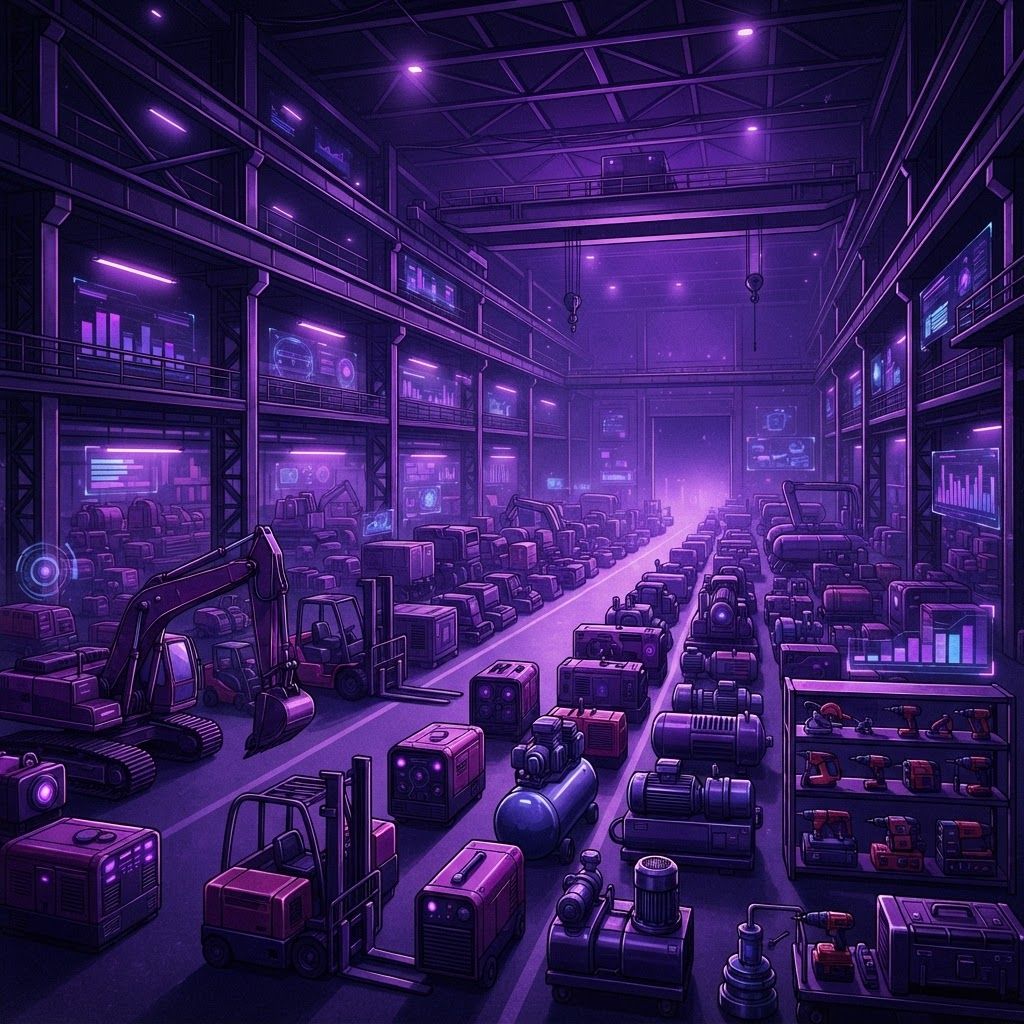
Equipment Is a Long-Term Relationship, Not a Transaction
Buying equipment differs fundamentally from buying supplies. A commercial oven, an excavator, an autoclave, or an air compressor will operate for years, and its total cost is dominated by service, parts, downtime, and energy consumption rather than purchase price. That reality makes the supplier relationship far more consequential than the initial invoice.
Glendale's equipment distributors understand this. Most combine sales with installation, preventive maintenance, parts inventory, and technical support. The businesses they serve span construction contractors, restaurants and commercial kitchens, medical and dental practices, manufacturing facilities, property maintenance operations, and film production companies. Each category has distinct reliability requirements, but all share the same fundamental need: equipment that works when it is needed.
Categories of Equipment Distribution
Construction equipment distributors handle earthmoving machinery, compaction, generators, lifts, and attachments, typically offering both sales and rental. Foodservice equipment dealers supply ranges, refrigeration, dishwashing, and ventilation, usually with design and installation services because commercial kitchens require coordinated layouts and utility connections.
Medical and dental equipment distributors serve clinical practices with imaging, sterilization, treatment furniture, and monitoring devices under regulatory constraints. Industrial equipment suppliers provide compressors, material handling, pumps, and process machinery. Tool and light equipment distributors handle power tools, generators, and portable machinery. Specialty categories include laundry equipment, HVAC, and production and lighting equipment for entertainment work.
The Top 10 Equipment Wholesalers in Glendale
1. Verdugo Construction Equipment — Supplies and services earthmoving machinery, compaction equipment, generators, and lifts. Rental-to-purchase options let contractors evaluate a machine on real jobs before committing capital.
2. Glendale Restaurant Equipment Supply — Provides commercial cooking equipment, refrigeration, dishwashing, and stainless fabrication with kitchen design and installation support. Layout expertise prevents costly ventilation and utility errors during buildouts.
3. San Fernando Industrial Machinery — Distributes compressors, pumps, material handling equipment, and process machinery to manufacturers, with preventive maintenance programs that reduce unplanned downtime.
4. Crescenta Medical Equipment Distribution — Serves clinics and dental practices with treatment furniture, sterilization equipment, and diagnostic devices, including installation validation and service documentation required for regulatory compliance.
5. Adams Hill Tool & Power Equipment — Carries professional power tools, generators, pressure washers, and portable equipment, with on-site repair service that keeps crews productive rather than waiting on manufacturer turnaround.
6. Foothill Commercial Laundry Systems — Supplies washers, dryers, and finishing equipment to hospitality, healthcare, and multi-housing operators, with utility efficiency analysis that often justifies replacement of aging machines.
7. Kenneth Road HVAC Equipment Wholesale — Distributes air conditioning, heating, and ventilation equipment plus controls and refrigerant products to licensed contractors, with load calculation and selection assistance.
8. Grandview Material Handling Solutions — Provides forklifts, pallet jacks, conveyors, and racking systems, including fleet management and operator safety training programs required for compliance.
9. Glenoaks Production Equipment Supply — Serves film and video production with lighting, grip, power distribution, and support equipment. Both sales and rental serve productions with variable, project-based needs.
10. Chevy Chase Landscape & Grounds Equipment — Supplies commercial mowers, trimmers, blowers, and irrigation equipment to landscape contractors and property managers, with seasonal service scheduling and parts stocking.
Buy or Rent: Making the Right Call
The buy-versus-rent decision depends primarily on utilization. Equipment used consistently justifies ownership, since rental rates over a year typically exceed purchase cost. Equipment used occasionally rarely justifies purchase, because ownership carries storage, maintenance, insurance, and depreciation whether or not the machine operates.
Renting also transfers maintenance responsibility and provides access to newer equipment without capital commitment. Ownership provides availability certainty, which matters when a machine is central to daily operations. Many operators reach a hybrid conclusion: own core equipment used daily, rent specialty equipment used occasionally, and rent supplemental units during peak demand.
Evaluating Total Cost of Ownership
Purchase price is the least important number in an equipment decision. Build a fuller picture by estimating energy consumption over the expected service life, since efficient commercial refrigeration or HVAC can save more than the price difference from a cheaper unit. Add expected maintenance costs, parts availability and pricing, and the cost of downtime when the equipment fails.
Parts availability deserves specific inquiry. Ask how long the manufacturer supports a model with parts, whether the distributor stocks common wear items locally, and what typical response time looks like for a service call. Equipment from a brand with no local service presence can become effectively unusable when a component fails, regardless of how attractive the purchase price was.
Trends in Equipment Distribution
Electrification is expanding rapidly across categories, from battery-powered landscape equipment to electric material handling and compact construction machines. Drivers include emissions regulations, noise restrictions that permit earlier work in residential areas, and lower operating costs.
Telematics and connected monitoring now provide usage data, fault codes, and maintenance alerts, shifting service from reactive to predictive. Energy efficiency requirements continue tightening, particularly for refrigeration and HVAC. Supply chain lessons have also increased the value distributors place on holding local inventory, and buyers increasingly ask about actual availability rather than accepting quoted lead times at face value.
Final Thoughts
Glendale's equipment wholesalers combine product supply with the installation, maintenance, and parts support that determine whether an investment performs. Evaluate suppliers on service capability and parts availability, calculate total cost of ownership rather than purchase price, and be honest about utilization when deciding between buying and renting. Equipment decisions made carefully pay dividends for a decade; those made on price alone tend to generate expensive lessons much sooner.