
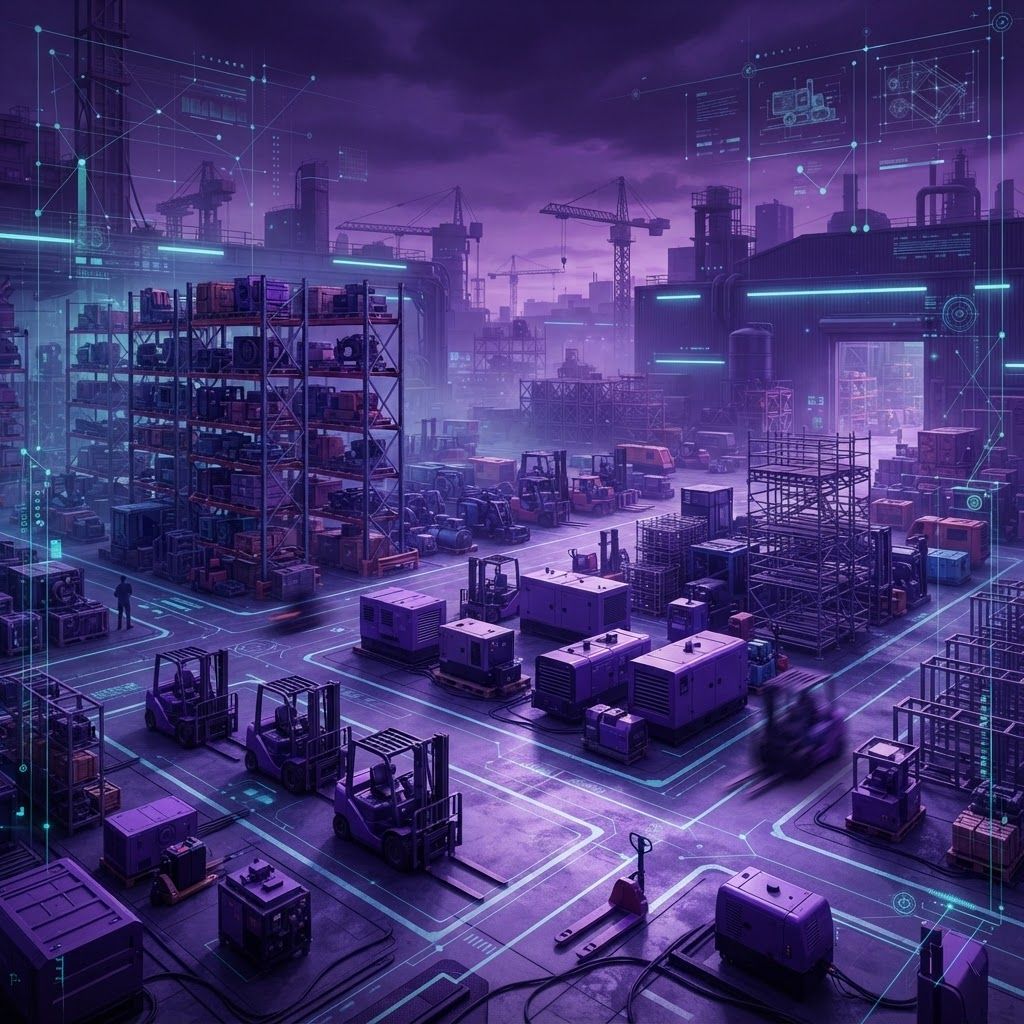
Fontana's Equipment Distribution Advantage
Equipment distribution follows industry. Fontana's concentration of warehousing, manufacturing, construction and food service activity has created sustained demand for forklifts, racking, generators, compressors, commercial kitchen equipment and countless other capital goods. Distributors located here can reach an extraordinary density of potential customers within a short drive, which supports both broad inventory and responsive service.
Service proximity is the underrated factor. Equipment breaks, and when it does, downtime costs accumulate immediately. A forklift out of service slows an entire dock. A failed compressor stops a production line. A broken walk-in cooler threatens inventory. Buying from a distributor who can dispatch a technician the same day is fundamentally different from buying online and hoping for the best.
Categories of Equipment Wholesale
Material handling distributors supply forklifts, pallet jacks, conveyors and racking. Construction equipment dealers handle earthmoving, compaction and lifting machinery. Warehouse equipment suppliers provide dock equipment, shelving and storage systems. Restaurant equipment distributors cover cooking, refrigeration and food preparation. Industrial equipment suppliers handle compressors, generators, pumps and shop machinery. Safety and facility equipment covers everything from fall protection to floor cleaning machines. Many distributors span several categories, and the strongest also provide installation and service.
The Top 10 Equipment Wholesalers Serving Fontana
1. Inland Empire Material Handling Equipment
Forklifts, reach trucks, pallet jacks and warehouse vehicles are supplied new and used with parts and service support. Fleet management programmes, including scheduled maintenance and utilization tracking, help large warehouse operators control an expensive equipment category.
2. Fontana Warehouse Systems and Racking
Pallet racking, mezzanines, conveyors, shelving and dock equipment support warehouse design and expansion. Engineering support matters here, since racking is a structural system subject to seismic requirements and permit review in California.
3. Sierra Construction Equipment Distribution
Excavators, skid steers, compaction equipment, generators and lifts serve contractors through both sale and rental. Availability of attachments and rapid field service keep jobsite schedules intact when equipment issues arise.
4. Valley Restaurant Equipment Supply
Ranges, ovens, refrigeration, prep equipment and smallwares serve restaurants, caterers and institutional kitchens. Kitchen layout planning and coordination with health department and building requirements make it a practical partner for new openings.
5. Cypress Industrial Air and Power Equipment
Air compressors, generators, pumps and power distribution equipment serve manufacturers and facility operators. Correct sizing is critical, as undersized compressed air systems create chronic production problems that are expensive to remedy later.
6. Fontana Shop Machinery Distribution
Lathes, mills, saws, press brakes and fabrication machinery serve metalworking and manufacturing operations. Installation, rigging and operator training support turn a machine purchase into productive capacity rather than an asset waiting to be commissioned.
7. Foothill Safety and Facility Equipment
Fall protection, guarding, spill containment, floor cleaning machines and facility maintenance equipment serve warehouses and plants. Regulatory knowledge around workplace safety requirements helps operators pass inspection and, more importantly, prevent injuries.
8. Arrow Ridge Landscape and Agricultural Equipment
Mowers, tractors, irrigation equipment and implements serve landscape contractors, growers and municipalities. Parts availability and seasonal service scheduling keep equipment operational during peak demand periods.
9. Metro West Used and Refurbished Equipment
Pre-owned and reconditioned equipment across material handling, shop and food service categories offers substantial savings. Honest condition assessment, service history documentation and limited warranties make used purchasing a reasonable strategy rather than a gamble.
10. Rialto Fontana Equipment Service and Parts
Focused on maintenance, repair and parts rather than equipment sales, this company supports mixed fleets across multiple brands. Independent service capability is valuable to operators running equipment from several manufacturers who prefer a single service relationship.
Purchase, Lease or Rent
The acquisition decision deserves more analysis than it usually receives. Purchasing suits equipment used consistently over years, where ownership cost per hour is lowest. Leasing preserves capital and often bundles maintenance, which suits operations that want predictable expense and regular equipment refresh. Renting makes sense for short projects, seasonal peaks or specialized machinery used occasionally. Calculate utilization honestly, because equipment sitting idle represents capital earning nothing. Many operations run a core owned fleet supplemented by rentals during peaks, which is usually the most efficient structure.
Total Cost of Ownership
Purchase price is frequently the smaller part of equipment cost. Consider fuel or energy consumption, scheduled maintenance intervals and parts pricing, expected component replacement, operator training requirements and eventual resale value. Ask about parts availability and typical lead times, since an inexpensive machine with scarce parts becomes expensive during a breakdown. Evaluate service response commitments and whether the distributor stocks common wear parts locally. For California operations, confirm emissions compliance for engine-driven equipment, as regulations restrict older units and affect resale.
Trends in Equipment Distribution
Electrification is advancing quickly in material handling, with lithium powered forklifts displacing propane and lead acid in many indoor applications. Telematics and connected monitoring now provide utilization and maintenance data that support better fleet decisions. Automation, including autonomous mobile robots in warehousing, is moving from pilot to production deployment. Emissions regulation continues to accelerate fleet turnover for engine-driven equipment. Finally, supply chain normalization has improved lead times, though specialized equipment still requires advance planning.
Final Thoughts
Fontana's equipment wholesalers serve one of the most equipment-intensive regional economies in the country. Choose distributors based on service capability, parts availability and application expertise rather than purchase price alone, because uptime determines whether equipment earns its cost. Analyse utilization before deciding between purchase and rental, and build a relationship with a service partner before you need one urgently.