
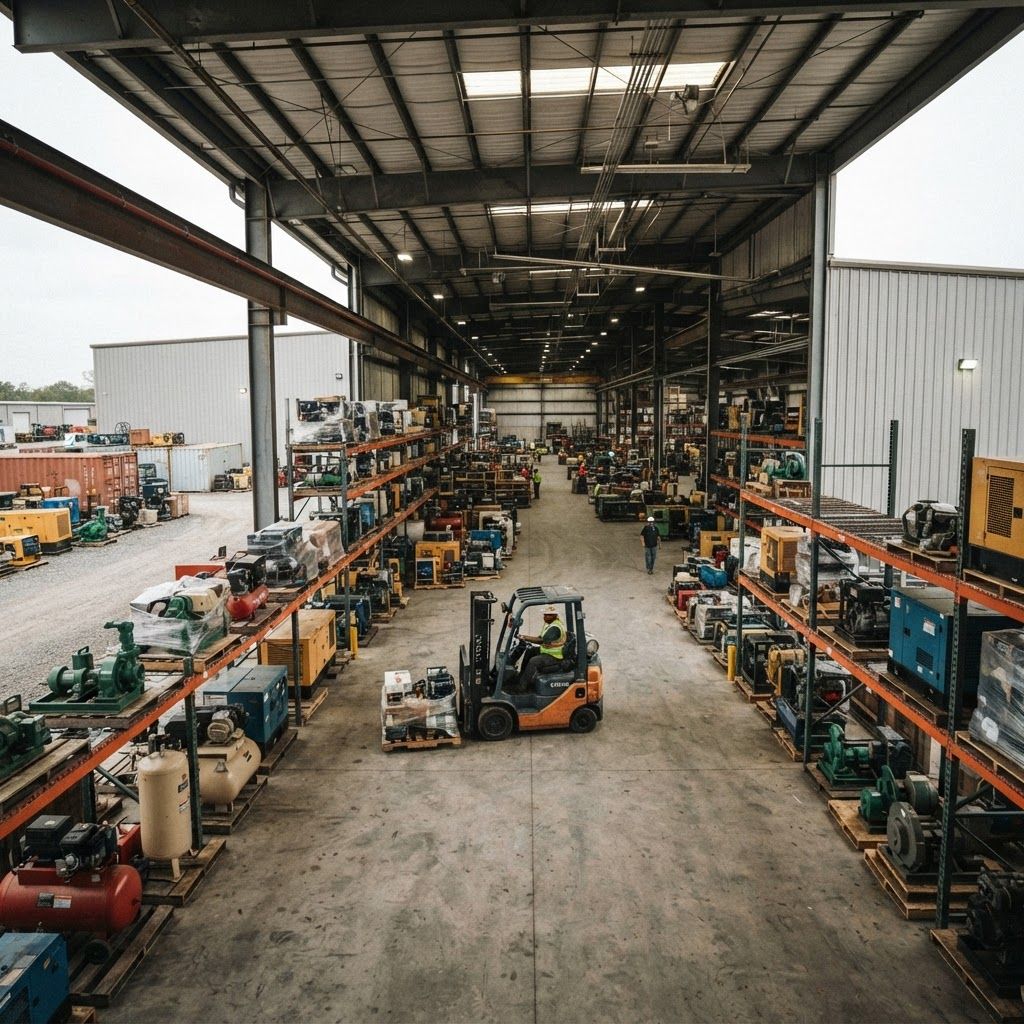
Equipment Distribution in a Building Region
Boise City sits at the center of a region where construction, agriculture, food processing, warehousing, and manufacturing all operate at meaningful scale. Every one of those industries runs on equipment, and equipment requires a distribution network that goes far beyond selling machines. Buyers need parts availability, factory-trained service technicians, operator training, financing options, and honest guidance on whether to buy, rent, or rebuild.
Equipment wholesalers in the Treasure Valley generally organize around end markets rather than product type. A distributor serving earthmoving contractors carries different lines, stocks different parts, and employs different technicians than one serving food processing plants or landscape contractors. Recognizing that specialization saves buyers considerable time, because the right distributor for a skid steer is rarely the right distributor for a packaging line.
What Matters When Choosing an Equipment Wholesaler
Aftermarket support outweighs purchase price in most equipment decisions. A machine that costs slightly less but sits idle for three weeks waiting on a hydraulic component destroys any initial savings. Buyers should ask directly about local parts inventory depth, technician headcount, average response time for field service calls, and whether loaner or rental units are available during major repairs.
Application expertise is the second differentiator. Sizing equipment correctly requires understanding the work: soil conditions, duty cycle, throughput requirements, facility constraints, and operator skill level. Distributors that ask detailed questions before quoting typically deliver better outcomes than those that quote from a spec sheet. Financing and acquisition flexibility form a third consideration, since equipment represents substantial capital. Purchase, lease, rental with purchase option, and used or certified pre-owned each fit different situations. Finally, training and documentation affect both safety and machine life, and distributors that provide operator instruction and maintenance guidance reduce avoidable damage significantly.
Ten Equipment Wholesalers Serving Boise City
1. Treasure Valley Construction Equipment distributes earthmoving and site machinery including excavators, skid steers, compact track loaders, wheel loaders, and compaction equipment. A large local parts warehouse and a field service fleet support contractors working across the metro, and both new and certified used inventory are offered alongside rental options.
2. Gem State Agricultural Machinery serves Idaho's farming sector with tractors, tillage implements, planting and harvesting equipment, and irrigation machinery. Seasonal service scheduling ahead of planting and harvest windows reduces in-season breakdowns, and precision agriculture technology support helps growers adopt guidance and variable rate systems.
3. Snake River Material Handling supplies forklifts, reach trucks, pallet jacks, order pickers, and warehouse racking. As distribution facilities have multiplied along the region's freight corridors, demand for both equipment and racking design has grown. The company provides fleet management reporting and operator certification training.
4. Boise Industrial Tool Wholesale covers cutting tools, abrasives, fasteners, hand and power tools, and shop consumables for manufacturers and fabricators. Vending and bin-stocking programs placed inside customer facilities keep consumables available while providing usage data that helps control spending.
5. Cascade Food Processing Equipment targets the dairy, potato, beverage, and packaged food plants that anchor southern Idaho's economy. Pumps, valves, heat exchangers, conveyors, fillers, and sanitary process components are supplied with the documentation food safety audits require. Installation and validation support accompanies larger projects.
6. Idaho Landscape and Turf Equipment serves landscape contractors, golf courses, municipalities, and school districts. Commercial mowers, aerators, trenchers, chippers, and irrigation equipment are stocked with strong parts support, since seasonal downtime during peak growing months is particularly costly for crews billing by the property.
7. Foothills Welding and Compressed Gas Supply distributes welding machines, plasma cutters, fume extraction, industrial gases, and consumables. Cylinder exchange and bulk gas delivery routes serve fabricators throughout the region, and technical staff assist with process selection and procedure qualification.
8. Meridian Facility and Cleaning Equipment supplies floor scrubbers, sweepers, pressure washers, carpet extractors, and janitorial machinery to building service contractors, schools, hospitals, and warehouses. Preventive maintenance contracts and on-site repair keep equipment running in facilities where cleaning schedules cannot slip.
9. Silver Sage Power Generation and Pumps covers generators, light towers, dewatering pumps, and portable power distribution. Construction sites, agricultural operations, and facilities requiring backup power source here, and load calculation support helps buyers avoid both undersizing and expensive overcapacity.
10. Capital City Used Equipment Exchange specializes in pre-owned machinery across construction, agricultural, and industrial categories. Inspection reports, hour readings, and service history documentation accompany listings, and the company also handles consignment sales for owners disposing of surplus assets. Buyers working within tight capital budgets find this channel practical for secondary or backup machines.
Trends in Equipment Distribution
Telematics has become standard rather than optional. Machines now report location, hours, fault codes, fuel consumption, and utilization, allowing distributors to schedule service proactively and helping owners identify underused assets. For fleet operators in Boise City, this data has changed maintenance from calendar-based to condition-based.
Electrification is progressing steadily in compact equipment, material handling, and lawn care, driven by emissions rules in some markets and by noise and indoor air quality considerations everywhere. Distributors are building charging expertise and technician capability accordingly. Rental has also grown as a share of overall equipment use, since contractors increasingly prefer to match fleet size to current backlog rather than own for peak demand. Meanwhile, persistent technician shortages have made service capacity a genuine competitive constraint, and distributors investing in apprenticeship programs are better positioned to keep response times short.
Guidance for Equipment Buyers
Evaluate total cost of ownership rather than purchase price. Fuel or energy consumption, expected maintenance, parts pricing, resale value, and downtime risk usually matter more over a machine's life than the initial quote. Ask distributors for parts pricing on common wear items before committing, since these costs vary widely between brands.
Verify local service capability by asking how many technicians are trained on the specific model and what typical response time looks like during peak season. Consider rental for equipment used only occasionally, and negotiate rental-to-purchase terms if utilization may increase. In Boise City's busy construction and agricultural cycles, the distributor that keeps your equipment running usually delivers far more value than the one that offered the lowest number on the quote.