
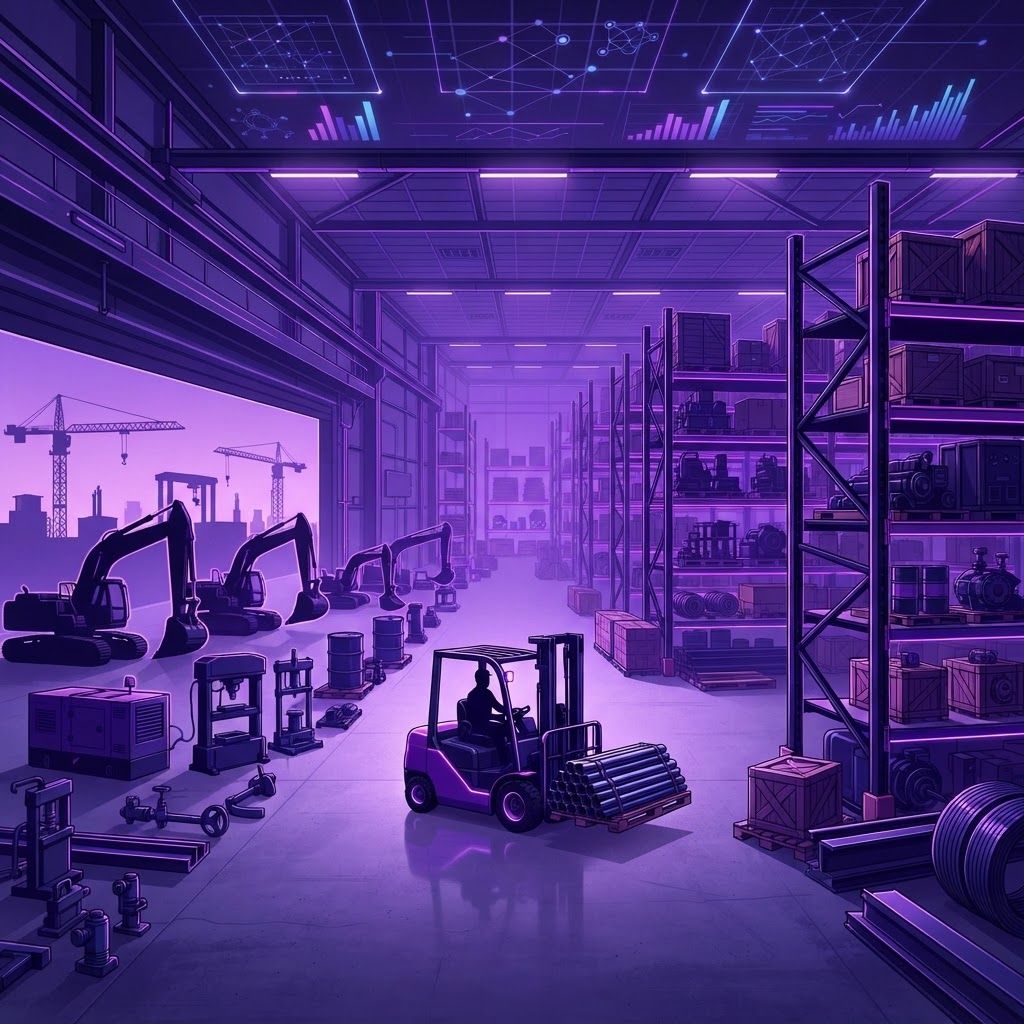
Baton Rouge Runs on Equipment
Few American cities of comparable size have an equipment demand profile as intense as Baton Rouge. The industrial corridor stretching along the Mississippi River between the capital and New Orleans holds one of the densest concentrations of refineries and chemical plants in the country. Those facilities schedule turnarounds that require enormous volumes of cranes, aerial lifts, welding machines, air compressors, generators, pumps and scaffolding within tight windows. Add commercial construction, parish infrastructure work, coastal restoration projects and a steady residential building market, and equipment supply becomes a critical regional industry rather than a niche trade.
Equipment wholesalers in this market therefore operate differently from those in general commercial hubs. They must hold industrial grade inventory, maintain certified service capability, understand permitting and safety compliance, and be able to mobilize on short notice when an unplanned shutdown occurs.
How to Evaluate an Equipment Wholesaler
Price per unit is the least useful comparison point in this category. What actually determines project cost is uptime. A machine that sits idle waiting for a hydraulic hose costs far more than a slightly higher purchase or rental rate. Contractors should evaluate suppliers on fleet age and condition, parts inventory held locally, field service technician availability, response time guarantees, operator training and certification support, and the breadth of attachments available.
Two additional factors matter in Louisiana specifically. First, storm readiness, because hurricane season creates simultaneous surges in generator, pump and debris handling demand. Suppliers with pre positioned storm inventory and established emergency protocols are meaningfully more valuable. Second, industrial compliance, since plant work often requires equipment meeting specific safety, emissions and inspection standards before it can pass a gate.
The Top 10 Equipment Wholesalers in Baton Rouge
1. H and E Equipment Services
Headquartered in Baton Rouge itself, H and E Equipment Services is arguably the most significant equipment name in the local market. The company combines distribution, rental, parts and service across earthmoving machines, aerial work platforms, cranes, forklifts and compaction equipment. Its hometown status translates into deep parts stock and technicians who understand local industrial requirements. For large scale projects needing a single accountable partner across multiple equipment categories, it is a natural first call.
2. Louisiana Cat
As the authorized Caterpillar dealer for the state, Louisiana Cat anchors the heavy earthmoving and power generation segments. The Caterpillar parts and service infrastructure is difficult to match on major machines, and the power systems division supplies generators and marine engines for industrial and offshore applications. Contractors working long duration projects often favor Cat equipment specifically because residual value and parts availability remain strong over the machine's life.
3. Scott Equipment Company
Scott Equipment has built a strong Gulf South reputation representing multiple manufacturer lines across construction, forestry, aggregate and industrial applications. Its multi line approach means customers can specify the best machine for a task rather than being confined to one brand's catalog. The company is particularly respected for its support of aggregate processing and material handling operations.
4. Sunbelt Rentals
Sunbelt operates one of the largest and most diversified rental fleets in North America, with substantial Baton Rouge presence. Its value proposition is category breadth combined with scale. A single account can source aerial lifts, temporary power, climate control, pumps, trench safety, welding equipment and specialty tools. For turnaround work where an equipment list runs to hundreds of line items across dozens of categories, that consolidation is operationally significant.
5. United Rentals
United Rentals brings comparable scale with a strong emphasis on industrial and plant services. Its specialty divisions covering trench safety, power and heating, fluid solutions and tool solutions map closely onto petrochemical maintenance requirements. Digital fleet management tools that let project managers track equipment utilization across multiple job sites have become a differentiator for larger contractors.
6. Bobcat and Compact Equipment Dealers
Compact equipment occupies its own competitive tier. Skid steers, compact track loaders, mini excavators and compact utility loaders dominate residential construction, landscaping, utility work and site preparation. Dealers in this segment compete on attachment inventory as much as machines, since a single carrier paired with the right breaker, auger, grapple or trencher replaces several dedicated units. Delivery within a working day and straightforward maintenance programs are decisive for smaller contractors.
7. Industrial Pump and Fluid Handling Distributors
Water is a constant engineering problem in south Louisiana. Distributors specializing in centrifugal and diaphragm pumps, hoses, valves, fittings and dewatering systems serve construction dewatering, coastal restoration, flood response and process applications. These suppliers typically employ application engineers rather than order takers, because selecting the wrong pump curve or seal material for a corrosive fluid creates immediate failure risk.
8. Welding and Fabrication Supply Houses
Plant maintenance and structural fabrication generate enormous demand for welding machines, plasma cutters, consumables, industrial gases and personal protective equipment. Suppliers in this category succeed through consumable logistics, keeping wire, rod, gas cylinders and abrasives flowing to job sites without interruption. Many also provide welder qualification testing support and equipment calibration services.
9. Material Handling and Forklift Distributors
Warehousing, port operations and manufacturing all depend on forklifts, reach trucks, pallet jacks, racking systems and conveyor equipment. Distributors in this space typically sell a package of equipment plus operator training plus scheduled maintenance, because forklift compliance and safety training carry regulatory weight. Fleet management programs that consolidate service across mixed brand fleets are increasingly common.
10. Independent Regional Equipment Dealers
Baton Rouge retains a meaningful tier of independent dealers handling used equipment, auction sourcing, specialty attachments and refurbishment. For contractors buying rather than renting, these dealers offer access to machines at price points national dealers rarely match, along with flexible trade arrangements. Their inspection and refurbishment quality varies, so buyers should insist on documented service history and independent inspection before purchase.
Trends Shaping the Equipment Market
Telematics has moved from novelty to expectation. Fleet owners now monitor engine hours, idle time, fuel burn, location and fault codes remotely, which changes maintenance from calendar based to condition based. Electrification is arriving first in compact and indoor equipment, where battery powered scissor lifts, mini excavators and forklifts eliminate emissions and noise concerns in enclosed or urban settings. Rental penetration continues to rise as contractors shift capital away from owned iron toward flexible access, particularly for equipment used less than half the year. Finally, skilled operator and technician shortages have made suppliers who provide training a strategic partner rather than a vendor.
Building the Right Supply Relationship
Successful Baton Rouge contractors generally maintain a primary relationship with a full service dealer for core machines, a national rental account for surge and specialty needs, and direct relationships with technical distributors for pumps, welding and material handling. Negotiate service response commitments in writing, understand what parts are stocked locally versus regionally, and confirm emergency contact procedures before hurricane season rather than during it.
Final Thoughts
Equipment supply in Baton Rouge is a mature, competitive and technically sophisticated industry shaped by the demands of one of America's most concentrated industrial corridors. The best wholesaler for any given contractor depends on project scale, equipment mix and tolerance for downtime. Prioritize uptime over unit price, verify local parts and service depth, and treat your equipment supplier as an extension of your project schedule.