
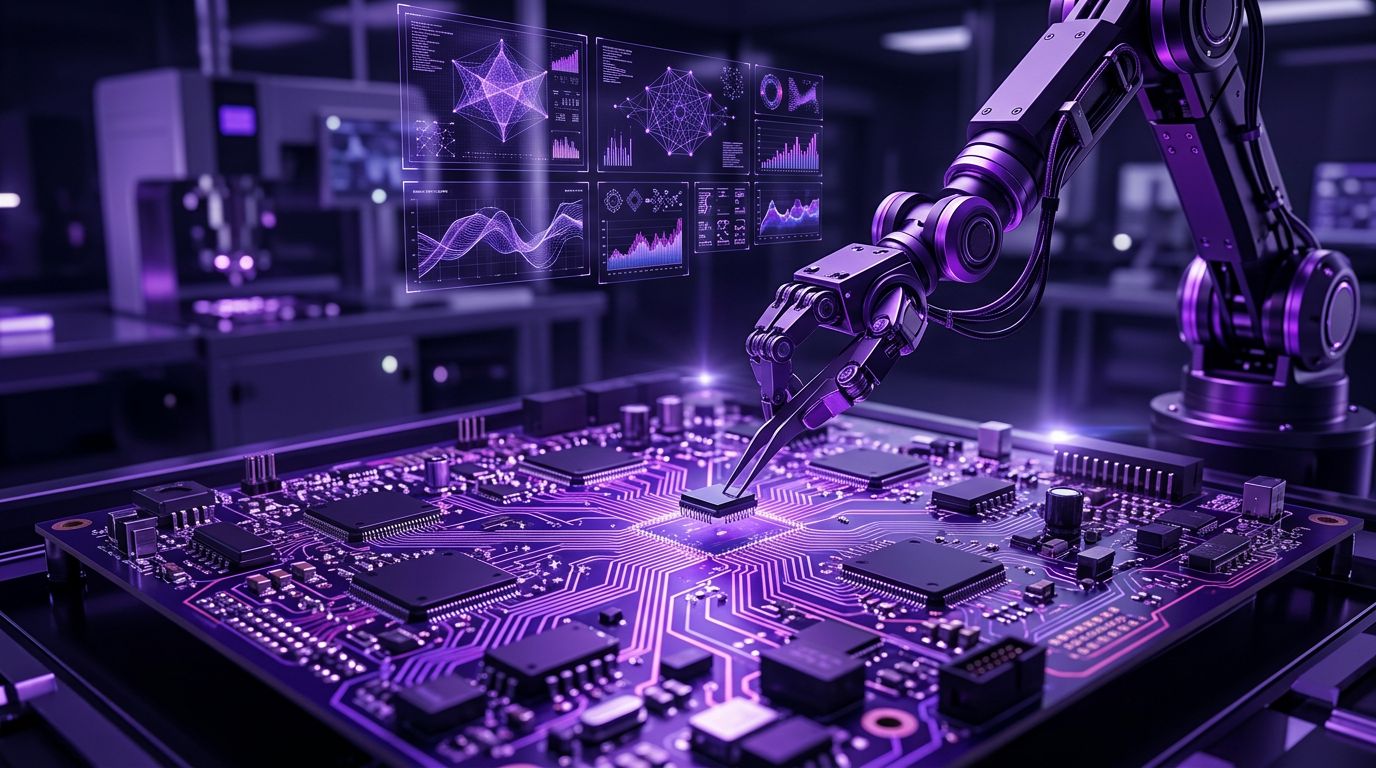
Electronics Manufacturing in Ann Arbor
Ann Arbor's electronics sector is closely tied to the University of Michigan's world-class engineering programs. Research in semiconductors, sensors, photonics, and autonomous systems has produced spinoff companies and attracted established manufacturers to the region. Proximity to Detroit's automotive industry further strengthens demand for advanced electronics used in vehicles, mobility, and manufacturing systems.
From microelectromechanical sensors to terahertz imaging and driving simulators, electronics manufacturers in the Ann Arbor area produce sophisticated technologies used around the world. Here are ten of the leading electronics manufacturers in and around Ann Arbor.
The Top 10 Electronics Manufacturers in Ann Arbor
1. KLA
KLA, a global leader in semiconductor process control and inspection, operates a significant facility in Ann Arbor. Its local teams contribute to the development of advanced tools that help chipmakers improve yield and quality.
2. Advanced Photonix
Advanced Photonix, with roots in Ann Arbor through its Picometrix operations, develops optoelectronic components and terahertz technology. Its products are used in industrial inspection, communications, and research applications.
3. FAAC
FAAC is an Ann Arbor company that designs and manufactures driving and vehicle simulators. Its systems are used by law enforcement, transit agencies, and the military for realistic training.
4. Integrated Sensing Systems
Integrated Sensing Systems, located in nearby Ypsilanti, develops MEMS-based sensors for medical and industrial applications. Its technology originated from University of Michigan research and is known for precision and miniaturization.
5. Toyota Research and Development
Toyota maintains major research and engineering operations near Ann Arbor. These facilities develop vehicle electronics, safety systems, and advanced mobility technologies.
6. Aptiv
Aptiv is a global technology company with Michigan engineering operations. It designs electrical architectures, connectors, and advanced safety electronics for the automotive industry.
7. Mechanical Simulation Corporation
Mechanical Simulation Corporation is an Ann Arbor company known for vehicle dynamics simulation software. Automakers and suppliers use its tools to test electronic control systems and autonomous features virtually.
8. Hyundai America Technical Center
Hyundai's technical center near Ann Arbor focuses on vehicle research, development, and electronics testing. It contributes to innovation in connected, electrified, and autonomous vehicles.
9. ZF Group
ZF Group operates engineering facilities in Michigan, developing sensors, electronic control units, and active safety systems. Its technologies support driver assistance and autonomous driving.
10. Lurie Nanofabrication Facility
The University of Michigan's Lurie Nanofabrication Facility is a world-class cleanroom used by researchers and startups to prototype semiconductors, sensors, and microdevices. It is a key driver of electronics innovation in Ann Arbor.
Electronics Trends in Ann Arbor
Automotive electronics are the largest growth area. Electric vehicles, autonomous driving, and connected car technologies require advanced sensors, power electronics, and computing systems. Ann Arbor's mobility testing facilities, including Mcity at the University of Michigan, attract companies developing these technologies.
Semiconductor manufacturing is also receiving renewed attention across the United States, creating opportunities for regional research and supply chain growth. Medical electronics and wearable sensors represent another strong area, supported by collaboration with Michigan Medicine.
How to Partner With Electronics Manufacturers
Businesses seeking electronics partners should evaluate engineering expertise, prototyping capabilities, quality certifications, and production capacity. Ask about experience in your industry, whether automotive, medical, or industrial, as each has unique regulatory requirements.
Collaboration with university facilities and research programs can also accelerate product development, especially for startups working with advanced materials or microfabrication.
Frequently Asked Questions
Why is Ann Arbor a hub for electronics innovation?
Ann Arbor benefits from the University of Michigan's top-ranked engineering programs, advanced research facilities, a skilled technical workforce, and proximity to Detroit's automotive industry. Together these factors create strong demand and support for electronics development and manufacturing.
Can startups access prototyping facilities in Ann Arbor?
Yes. University research facilities, including advanced cleanrooms, are often available to external users and startups under specific agreements. Local economic development organizations can also connect founders with contract manufacturers and engineering partners.
What types of electronics are produced in the Ann Arbor area?
The region produces sensors, optoelectronic components, simulation systems, automotive electronics, semiconductor equipment, and medical devices. Many companies focus on specialized, high-value products rather than mass consumer electronics.
Are electronics careers growing in Ann Arbor?
Demand for electrical engineers, embedded software developers, and manufacturing technicians remains strong, driven by vehicle electrification, autonomous systems, and semiconductor investment. Local colleges and universities offer programs that prepare students for these roles.
How does Mcity support electronics companies?
Mcity is the University of Michigan's testing environment for connected and automated vehicles. It allows companies to evaluate sensors, communication systems, and vehicle electronics in realistic but controlled conditions, accelerating safe deployment.
What certifications matter for electronics manufacturers?
Common certifications include quality management standards for general manufacturing, automotive-specific quality standards for vehicle suppliers, and medical device standards for healthcare products. These certifications demonstrate consistent quality and regulatory compliance.
Final Thoughts
Ann Arbor's electronics sector blends global leaders like KLA and Toyota with homegrown innovators such as FAAC, Advanced Photonix, and Mechanical Simulation Corporation. Supported by world-class university research, the region continues to shape the future of semiconductors, sensors, and mobility technology.