
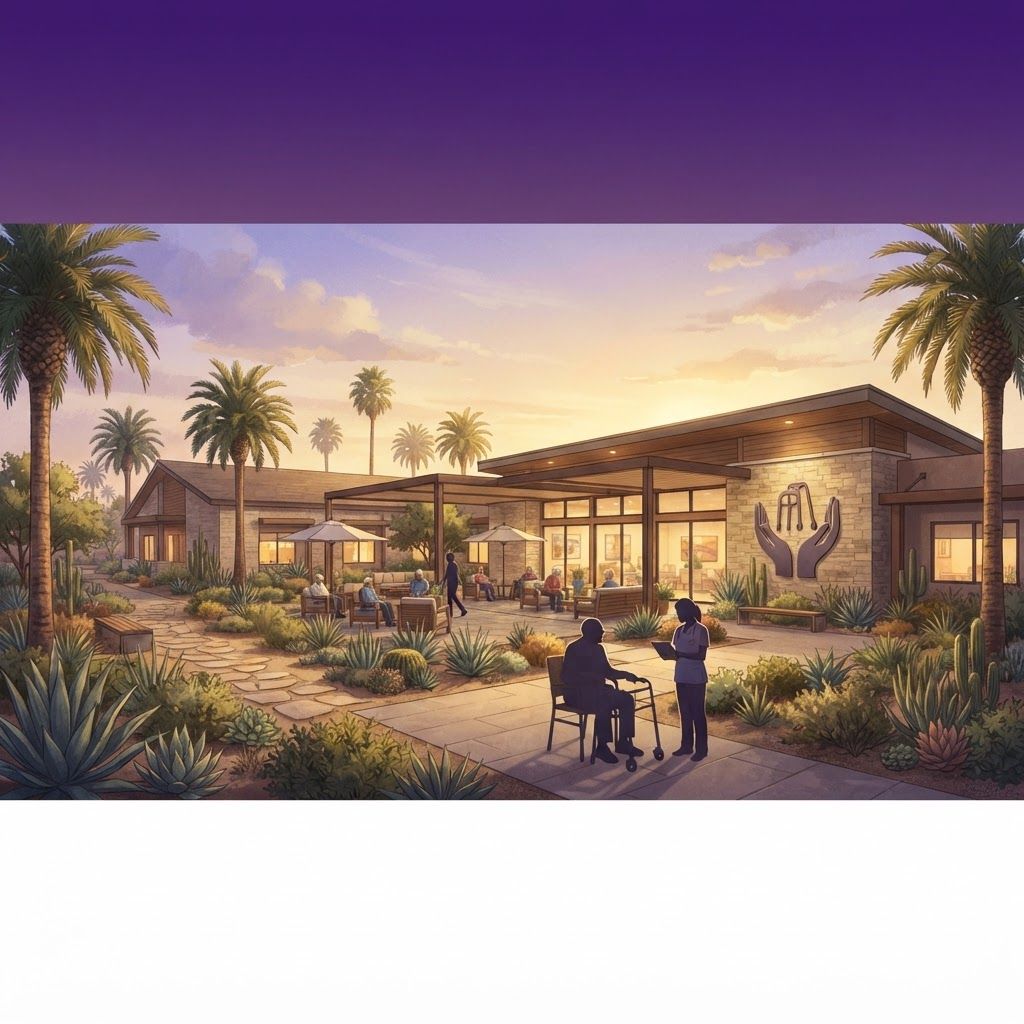
Senior Living at the Heart of the West Valley
Few American cities are as closely associated with retirement living as the communities of Arizona's northwest valley. Surprise sits alongside Sun City, Sun City West and Sun City Grand, an area that effectively pioneered the modern active adult community. That history has produced an exceptionally deep senior care market, with facilities spanning every level of support from fully independent apartments to skilled nursing and specialised dementia care.
For families making these decisions, depth of choice is both a blessing and a challenge. Understanding the categories properly is the first and most important step, because selecting the wrong level of care leads to either unnecessary cost or an unsafe placement.
Understanding the Levels of Senior Care
Independent living provides private apartments or homes with community amenities, dining options, transport and social programming, but no personal care. Residents manage their own medication and daily activities.
Assisted living adds help with activities of daily living such as bathing, dressing, mobility and medication administration, while preserving as much independence as possible.
Memory care is a secured environment with staff specifically trained in dementia care, structured routines and programming designed for cognitive impairment.
Skilled nursing provides round-the-clock licensed nursing care for complex medical needs, including post-hospital rehabilitation and long-term care for those requiring ongoing clinical supervision.
Continuing care communities combine several of these on a single campus, allowing residents to move between levels without relocating away from their social network, which is a genuine advantage as needs change.
The Top 10 Elderly Care Options Serving Surprise
1. Sun Grove Senior Living Community
A continuing care campus offering independent living, assisted living and memory care in one location. Its principal strength is continuity: couples with differing care needs can remain on the same campus, and residents avoid disruptive relocation as requirements increase.
2. Desert Blossom Assisted Living
A mid-sized assisted living residence emphasising personalised care plans, medication management and an active social calendar. Staff-to-resident ratios are a stated priority, and the dining programme accommodates medical dietary requirements rather than offering a single menu.
3. Memory Haven Care Center
A dedicated memory care facility with secured grounds, purpose-designed layouts that reduce confusion, and staff trained in dementia-specific communication techniques. Structured daily routines and sensory programming are central to the approach.
4. Surprise Skilled Nursing and Rehabilitation
Skilled nursing care and short-term rehabilitation following hospitalisation, surgery or stroke. On-site physical, occupational and speech therapy support recovery, with the goal of returning many residents home.
5. Arizona Traditions Independent Living
Independent living apartments and casitas with dining, housekeeping, transport, fitness facilities and extensive social programming. Suited to residents who want community and convenience without personal care support.
6. Comfort Care Residential Group Homes
Small residential care homes, typically housing under a dozen residents in a converted family home setting. The intimate scale suits individuals who find large facilities overwhelming, and staff familiarity with each resident is typically very high.
7. West Valley Respite and Adult Day Services
Daytime care and structured activity programmes allowing family caregivers to work or rest while ensuring supervision and social engagement. Respite services are frequently the factor that allows a family to continue caring for a loved one at home for longer.
8. Home Care Services of Surprise
Non-medical in-home support covering personal care, meal preparation, companionship, transport and light housekeeping, delivered on flexible schedules. Many families use this as a first step before considering residential placement.
9. Hospice and Palliative Care of the Northwest Valley
Comfort-focused care for individuals with advanced illness, provided at home or in facilities, with pain management, emotional support and family bereavement services. Access to skilled palliative care substantially improves quality of life in the final stages of illness.
10. Veterans Senior Care Programs
Care options and benefits available to veterans and surviving spouses, including aid and attendance benefits that can offset the cost of assisted living. Given the sizeable veteran population in the West Valley, these programmes are an important and frequently overlooked resource.
What to Inspect During a Visit
Tour at least three facilities, and visit at least once unannounced outside of scheduled tour hours. Pay attention to whether residents appear engaged and well groomed, whether common areas are genuinely in use and whether staff address residents by name.
Ask direct questions: what is the staff-to-resident ratio on each shift including overnight, what is annual staff turnover, how are medications administered and documented, what happens when a resident's needs increase, and what triggers a transfer to a higher level of care.
Eat a meal on site. Dining quality affects daily satisfaction more than almost any other factor, and it is easy to evaluate directly. Review the most recent state inspection reports, which are publicly available and reveal patterns that marketing materials will not.
Understanding Costs
Senior care pricing structures vary widely. Some facilities charge an all-inclusive monthly rate; others use a base rate plus tiered care level charges that increase as needs grow. Ask for a written schedule of what triggers each tier and how much it costs, along with the history of annual rate increases.
Funding sources include private payment, long-term care insurance, veterans benefits and, for skilled nursing, Medicare for limited post-hospital periods and Medicaid for those who qualify. Clarify what each facility accepts before becoming emotionally committed to a choice.
Climate Considerations for Senior Facilities
In Surprise, backup power and cooling reliability are safety issues rather than conveniences. Ask specifically about generator capacity, emergency cooling plans and evacuation procedures during extended power outages in summer. Shaded outdoor spaces and covered walkways also determine whether residents can realistically spend time outside for much of the year.
Final Thoughts
The northwest valley offers an exceptional range of senior care, from independent living through skilled nursing and hospice. The most common mistake families make is deciding under crisis pressure after a hospitalisation. Touring facilities and understanding options in advance produces far better placements, lower stress and better outcomes for everyone involved.