
Why Laboratory Quality Matters
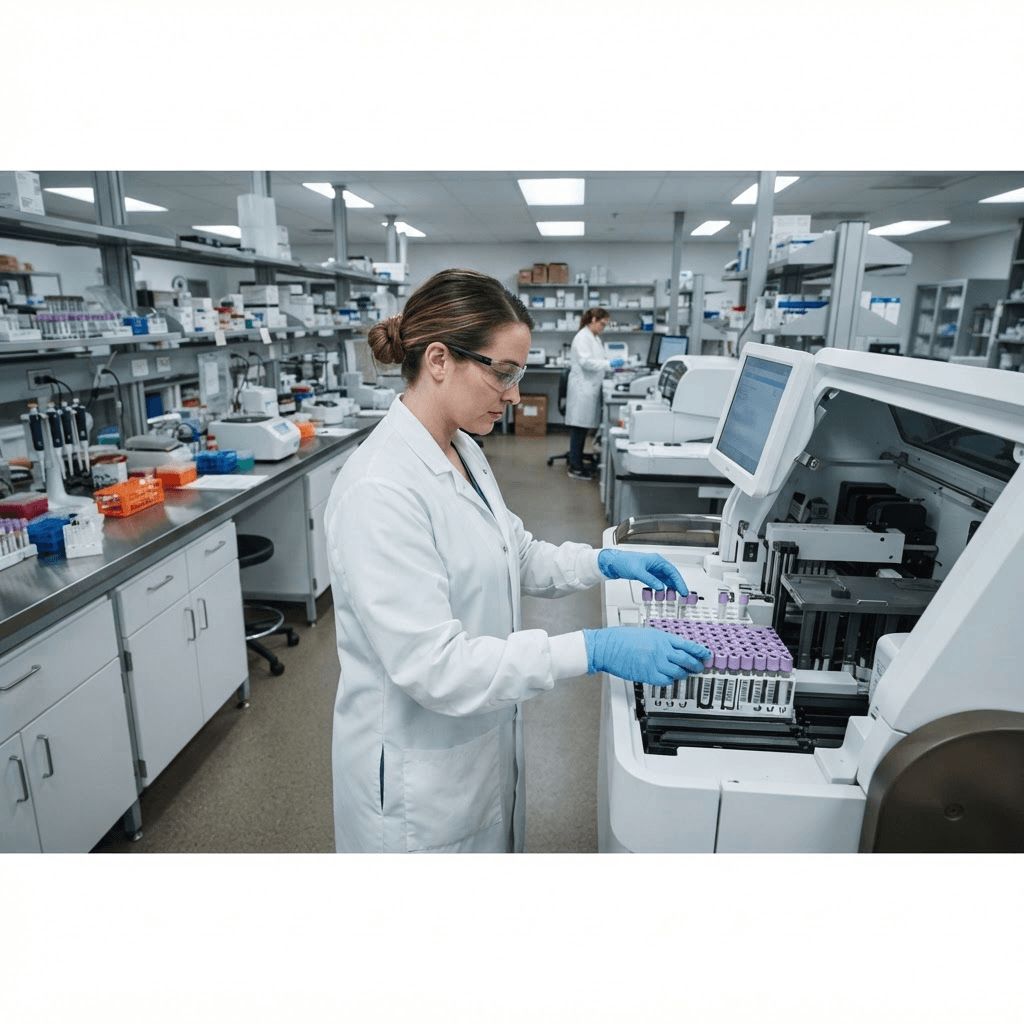
Roughly seventy percent of medical decisions involve laboratory or imaging results. A wrong number leads to a wrong treatment, an unnecessary procedure, or a missed diagnosis. Yet patients rarely think about where their sample is processed, even though accuracy, turnaround time, and cost vary considerably between facilities.
St. Louis has an advantage here. The presence of two academic medical centers means the region hosts reference laboratories capable of specialized testing that most cities send away, including genetic sequencing, advanced immunology, and rare disease panels. That capability shortens turnaround for complex cases and keeps expert pathologists locally available for consultation.
The Top 10 Diagnostic Labs in St. Louis
1. Barnes-Jewish and Washington University laboratory services. The academic reference laboratory network handles routine chemistry and hematology alongside highly specialized molecular, genetic, and microbiology testing. Its pathology department is among the strongest in the country, which matters enormously for cancer diagnosis where interpretation is as important as the assay.
2. SSM Health Saint Louis University Hospital laboratories. The second academic laboratory system provides comprehensive testing with strong transplant immunology, infectious disease, and hepatology support, plus rapid turnaround for critical inpatient care.
3. Quest Diagnostics. The national reference laboratory operates numerous patient service centers across the metro area, making routine blood draws convenient. Its online portal, transparent consumer pricing, and direct-to-consumer test menu are genuinely useful for patients managing their own screening.
4. Labcorp. The other major national laboratory, with wide collection site coverage and comparable capability. Insurance network status frequently determines which of the two national labs is cheaper for a given patient, so it is worth checking both.
5. Mercy Laboratory Services. The health system's laboratory network supports its extensive clinic footprint with integrated ordering and results delivery, which reduces lost results and duplicate testing for patients within the system.
6. BJC Medical Group and community hospital laboratories. Hospital-based labs across the county and St. Charles offer fast turnaround for urgent testing and are the appropriate choice when results are needed the same day.
7. GeneDx and molecular diagnostics specialists. Genetic testing laboratories serving the region provide hereditary cancer panels, carrier screening, and exome sequencing, typically ordered through genetic counselors who help interpret results properly.
8. Bio-Reference and specialty reference laboratories. Niche laboratories focused on endocrinology, allergy, oncology, and women's health handle testing that requires particular expertise, and physicians often route specific panels to them for that reason.
9. Affinia Healthcare and community health center laboratories. On-site testing at federally qualified health centers provides affordable access for uninsured and underinsured patients, often with sliding scale pricing that makes screening realistic.
10. Direct-to-consumer and workplace screening providers. Employer wellness programs, pharmacy point-of-care testing, and consumer lab services fill a real gap for basic screening such as lipid panels, hemoglobin A1c, and thyroid function without a physician visit.
Understanding Test Categories
Routine chemistry and hematology panels are highly standardized and available essentially everywhere with reliable quality. For these, convenience and cost should drive your choice.
Microbiology, including cultures and susceptibility testing, benefits from laboratories with high volume and strong infectious disease support, because organism identification and antibiotic guidance require judgment. Anatomic pathology, where a pathologist examines tissue, is the category where institutional expertise matters most. Second opinions on cancer specimens change diagnoses in a meaningful minority of cases, and academic centers are the appropriate place to seek them.
Molecular and genetic testing sits in its own category because interpretation is complex and results carry implications for family members. These tests should generally be ordered with genetic counseling support rather than in isolation.
How to Control Testing Costs
Ask whether the laboratory your physician uses is in your insurance network. This is the single largest source of surprise laboratory bills, because a covered office visit can be paired with an out-of-network specimen processor. You can usually request a different laboratory.
Request cash pricing when you have a high deductible. Many laboratories publish self-pay rates that are lower than the billed insurance rate applied to your deductible. Ask which specific tests are being ordered and why, since panels sometimes include components that add cost without changing management.
Avoid duplicate testing by ensuring results flow to all your physicians. Patients seeing specialists across different health systems frequently repeat tests unnecessarily, and requesting records transfer prevents it.
Interpreting Results Sensibly
Reference ranges describe the middle ninety-five percent of a reference population, which means a healthy person will occasionally fall outside them. A single mildly abnormal value on a broad panel is common and usually not meaningful in isolation.
Trends matter more than snapshots. A value moving steadily in one direction across several draws is more informative than one reading at the edge of normal. Timing and conditions also matter: fasting status, hydration, recent exercise, time of day, and medications all influence results.
Do not interpret significant results without your clinician. Portal access has given patients immediate visibility, which is positive, but context is essential. Write down questions and ask what the result changes about your care plan, which is the only question that ultimately matters.
The Regional Outlook
Laboratory medicine locally continues to move toward faster molecular diagnostics, particularly for infectious disease, where rapid organism identification shortens time to correct antibiotic therapy. Digital pathology is expanding, allowing slides to be reviewed remotely by subspecialists, which improves access to expert interpretation across the region.
Point-of-care testing in clinics and pharmacies is also growing, delivering results during the visit rather than days later. For patients in St. Louis, the combination of academic reference capability and convenient community collection means high-quality testing is genuinely accessible. The main task is ensuring your samples reach an in-network laboratory and that results reach every clinician involved in your care.