
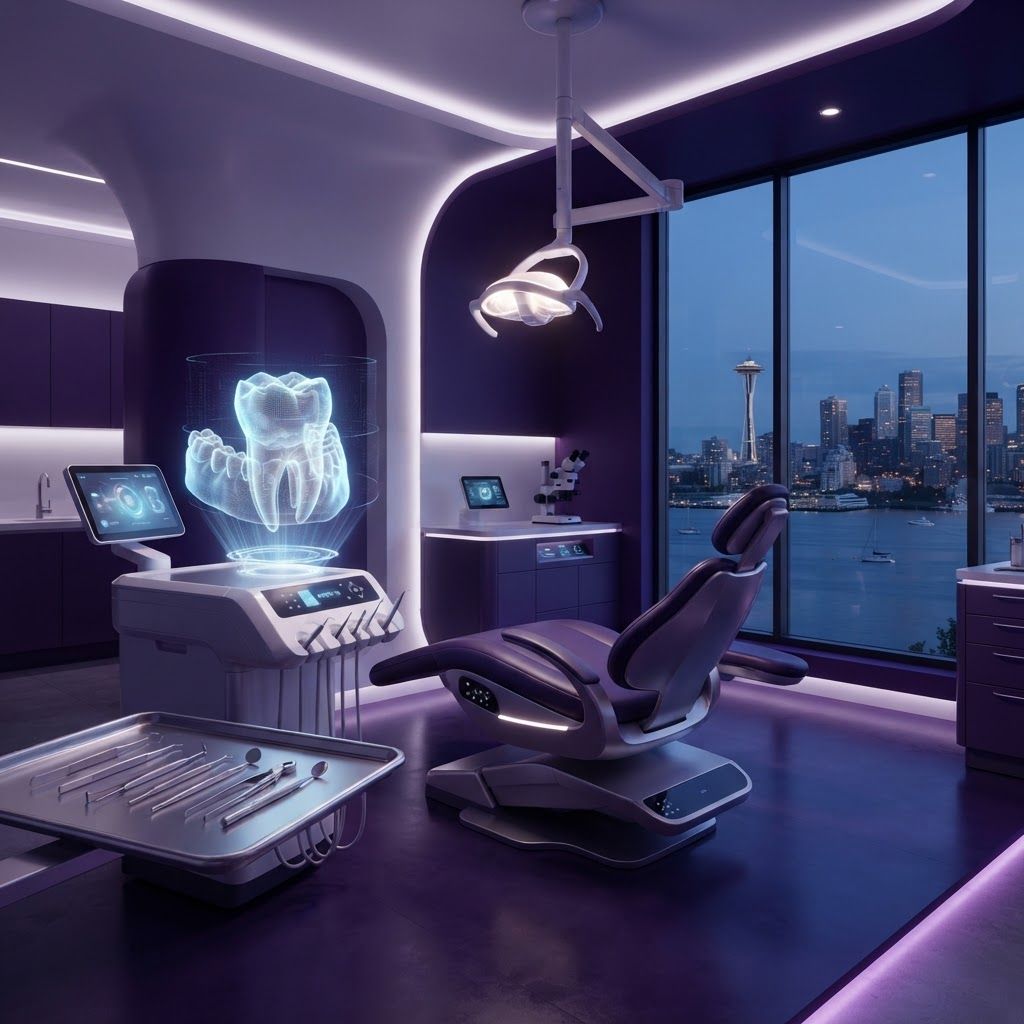
A Category Where Choice Really Matters
Dentistry differs from most medical specialties in one important respect: a substantial portion of treatment involves discretionary timing and judgment. Two competent dentists examining the same mouth may reasonably disagree about whether a small lesion requires restoration now or monitoring, or whether a crown or a filling is the better answer. That variability makes provider selection and second opinions more consequential in dentistry than patients typically assume.
Tacoma's dental market is largely composed of independent practices and small group practices, supplemented by specialty offices and community clinics serving lower-income residents. Access varies significantly by insurance type, and finding a practice accepting state dental coverage requires more effort than finding one accepting commercial plans, a persistent gap in the local system.
Understanding Dental Specialties
General dentists handle examinations, cleanings, fillings, crowns, extractions and increasingly implant restoration. Orthodontists correct alignment with braces and clear aligners. Oral and maxillofacial surgeons perform complex extractions, implant placement and jaw procedures. Periodontists treat gum disease and bone loss. Endodontists perform root canal therapy. Pediatric dentists specialize in children, including behavioral management and developmental assessment. Prosthodontists focus on complex restoration and full-mouth rehabilitation.
Knowing these boundaries helps. A complicated root canal performed by an endodontist with a surgical microscope generally has a better prognosis than the same procedure attempted in a general practice without one. Conversely, routine care handled by a trusted general dentist who knows your history often produces better long-term outcomes than fragmenting care across specialists unnecessarily.
Technology trends have genuinely improved dentistry. Digital radiography reduces radiation exposure substantially. Intraoral scanning has replaced most physical impressions. Chairside milling allows same-day crowns. Cone beam imaging has made implant planning far more precise. Clear aligner therapy has expanded orthodontic options for adults. These are real advances rather than marketing, though their presence does not substitute for clinical judgment.
The Top 10 Dental Clinics in Tacoma
1. Tacoma Family Dentistry provides comprehensive general care with digital imaging, same-day crown capability and a preventive emphasis that keeps restorative work minimal over time.
2. Proctor District Dental Group serves its neighborhood with general and cosmetic dentistry, and is known for thorough treatment planning conversations before work begins.
3. Commencement Bay Oral Surgery handles complex extractions, wisdom teeth, implant placement and jaw procedures, with sedation options and cone beam imaging for surgical planning.
4. Rainier Orthodontics offers both traditional braces and clear aligner therapy for children, teens and adults, with digital treatment simulation that clarifies expected outcomes.
5. Hilltop Community Dental operates on a sliding fee scale, accepting state dental coverage and uninsured patients, addressing one of the city's most significant care access gaps.
6. Sound Periodontics specializes in gum disease treatment, bone grafting and implant support, working closely with referring general dentists on staged treatment plans.
7. Pierce Pediatric Dentistry focuses exclusively on children, with an environment and behavioral approach designed to establish positive long-term dental habits.
8. Old Town Endodontics performs root canal therapy and retreatment using surgical microscopes and specialized instrumentation that improve success rates on difficult cases.
9. Evergreen Cosmetic and Restorative Dental handles veneers, full-mouth rehabilitation and complex restorative work, typically for patients addressing accumulated damage or wear.
10. Sixth Avenue Dental Care completes the list as an accessible general practice with extended hours and emergency accommodation, useful for patients who cannot attend weekday appointments.
How to Evaluate Treatment Recommendations
Ask for the evidence. When a dentist recommends a crown, ask to see the radiograph or intraoral photograph and to have the finding explained. Reputable practitioners welcome this; digital imaging exists partly to make such explanation possible. Vague recommendations without visual support deserve scrutiny.
Seek a second opinion for large treatment plans. Any proposal involving multiple crowns, extractions or a full-mouth reconstruction warrants independent review. Bring your radiographs, which are your records and must be provided on request, so the second examination does not require new imaging.
Distinguish urgent from elective. Active infection, significant pain and progressive decay require prompt attention. Cosmetic improvements and borderline findings can often be staged over months, which spreads cost and allows monitoring. Ask specifically what happens if a given item waits six months.
Managing Dental Costs
Dental insurance operates differently from medical coverage, typically with a modest annual maximum that complex treatment exhausts quickly. Sequencing treatment across two benefit years, when clinically acceptable, can substantially reduce out-of-pocket cost. Ask the practice to help plan that timing.
For uninsured patients, ask about in-house membership plans, which many Tacoma practices now offer, covering preventive care and discounting restorative work for an annual fee. Community clinics with sliding scales and dental hygiene school programs provide lower-cost alternatives for routine care.
Prevention remains the largest financial lever. Twice-yearly cleanings, consistent home care and early intervention on small problems cost a fraction of what delayed treatment requires. The most expensive dentistry in Tacoma is the treatment that becomes necessary after years of avoidance, and no provider on any list can undo that arithmetic.