
Why Renting Beats Owning for Most Contractors
Construction equipment is expensive to buy, expensive to maintain and expensive to store. For machines used intermittently, rental almost always produces better economics. A contractor renting an excavator for three weeks a year avoids the purchase price, the insurance, the maintenance schedule, the transport logistics and the depreciation, while gaining access to newer machines with current emissions compliance and safety features.
Tempe sits at the centre of an active construction region, and the local rental market reflects that. Suppliers stock everything from compact tools to heavy earthmoving equipment, and most support delivery across the metropolitan area. Understanding the categories helps contractors and homeowners rent the right machine rather than the closest available one.
1. Earthmoving and Excavation Equipment
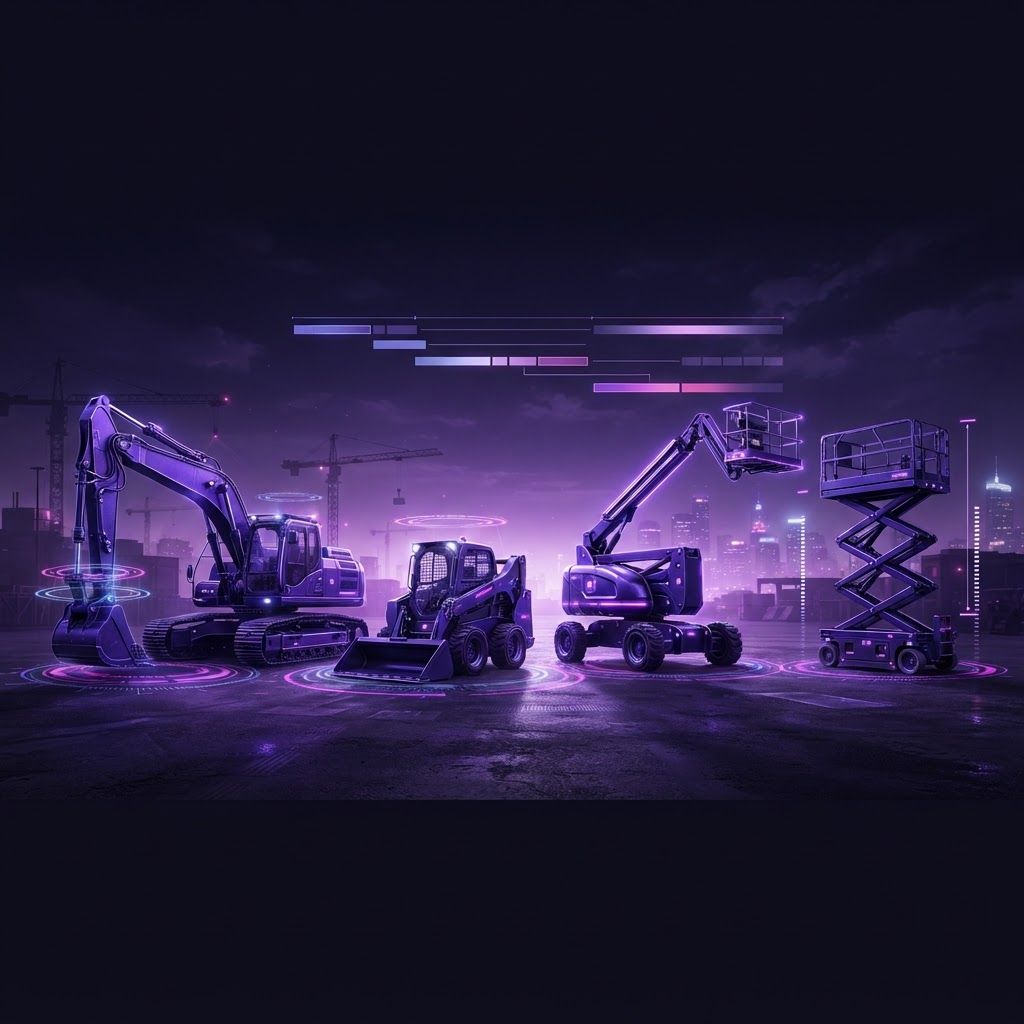
Excavators, backhoes, dozers and compact track loaders form the core of any site work fleet. Sizing matters: a machine too large cannot access a constrained infill lot, while one too small wastes days on work a larger unit completes in hours. Rental yards with a full size range allow contractors to match the machine to the specific site rather than compromising.
2. Skid Steers and Compact Loaders
Skid steers are the most versatile machines on most sites because attachments transform them entirely. Augers, breakers, grapples, trenchers, brooms and forks turn one base machine into many tools. Rental suppliers with deep attachment inventory add disproportionate value, since attachment availability often determines whether a task can be completed on schedule.
3. Aerial Lifts and Access Equipment
Scissor lifts, boom lifts and telehandlers provide safe elevated access for construction, maintenance and installation work. Selection depends on required working height, horizontal reach, surface conditions and whether the work is indoors or outdoors. Rough terrain models are necessary on unfinished sites, while electric units suit finished interiors.
4. Concrete Equipment
Mixers, power trowels, screeds, vibrators, saws and core drills support concrete work of every scale. In this climate, concrete placement requires particular care because high ambient temperatures accelerate set time. Contractors frequently pour at night during summer and rely on rental suppliers that can deliver and collect outside standard hours.
5. Compaction Equipment
Plate compactors, rammers and rollers achieve the soil density that foundations, slabs and pavement require. Given the variable soils across the valley, proper compaction is a genuine structural concern rather than a formality. Matching compactor type to soil composition determines whether specified density is achievable.
6. Trenching and Underground Equipment
Trenchers, vibratory plows and directional boring equipment install utilities, irrigation and conduit. Directional boring is especially valuable in developed areas because it places lines beneath existing hardscape and landscaping without excavation, avoiding restoration cost.
7. Air Compressors and Pneumatic Tools
Towable compressors power breakers, rock drills and pneumatic tooling for demolition and hardscape removal. Caliche layers common in regional soils frequently require pneumatic or hydraulic breaking that standard excavation cannot handle efficiently.
8. Generators and Temporary Power
Portable and towable generators supply power to sites before permanent service is energised, and they support events and emergency operations. Correct sizing matters, since undersized units struggle with motor starting loads while oversized units waste fuel running lightly loaded.
9. Portable Cooling, Heating and Climate Equipment
This category is unusually important locally. Evaporative coolers, portable air conditioning, misting systems and industrial fans protect worker health during summer and allow productive work in enclosed spaces. Temporary climate control also supports finishing trades that require specific temperature ranges for adhesives and coatings.
10. Site Services and Support Equipment
Rental suppliers also provide light towers, temporary fencing, traffic control devices, storage containers, portable sanitation and dust suppression equipment. These items rarely appear in project planning early enough, yet they are required for compliance and site function from the first day of work.
Renting Efficiently
A few practices reduce rental cost meaningfully. Book in advance during peak construction periods, since popular machines are frequently committed weeks out. Understand the rate structure, because daily, weekly and monthly rates differ substantially and a four-day rental often costs the same as a week. Inspect and photograph equipment at pickup and return to document condition, which prevents disputes over pre-existing damage.
Clarify who is responsible for fuel, transport, and damage waiver coverage, and confirm whether your own insurance already provides adequate protection. Ask about the supplier's response time if a machine fails on site, because downtime on a rented machine still costs you labour.
Desert-Specific Considerations
Heat and dust affect equipment performance directly. Hydraulic systems run hotter, air filters load faster and operators fatigue more quickly. Plan work sequences to complete demanding tasks early in the day during summer, check filters and fluid levels more frequently than standard intervals suggest, and ensure operators have shade and water access. Dust suppression is often a regulatory requirement as well as a practical necessity on active sites.
Final Thoughts
The best construction equipment rental suppliers in Tempe combine well-maintained modern fleets with reliable delivery, deep attachment inventory and responsive service support. Choosing a supplier on availability and support rather than rate alone is what keeps a project moving on schedule.