
Why Renting Beats Owning for Most Projects
Construction equipment is a depreciating asset with an appetite for maintenance, storage space, insurance, and transport logistics. For a general contractor running three jobs at once, owning a core fleet makes sense. For nearly everyone else, including specialty subcontractors, property managers, small builders, and homeowners tackling a serious project, renting is the rational choice. You pay for the hours you actually use, you get a machine that has been serviced, and you can match the tool precisely to the task rather than forcing whatever you happen to own to do the job.
Spokane's rental market has grown alongside regional construction activity across the Valley, Liberty Lake, Airway Heights, and the north side. National chains operate large yards with deep inventories, while independent regional suppliers compete on service, flexibility, and local knowledge. Both models have real advantages, and the right pick depends on your project profile.
The Ten Equipment Categories That Move Most
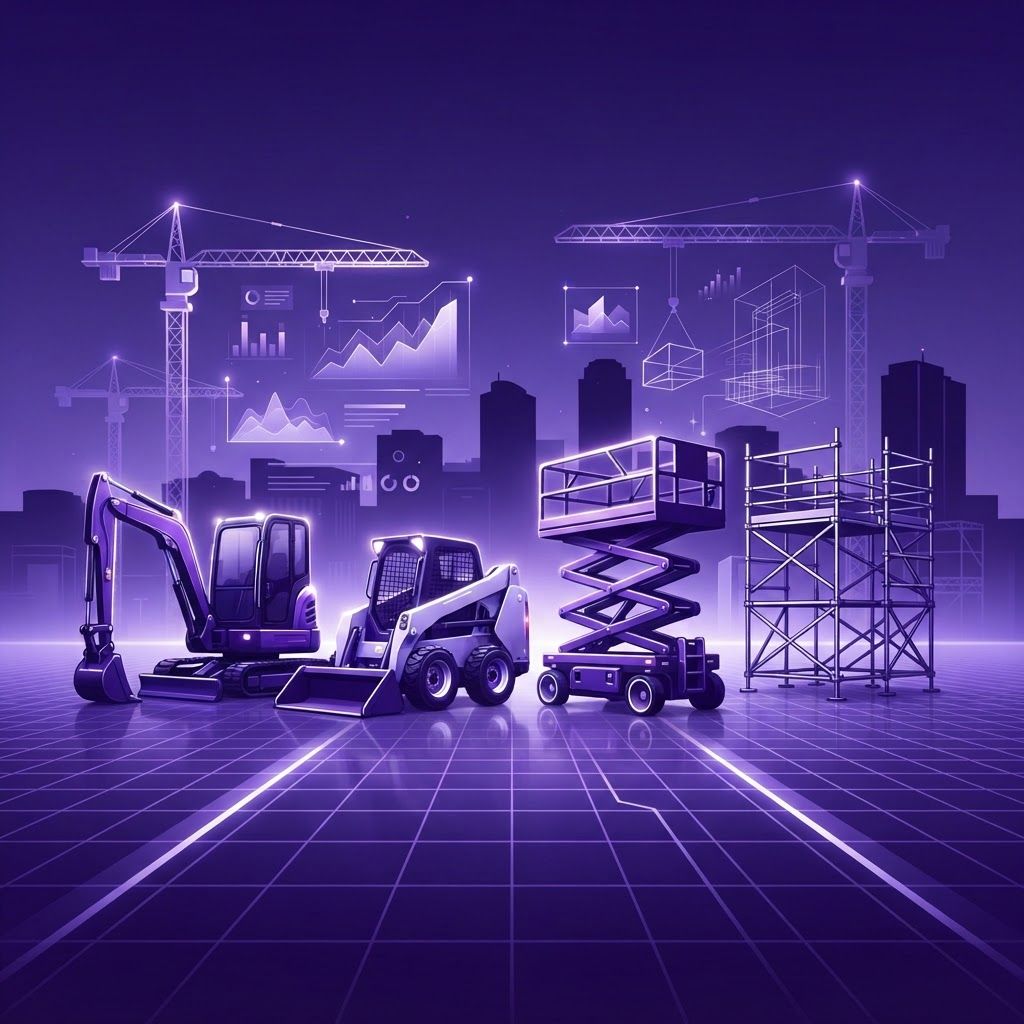
1. Mini excavators and compact track loaders. The workhorses of residential site work: trenching for utilities, footing excavation, stump removal, grading, and landscape demolition. Compact size matters enormously in Spokane's older neighborhoods with narrow side yards and mature trees.
2. Skid steers and attachments. One carrier, many jobs. Buckets, pallet forks, augers, brush cutters, grapples, and snow pushers turn a single rental into a versatile platform.
3. Full-size excavators and backhoes. For larger site development, sewer and water line work, pond digging, and rural property projects.
4. Aerial lifts and telehandlers. Scissor lifts for interior work, boom lifts for exterior painting and roofing, and telehandlers for material placement on framing sites.
5. Compaction equipment. Plate compactors, jumping jacks, walk-behind and ride-on rollers for driveways, patios, and trench backfill. Proper compaction is what keeps hardscape from settling through a freeze-thaw winter.
6. Concrete equipment. Mixers, power trowels, screeds, saws, core drills, and buggies for flatwork and demolition.
7. Trenchers, augers, and drills. Irrigation lines, fence posts, and electrical runs, where the right machine turns a multi-day dig into an afternoon.
8. Generators, light towers, and temporary power. Essential for off-grid sites, winter work with short daylight, and any project ahead of a permanent service connection.
9. Air compressors and breakers. Concrete demolition, rock removal, and the basalt that Spokane builders know all too well.
10. Support gear and specialty tools. Dump trailers, scaffolding, tile saws, drywall lifts, floor sanders, pumps, heaters, and dust extraction. Often the difference between a professional finish and a frustrating weekend.
What Makes a Rental Company Worth Using
Fleet age and maintenance records. The best yards run newer machines on documented service intervals. Ask about the model year and the hour meter reading before you commit. A cheap rate on a worn machine that fails mid-dig is the most expensive rental you can make.
Real availability and reservations. Peak season in the Inland Northwest runs from late spring through fall, and popular compact equipment books out. Companies that honor reservations and communicate proactively about substitutions protect your schedule.
Delivery and pickup capability. Unless you own a trailer rated for the load and a truck to pull it, delivery matters. Confirm the fee, the drop location constraints, and whether the crew will position the machine where you need it.
Operator orientation. Reputable suppliers walk you through controls, safety systems, fluid checks, and shutdown procedure. Some offer certification training for aerial lifts, which is often required on commercial sites.
Transparent rate structures. Four-hour, daily, weekly, and monthly tiers, with clearly stated hour allowances. Weekly rates typically deliver far better value than three separate day rentals, and monthly rates are dramatically cheaper per day.
Clear damage and fuel policies. Understand the damage waiver, what it does and does not cover, whether your own general liability or homeowner policy applies, and the fuel return requirement. Refueling charges and cleaning fees are the most common surprise line items.
Attachment inventory. A yard with a deep attachment library lets you adapt on site instead of returning for a second machine.
Trends in the Rental Industry
Telematics is now standard on newer fleets, giving both supplier and customer visibility into engine hours, location, idle time, and fault codes. This has improved maintenance reliability and made hour-based billing more transparent.
Electrification is arriving fastest in compact and indoor equipment. Battery-powered scissor lifts, electric mini excavators, and cordless tool platforms are increasingly requested for interior work, noise-restricted neighborhoods, and job sites with emissions or ventilation constraints. Expect that category to expand quickly.
Digital rental management has also changed the customer experience. Online reservations, e-signed contracts, photo-documented condition reports at pickup and return, and app-based extensions have replaced a lot of counter time. Meanwhile, the broader trend of contractors renting rather than expanding owned fleets has kept demand strong and made early booking more important than it was a decade ago.
How to Rent Smart
Define the task before shopping for the machine. Know your dig depth, reach, lift height, weight capacity, and access width. A machine that cannot fit through a gate or reach a second-story soffit is useless regardless of price. Measure the tightest point on your site and bring that number to the counter.
Then plan the calendar realistically. Add a buffer day for weather, utility locates, and the inevitable complication. Always call for utility locates before any digging; it is free, legally required, and prevents catastrophic damage. Confirm ground conditions too, since a heavy machine on saturated spring soil creates rutting and repair costs that dwarf the rental fee.
Finally, treat the return as part of the job. Clean the machine, top the fuel, photograph its condition, and return during business hours so a walkthrough can be documented. That habit protects your deposit and builds the kind of account relationship that gets you a machine on a busy Friday in July.
Final Thoughts
The best construction equipment rental companies in Spokane are judged less on their price sheet than on whether the right machine is ready, running, and delivered when promised. Newer fleets, honest counter advice about which machine actually suits the job, straightforward damage and fuel terms, and reliable logistics are what keep projects on schedule. Pick a supplier you can build a long relationship with, and every subsequent project gets easier.