
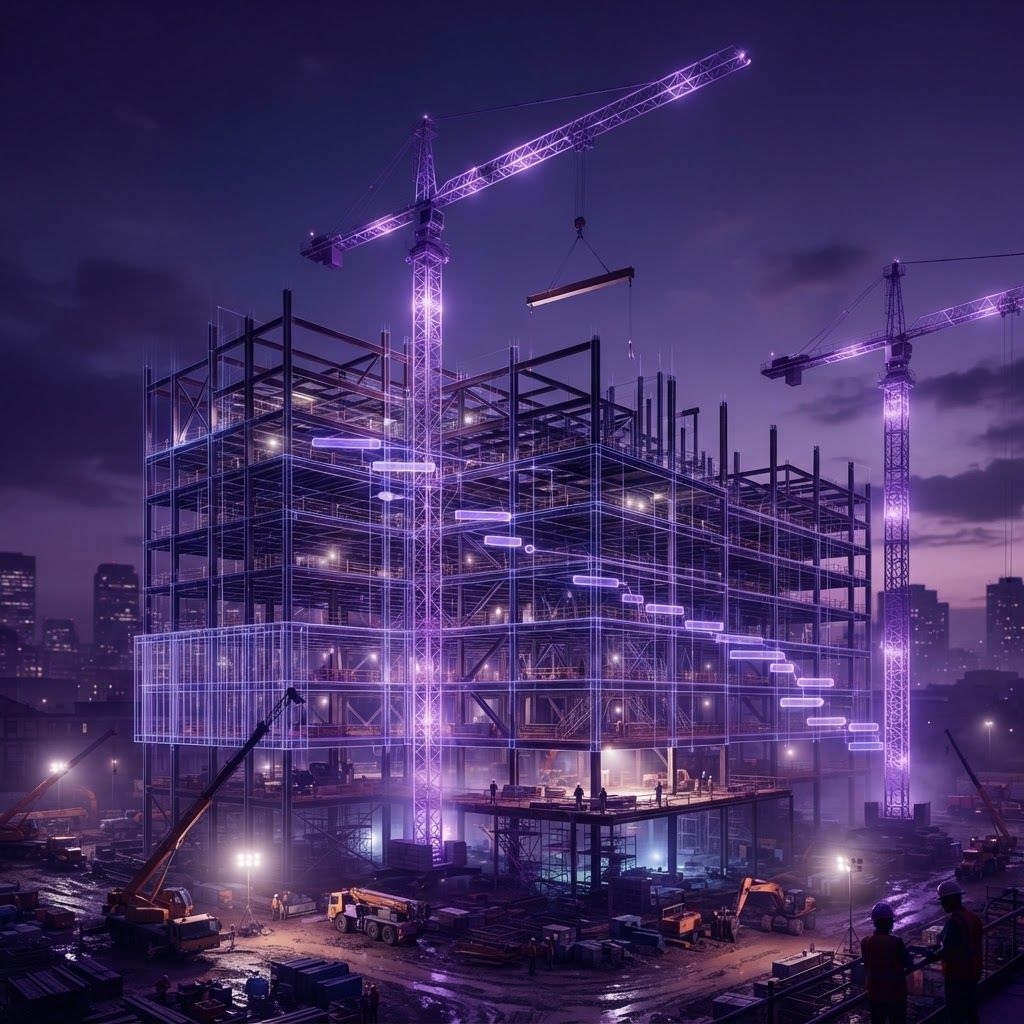
Commercial Building in Ramapo
Commercial construction in Ramapo reflects the township's economic mix. Retail and service businesses need tenant fit-outs along commercial corridors. Logistics and distribution operators need warehouse and light industrial space near highway access. Healthcare providers need medical offices built to specialized standards. Schools, houses of worship and community organizations need institutional buildings that serve large groups safely.
Each of these building types carries distinct code requirements, systems complexity and inspection pathways. A contractor who excels at warehouse construction may be poorly suited to a medical suite with specialized mechanical, electrical and infection control requirements. Matching the builder to the building type is the first and most consequential decision an owner makes.
Ten Commercial Construction Companies
Ramapo Commercial Builders handles ground-up commercial projects with in-house project management and a track record of navigating local approval processes efficiently.
Hudson Valley Construction Management operates primarily as a construction manager, representing owner interests, coordinating trades and controlling cost and schedule rather than self-performing all work.
Suffern Industrial Contractors specializes in warehouse, distribution and light industrial facilities, including dock equipment, high-bay lighting, racking coordination and heavy slab work.
Northgate Retail Construction focuses on retail and restaurant build-outs where schedule certainty directly affects revenue, and where landlord coordination is a routine part of the job.
Airmont Medical Facility Builders constructs healthcare spaces with the specialized mechanical, electrical, plumbing and regulatory requirements those environments demand.
Spring Valley Institutional Construction builds schools, community centers and houses of worship, managing occupied-site phasing and strict life safety requirements.
Monsey Office and Tenant Improvement executes interior office fit-outs, reconfigurations and modernization projects for existing buildings.
Pomona Design Build Services delivers integrated design and construction under a single contract, which shortens schedules and reduces coordination gaps between designer and builder.
Torne Valley Site Development handles sitework, grading, drainage, utilities and parking infrastructure, foundational work that determines whether a project starts smoothly.
Rockland Restoration and Adaptive Reuse completes the list by converting existing structures to new commercial uses, a growing category as older buildings find new purposes.
Choosing a Delivery Method
Design-bid-build separates design and construction, producing competitive pricing on a fully documented design. It works well when the scope is clearly defined but offers limited flexibility once bidding concludes and provides no builder input during design.
Design-build combines both under one contract, giving a single point of responsibility, earlier cost feedback and generally faster delivery. Owners trade some pricing transparency for speed and coordination.
Construction management engages a manager early to advise on constructability, budget and schedule while trade contracts are bid competitively. This suits complex projects and owners who want visibility into subcontractor pricing.
The right method depends on project complexity, schedule pressure, the owner's internal capacity and how much risk the owner wishes to retain.
Budget and Schedule Control
Establish the budget with site development included. Grading, drainage, utility extension, stormwater management and parking often represent a larger share of commercial project cost than owners expect, particularly on the sloped and rocky terrain common in the area.
Front-load decision making. In commercial work, changes during construction are expensive because they affect coordinated trade sequencing, permitting and often equipment already ordered.
Track the critical path rather than overall percentage complete. Delays matter only when they affect the sequence that governs the finish date, and experienced contractors will explain which activities carry float and which do not.
Plan for commissioning and closeout. Systems testing, inspections, certificates of occupancy and training are frequently compressed at the end of a project and cause preventable delays when not scheduled deliberately.
Risk and Compliance
Verify insurance limits, bonding capacity and safety performance records. Commercial projects carry greater exposure than residential work, and a contractor's safety culture correlates strongly with overall project discipline.
Understand permitting and zoning early. Site plan approval, variance processes and utility coordination can take longer than construction itself, and starting design without understanding these constraints wastes both time and money.
Address accessibility and life safety requirements in design rather than discovering them during inspection. Corrections at that stage are costly and schedule-damaging.
Trends in Commercial Construction
Adaptive reuse has accelerated as owners repurpose older retail and office buildings for logistics, medical, fitness and mixed uses. Repurposing an existing structure often beats new construction on both cost and timeline.
Energy code requirements have tightened, pushing improved envelope performance, efficient mechanical systems, LED lighting and building automation into standard specifications.
Prefabrication of mechanical assemblies, bathroom pods and wall panels has grown because it compresses schedules and improves quality consistency, particularly valuable when weather limits on-site productivity.
Final Thoughts
Commercial construction companies in Ramapo serve industrial, retail, medical, institutional, office, sitework and adaptive reuse projects. Owners achieve the best outcomes by matching the contractor to the building type, selecting a delivery method suited to their risk tolerance, budgeting site development honestly, finalizing decisions before construction and verifying insurance, bonding and safety performance. With disciplined planning and the right partner, a commercial project becomes a predictable investment rather than an open-ended obligation.