
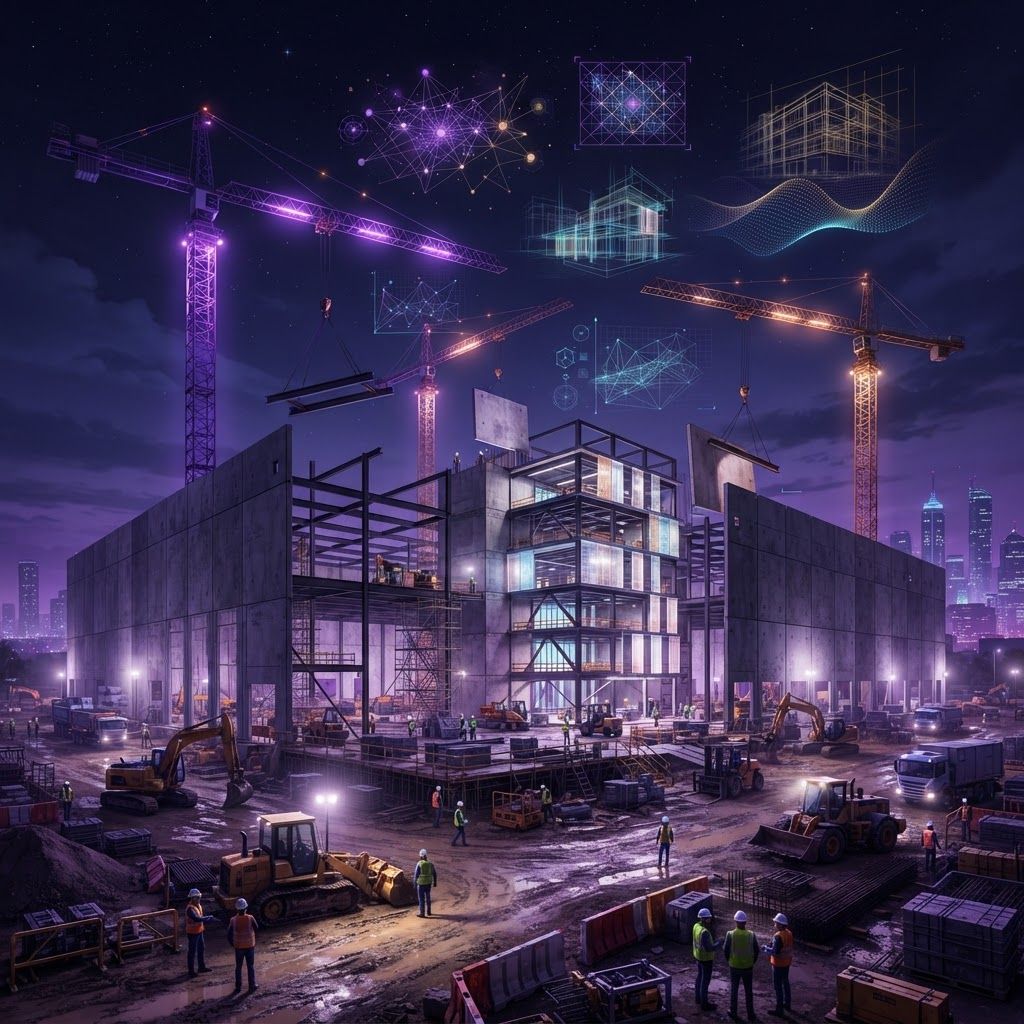
Hialeah as a Commercial Construction Market
Hialeah has one of the densest concentrations of industrial and light manufacturing property in South Florida. Warehousing, distribution, food processing, auto-related trades, and small manufacturing operate throughout the city, supported by proximity to major expressways, rail, and the airport. Layered over that industrial base is extensive neighborhood retail, medical office space, and institutional facilities serving a large residential population.
Commercial construction here operates under the same High Velocity Hurricane Zone requirements as residential work, but with additional layers: accessibility compliance, fire protection engineering, energy code performance, health department review for food service, and coordination with utility providers on service capacity. Tenant improvement work carries intense schedule pressure because rent obligations typically begin before a space is usable, so every week of delay carries direct financial cost.
1. Industrial and Warehouse Builders
These contractors construct distribution centers, light manufacturing facilities, and flex buildings, typically using tilt-up concrete panels or pre-engineered metal systems with structural steel framing. Key technical elements include slab design for forklift and racking loads, dock and truck court geometry, clear height optimization, fire sprinkler design matched to intended storage commodities, and heavy electrical service. Experienced industrial builders also plan for future tenant flexibility, which preserves asset value.
2. Retail and Shopping Center Contractors
Retail construction includes new centers, pad site buildings, and facade renovation of aging properties. Contractors in this segment manage phased work that keeps existing tenants operating and customers safe, coordinate signage and storefront systems, and handle parking, lighting, and landscaping requirements. Because retail landlords compete for tenants, curb appeal and delivery speed both directly affect leasing outcomes.
3. Restaurant and Food Service Build-Out Specialists
Restaurant construction is among the most technically demanding commercial work. It combines commercial kitchen exhaust and makeup air systems, grease interceptors, extensive plumbing, high electrical loads, refrigeration, fire suppression over cooking equipment, and finish work that must satisfy both design intent and health code cleanability standards. Specialists coordinate health department and fire marshal review in parallel with construction and manage long-lead kitchen equipment procurement, which is frequently the critical path item.
4. Medical and Dental Office Contractors
Healthcare build-outs require knowledge of specialized requirements including lead shielding for imaging rooms, medical gas piping, dedicated electrical circuits with backup provisions, enhanced ventilation and filtration, infection control finishes, and accessibility beyond baseline code. These projects also involve equipment vendors whose installation requirements must be integrated into rough-in work, so coordination discipline determines whether the space functions on opening day.
5. Office and Corporate Interior Contractors
Office build-outs involve partition construction, ceiling systems, lighting design, mechanical distribution, structured cabling, and finish selection. Modern office projects increasingly emphasize flexible layouts, acoustic performance, and air quality. Contractors who work efficiently in occupied buildings, managing noise, dust, and elevator access around other tenants, are particularly valuable in multi-tenant properties.
6. Hospitality and Multi-Unit Development Builders
Hotel and larger mixed-use projects require contractors capable of managing complex vertical construction, repetitive unit build-out, extensive mechanical and plumbing risers, and rigorous life safety systems. These projects run on tight financing schedules where delay carries significant carrying cost, so scheduling sophistication and subcontractor capacity are essential qualifications.
7. Institutional and Educational Facility Contractors
Schools, community facilities, houses of worship, and government buildings involve public or institutional procurement processes, enhanced durability standards, and often work scheduled around occupancy calendars such as summer breaks. Contractors in this space understand bonding requirements, prevailing wage rules where applicable, and the documentation and inspection rigor institutional owners expect.
8. Structural Steel and Pre-Engineered Building Contractors
Specialists in structural steel and pre-engineered metal buildings handle erection, connection detailing, and coordination with foundation contractors. Pre-engineered systems deliver large clear spans economically, which suits warehouse and industrial applications well. In the hurricane zone, connection design and anchorage are scrutinized closely, and fabrication tolerances must be tight because field corrections on steel are expensive.
9. Site Development and Civil Contractors
Before vertical construction begins, site contractors handle clearing, grading, fill and compaction, underground utilities, stormwater management systems, paving, and hardscape. In South Florida, drainage design is critical given intense rainfall and a high water table, and permitting involves water management district review in addition to county approval. Site work often determines whether a project starts on schedule.
10. Renovation and Adaptive Reuse Contractors
Much of Hialeah commercial building stock is decades old, creating steady demand for renovation and conversion work. Contractors in this segment assess existing structural capacity, upgrade electrical and mechanical systems to current code, address concrete spalling and envelope deterioration, and bring buildings into accessibility compliance. Adaptive reuse, such as converting older industrial space to modern flex or creative office use, requires imagination alongside technical rigor.
Delivery Methods and What They Mean
Commercial projects use several contracting structures. Design-bid-build separates design from construction and produces competitive pricing on a fully documented scope, but it offers no builder input during design and can generate change orders when drawings prove incomplete. Design-build combines both under one contract, compressing schedule and consolidating responsibility. Construction management at risk brings the builder in early for preconstruction input while ultimately providing a guaranteed maximum price. For fast-track tenant improvements, negotiated contracts with an established contractor usually deliver the best schedule outcome.
Cost and Schedule Drivers
Long-lead equipment dominates many commercial schedules, particularly electrical switchgear, rooftop mechanical units, elevators, and commercial kitchen equipment. Utility service upgrades can take months and must be initiated early. Permitting involves multiple reviewing agencies whose comments must be resolved sequentially. Labor availability fluctuates with overall market activity, and during busy periods subcontractor capacity rather than money becomes the binding constraint.
Evaluating a Commercial Contractor
Verify licensing and confirm the contractor has completed projects of comparable type and scale, since experience with a specific building type matters more in commercial work than general capability. Request bonding capacity information for larger projects, along with current insurance certificates verified with carriers. Ask about safety performance records, because a poor safety history signals management weakness that usually appears in quality and schedule as well.
Examine the project team specifically rather than the company generally. Identify the superintendent and project manager who will actually run the job and review their experience. Ask how the contractor handles preconstruction cost estimating, submittal and shop drawing review, schedule updating, and change order pricing transparency. Request references from both owners and design professionals, since architects and engineers see contractor coordination behavior clearly.
Final Thoughts
Commercial construction in Hialeah spans warehouses, retail centers, restaurants, medical suites, offices, and adaptive reuse of older industrial buildings. Success depends on matching contractor specialization to building type, choosing a delivery method suited to the project risk profile, initiating utility and long-lead procurement early, and evaluating the specific team assigned rather than the company brochure. Handled well, commercial construction in this market delivers durable buildings in a location with genuine long-term logistical and demographic advantages.