
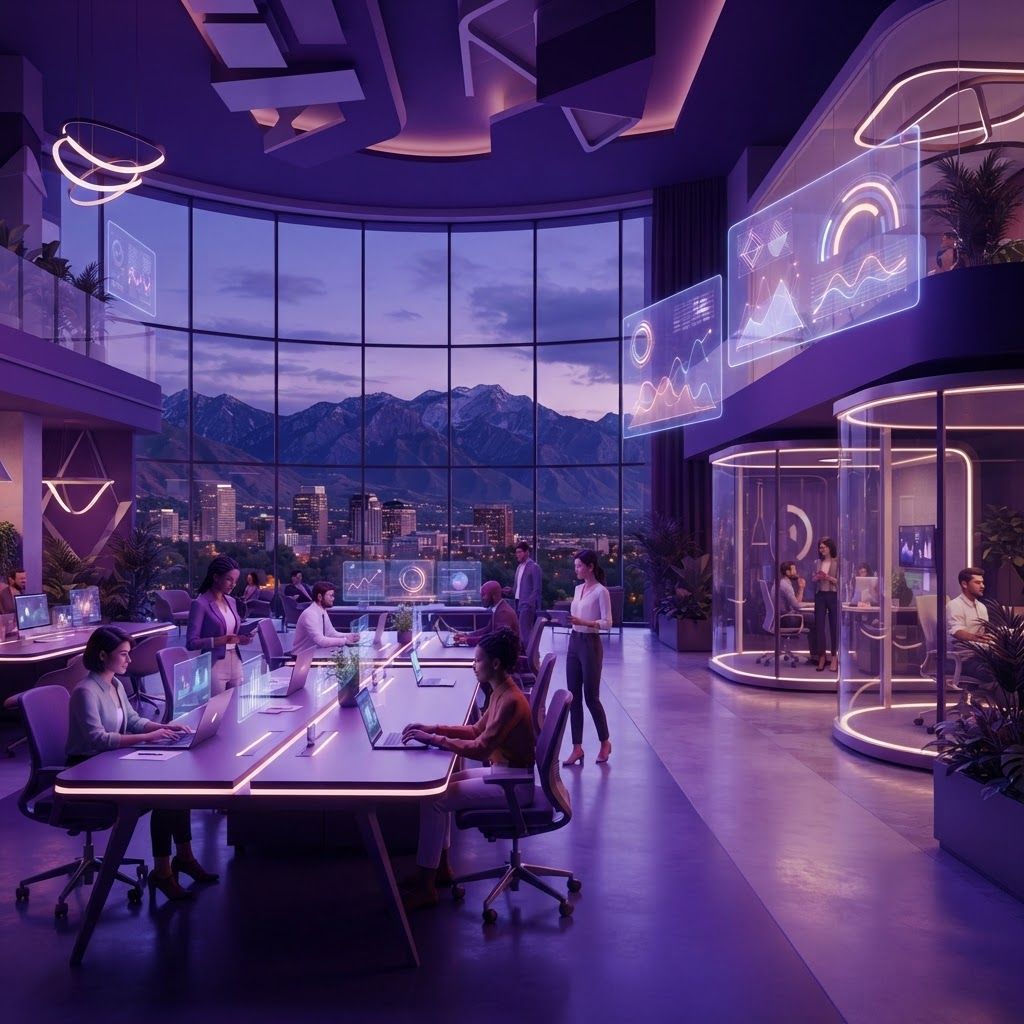
Why Salt Lake City Became a Co-working Destination
The corridor running from downtown Salt Lake City south through Draper and Lehi has earned a reputation as one of the fastest growing technology regions in the United States. Combine that with a low cost of living relative to coastal metros, an international airport minutes from downtown, and world-class skiing within a forty-minute drive, and the appeal to remote workers becomes obvious.
The result has been sustained demand for flexible workspace. Salt Lake City co-working now spans everything from boutique creative studios in converted warehouses to full-floor enterprise suites in Class A towers. Understanding the differences helps freelancers, founders, and corporate teams choose well.
1. Kiln
Kiln has become one of the most recognizable names in Utah flexible workspace, known for design-forward interiors, generous natural light, and community programming that goes well beyond networking happy hours. Its locations attract a blend of venture-backed startups, marketing agencies, and established remote teams. Members often cite the quality of phone booths, podcast rooms, and event space as a meaningful differentiator.
2. Industry SLC
Housed in a large adaptive reuse building in the Granary District, Industry SLC offers a distinctly Salt Lake City atmosphere with exposed timber, high ceilings, and an on-site cafe. It suits creative studios, product design teams, and companies that want private suites with the energy of a larger community. The rooftop space is a frequent choice for company gatherings and product launches.
3. WeWork
WeWork brought global brand familiarity to downtown Salt Lake City, and its offering remains attractive to distributed teams that need consistent access across multiple cities. Standard amenities include private offices, dedicated desks, conference rooms bookable by credit, and reliable enterprise-grade connectivity. For companies with employees traveling frequently, the network effect is the primary draw.
4. Church and State
More than a workspace, Church and State functions as a startup hub with mentorship programming, investor connections, and educational events. Early-stage founders often choose it specifically for proximity to the Utah venture community. Desk and office options are paired with programming that helps first-time entrepreneurs navigate fundraising and go-to-market decisions.
5. Regus Salt Lake City
Regus operates several locations across the valley, emphasizing professional presentation over startup culture. Private offices, staffed reception, mail handling, and formal meeting rooms make it a practical choice for consultants, law practices, financial advisors, and satellite offices of national firms that need a credible business address.
6. Impact Hub Salt Lake
Impact Hub Salt Lake serves social enterprises, nonprofits, and mission-driven businesses. Its community skews toward organizations working on education, sustainability, and community development, and its programming reflects that focus. For founders who value alignment of values alongside desk space, it offers a distinctive environment.
7. Sandbox SLC
Sandbox SLC caters to independent professionals and small teams looking for straightforward, affordable membership without elaborate amenity packages. Flexible day passes, open desks, and month-to-month terms appeal to freelancers, contractors, and people transitioning between roles who need a reliable place to work outside the home.
8. Work Hive
One of the earlier entrants to the Salt Lake City market, Work Hive has maintained a loyal membership through a quieter, more focused atmosphere. It attracts writers, developers, designers, and consultants who prioritize concentration over constant collaboration. Downtown proximity to transit and restaurants adds practical convenience.
9. Venture X
Venture X locations in the greater Salt Lake area combine polished finishes with flexible commitment terms. The model targets growing companies that have outgrown a coffee shop but are not ready to sign a multi-year commercial lease. Team suites can typically expand as headcount increases, which reduces the friction of scaling.
10. Salt Mine Productive Workspace
Located south of downtown, Salt Mine Productive Workspace focuses on affordability and community for solo operators and micro-teams. Its membership base includes coaches, therapists, small agencies, and e-commerce operators. Amenities are practical rather than luxurious, and pricing reflects that, making it accessible for bootstrapped businesses.
Features That Actually Matter
Marketing materials tend to highlight coffee and design, but day-to-day satisfaction usually hinges on less glamorous factors. Test the internet under load rather than trusting advertised speeds. Count the number of enclosed call booths relative to member capacity, because video meetings dominate modern work. Ask how conference room credits are allocated and what happens when rooms are fully booked. Verify parking arrangements, which vary considerably between downtown towers and southern valley locations.
Cost and Commitment Considerations
Salt Lake City pricing generally undercuts San Francisco, Seattle, and Denver, which is part of why the market has grown. Still, structures differ significantly. Open desk memberships offer the lowest entry point but no guaranteed seat. Dedicated desks provide consistency. Private offices carry the highest cost but deliver acoustic privacy and storage. Many operators offer meaningful discounts for annual commitments, so teams confident in their headcount can reduce spend substantially.
The Outlook for Flexible Work in Utah
Hybrid schedules appear to be a durable feature of the Utah economy rather than a temporary adjustment. That points toward continued demand for space that is closer to where people live, which explains expansion into suburban submarkets. Expect more operators to add wellness facilities, childcare partnerships, and outdoor work areas that take advantage of the region's climate and mountain views.