
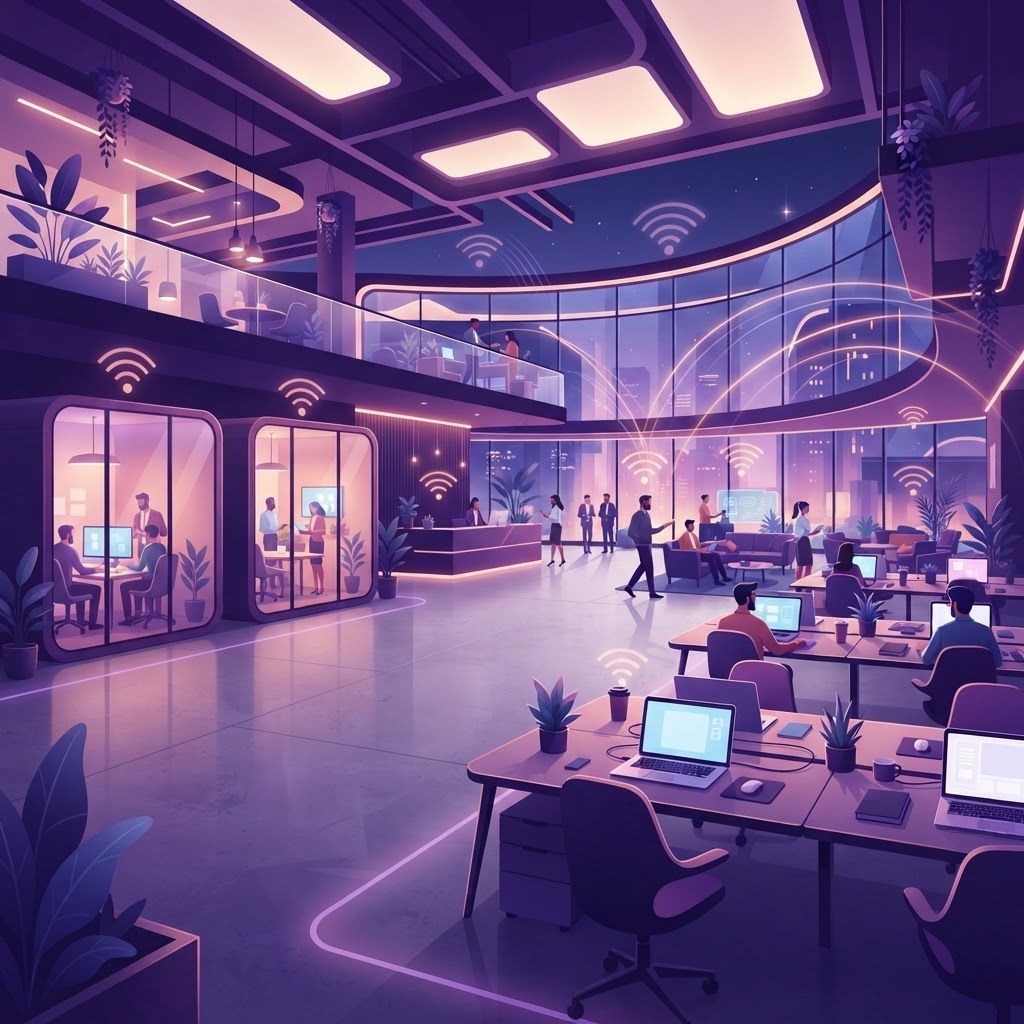
Chesapeake was never a traditional office town, and that is precisely why flexible workspace has taken hold here. The city is largely suburban, its workforce commutes in multiple directions across Hampton Roads, and a substantial share of its professionals now work remotely for employers headquartered elsewhere. For those workers, the choice is not between a downtown tower and a home office; it is between a kitchen table and a well-run flexible space ten minutes from home. Co-working in Chesapeake competes on convenience, quiet, and reliability rather than urban prestige.
Who Uses Co-working Space in Chesapeake
Four groups dominate local demand. Remote employees of out-of-region companies need reliable connectivity, video-call privacy, and separation from household distraction. Independent professionals such as consultants, accountants, therapists, insurance agents, and attorneys need credible meeting space without a long-term lease. Small teams of two to twelve people need a private suite that can grow. And military-connected spouses, who face frequent relocation, need month-to-month arrangements that do not penalize a sudden move.
Greenbrier Workspace Collective
Located in the city primary commercial corridor, Greenbrier Workspace Collective is the most conventional co-working offering in Chesapeake, combining open desks, dedicated desks, private offices, and conference rooms. Its strength is infrastructure: redundant internet, enterprise networking, professional printing, mail handling, and soundproofed call rooms. Members consistently cite the reliability of the video-conferencing rooms, which is the single most important feature for remote employees.
Battlefield Business Hub
Battlefield Business Hub targets small businesses that need a professional address and occasional meeting space more than daily desks. Its virtual office packages include mail receipt, a business address, and a monthly allotment of conference room hours, which serves contractors, real estate professionals, and consultants who spend most of their time in the field.
Great Bridge Creative Studios
Housed in a converted building near the Great Bridge corridor, this space serves designers, photographers, videographers, and other creative professionals. Its differentiator is purpose-built facilities, including a small photography studio with controllable lighting, an acoustically treated recording room, and large-format printing. Creative work has spatial requirements that generic co-working ignores.
Western Branch Executive Suites
Western Branch Executive Suites follows the traditional serviced-office model, offering fully furnished private offices with reception support, telephone answering, and shared conference facilities. It appeals to established professional practices, particularly legal, financial, and medical consulting, where client confidentiality and a formal front-of-house presence matter more than communal energy.
Tidewater Tech Commons
Tidewater Tech Commons focuses on technology workers and small software teams, with an emphasis on network performance, multiple monitor setups, and quiet zones. It also programs community events such as lunch-and-learn sessions and informal meetups, which addresses the isolation that long-term remote workers frequently report as their primary complaint.
Dominion Flex Offices
Dominion Flex Offices bridges office and light industrial use, offering suites that pair a professional front office with a small warehouse or workshop bay and roll-up door access. In a city with a large base of trades, contractors, e-commerce sellers, and equipment-based service businesses, this hybrid product is arguably more useful than pure desk space.
Atlantic Coast Coworking
Atlantic Coast Coworking competes primarily on price and flexibility, offering day passes, punch cards, and low-commitment monthly memberships. For freelancers with irregular schedules and professionals who only need workspace a few days a week, that structure avoids paying for capacity they do not use.
Riverfront Meeting Center
Riverfront Meeting Center specializes in bookable meeting and training space rather than membership desks, with rooms configured for board meetings, client presentations, workshops, and continuing education sessions. Audio-visual capability, catering coordination, and parking capacity are its selling points, and many local businesses use it as an occasional supplement to their own offices.
Southern Gateway Business Center
Serving the southern half of the city, Southern Gateway Business Center fills a real geographic gap. Professionals living in the Hickory, Fentress, and rural southern districts otherwise face a substantial drive to reach flexible workspace. The center offers private offices, coworking desks, and meeting rooms with generous parking and easy vehicle access.
Harbor Point Collaborative
Harbor Point Collaborative operates a smaller, curated space with a strong community focus, hosting a limited membership and emphasizing peer connection, referral networking, and shared professional development. Members trade the amenity breadth of larger operators for genuine relationships, which for many independent professionals is the more valuable asset.
Understanding Pricing Models
Flexible workspace pricing in Chesapeake generally follows four tiers. Day passes and punch cards suit occasional use. Open or hot desk memberships provide unassigned seating during business hours at the lowest monthly rate. Dedicated desks reserve a specific workstation, allowing equipment to remain in place. Private offices command the highest rate and are typically priced per seat with a minimum term. Virtual office plans, which provide address and mail service without workspace, sit below all of these.
Watch for costs outside the base rate, including conference room hours beyond the included allotment, printing overages, after-hours access fees, mail forwarding, guest passes, and parking where it is not free. Also confirm the notice period required to cancel, which is the entire point of choosing flexible space over a lease.
What to Evaluate on a Tour
Test the internet during the visit rather than trusting advertised speeds, and ask whether the connection is redundant. Sit in the space during a busy hour to judge actual noise levels. Check whether call rooms are genuinely private or merely enclosed. Confirm after-hours and weekend access, since remote workers on West Coast schedules need evening availability. Evaluate parking at peak time, kitchen and restroom condition, cleaning frequency, and whether the operator is responsive to small maintenance issues, which predicts how they will behave once you are a member.
Trends Shaping Local Flexible Workspace
Suburban demand continues to outpace urban core demand across the region, favoring markets like Chesapeake. Employers with distributed teams increasingly reimburse memberships directly, turning individuals into corporate accounts. Demand for enclosed private offices has grown relative to open seating as video calls became the default meeting format. And hybrid industrial-office flex product is expanding to serve small operating businesses rather than only knowledge workers.
Final Thoughts
The best co-working space in Chesapeake is the one you will actually use, which usually means the one closest to home with dependable connectivity and enough privacy to take a call without apology. Start with a day pass or short trial, work a full day, and pay attention to noise, comfort, and how the operator handles the small things. Flexible workspace only delivers its value when it makes your working day measurably better than the alternative.