
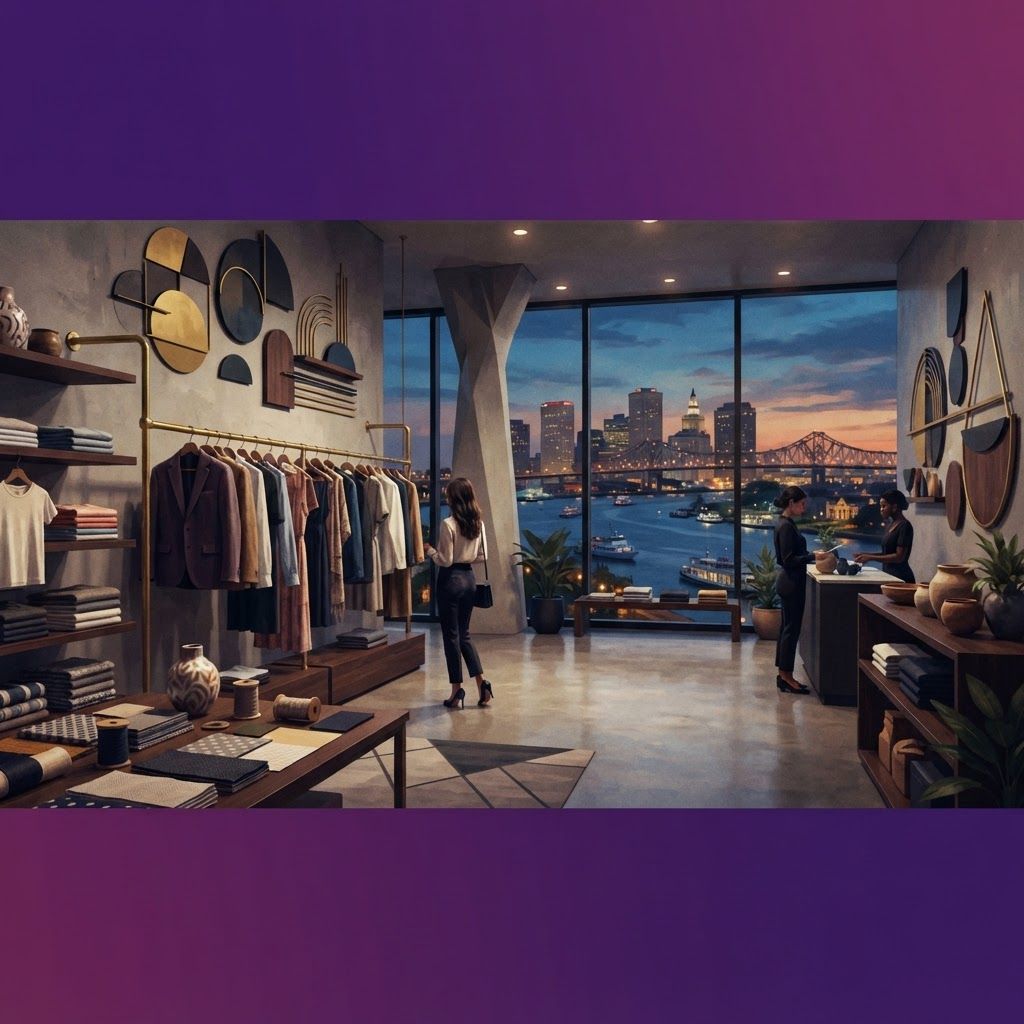
Dressing for Baton Rouge
Clothing choices in Baton Rouge are shaped by two forces: climate and culture. The climate is subtropical, with long stretches of heat and high humidity, sudden heavy rain, mild winters and only occasional genuine cold. That reality rewards breathable natural fibers, moisture-managing performance fabrics, light layering and footwear that tolerates water. Heavy wool coats and thick knits, standard in most of the country, spend the majority of the year unworn here.
Culture matters just as much. Louisiana State University creates enormous demand for purple and gold apparel and a game-day wardrobe that spans casual tailgate wear to dressier stadium looks. Church attendance supports demand for traditional Sunday dress. State government, legal, healthcare and petrochemical employment sustains a business and business-casual market. Festival season, crawfish boils and outdoor social life fill in the rest.
Leading Clothing Brands and Retailers
1. Southern Marsh, Southern Tide and coastal-preppy brands. This category is genuinely dominant in Baton Rouge. Performance polos, gingham and oxford shirts, lightweight chinos and embroidered-logo casual wear suit the climate and read as appropriate across a wide range of settings, from campus to office-casual to a Saturday tailgate. The performance fabrics used in modern versions handle heat and humidity far better than traditional cotton.
2. Vineyard Vines. Widely stocked in the region, the brand's bright colors, whale motif and lightweight construction fit both the aesthetic and the weather. Its game-day and collegiate collaborations are especially popular during football season.
3. Local Louisiana lifestyle brands. Homegrown apparel companies producing Louisiana-themed graphic tees, hats and casual wear — fleur-de-lis designs, crawfish and pelican graphics, regional slogans — occupy a meaningful share of local wardrobes. These brands succeed because they express place-based identity that national labels cannot replicate.
4. Nike and adidas collegiate lines. Officially licensed university apparel is a major category in a city this devoted to its team. Performance-fabric polos, quarter-zips, jerseys and hats in team colors serve as legitimate everyday wear for a large portion of the population, not merely stadium attire.
5. Women's boutiques. Baton Rouge supports a strong independent boutique scene stocking contemporary dresses, separates, denim and occasion wear. Their advantage over department stores is curation and service: staff who know the climate, understand what works for game day versus a wedding, and can pull an outfit together for a specific event.
6. Lululemon and athletic lifestyle brands. Athleisure has become genuinely practical in a humid climate. Moisture-wicking fabrics, lightweight construction and versatile styling mean these pieces move easily between exercise, errands and casual social settings. Demand is strong among students and young professionals.
7. J.Crew and Banana Republic. For business-casual and office wardrobes, these brands provide tailored yet climate-appropriate options: unlined blazers, lightweight wool and cotton-blend trousers, poplin shirting and warm-weather suiting. State government and professional employment sustains steady demand for this segment.
8. Traditional menswear and formalwear specialists. Louisiana's social calendar includes Mardi Gras balls, weddings, galas and formal events at a frequency higher than most states. Retailers and tailors providing tuxedos, suits, alterations and formal accessories therefore serve real, recurring need rather than occasional demand.
9. Levi's and denim brands. Denim remains a wardrobe staple even in heat, and lighter-weight denim, stretch constructions and shorts make it wearable most of the year. The category spans budget to premium, with strong availability across local retail.
10. Columbia, Patagonia and outdoor performance brands. Fishing, hunting, boating and outdoor recreation are central to Louisiana life. Sun-protective long-sleeve shirts, quick-drying pants, breathable rain shells and vented technical wear are functional necessities in the marshes and on the water, and they have crossed over into everyday casual use.
Trends in Local Apparel
Performance-fabric adoption in traditional silhouettes is the most significant regional trend. Dress shirts, polos and even suiting now come in stretch, moisture-wicking and wrinkle-resistant constructions that make formal-looking clothing genuinely wearable in August humidity.
Sun protection has moved into mainstream apparel, with ultraviolet-rated fabrics appearing in shirts, hats and layers well beyond dedicated fishing gear. Given Louisiana's sun exposure, this is a practical health improvement rather than a marketing feature.
Local brand loyalty continues to strengthen, and secondhand and consignment shopping has grown substantially, particularly for formalwear and children's clothing where garments are outgrown or worn only occasionally.
How to Build a Baton Rouge Wardrobe
Prioritize fabric over brand. Linen, cotton, seersucker, lightweight wool and technical synthetics perform in humidity; heavy blends and non-breathable synthetics do not. This single consideration matters more than any label.
Plan for layering rather than heavy outerwear. A light jacket, a versatile blazer and a packable rain shell cover most of the Louisiana year, and a heavy coat is largely unnecessary. Invest in quality footwear that tolerates rain and warmth, and treat leather appropriately for humidity.
Buy for the occasions you actually attend. If your calendar includes game days, church, work and a formal event or two per year, build around those four rather than aspirational categories. Finally, use local tailors — fit does more for appearance than price, and alterations are relatively affordable here.
Final Thoughts
Baton Rouge dresses with a distinctive blend of Southern tradition, collegiate enthusiasm and hard-won climate practicality. The brands that succeed locally are those that respect all three: they look appropriate at church and at the stadium, they breathe in the heat, and they carry a sense of place. Shoppers who prioritize fabric performance and proper fit, and who mix national labels with local boutiques and Louisiana brands, end up with wardrobes that are both comfortable and genuinely regional.